

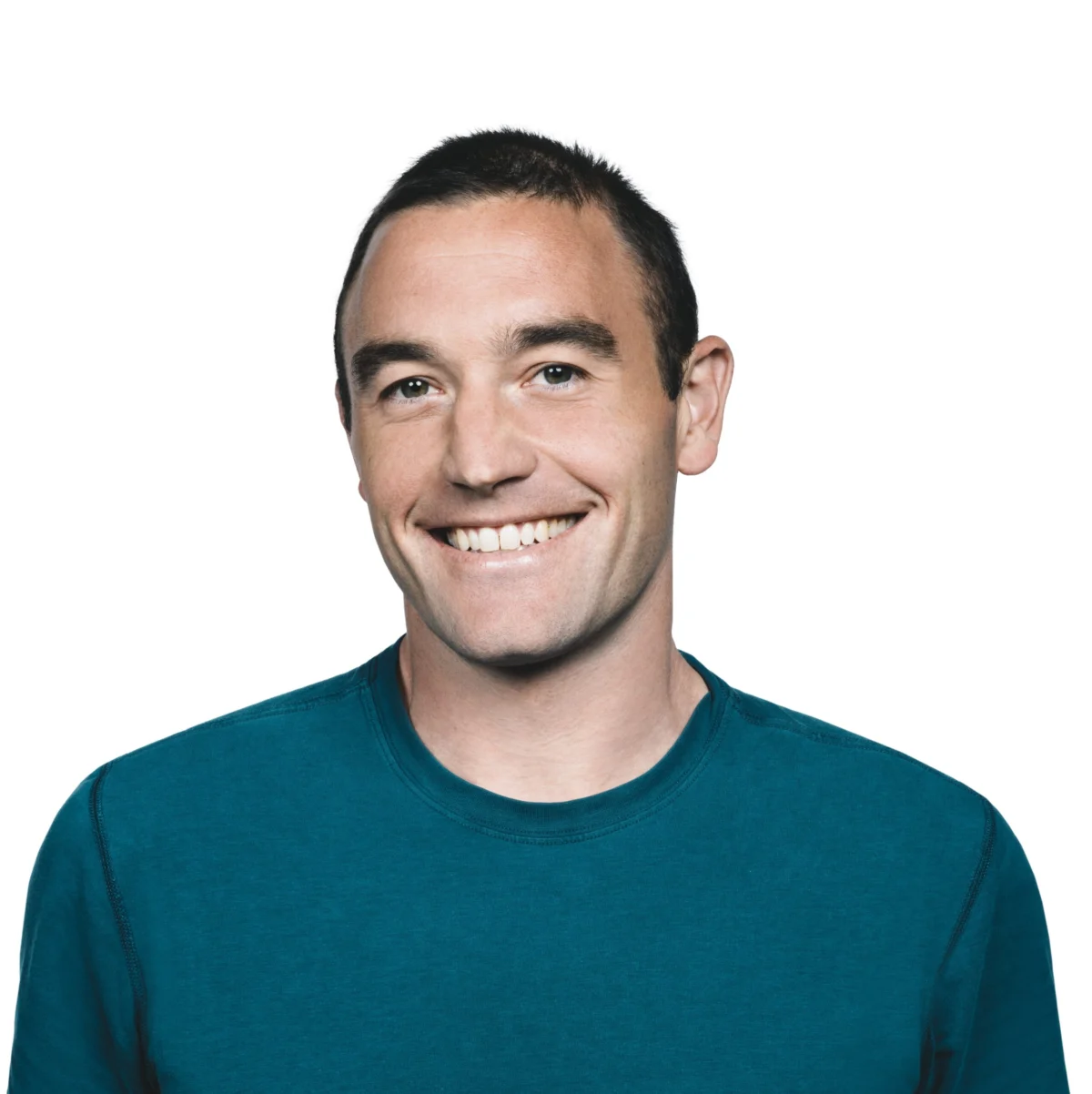
In the high-stakes theater of modern aerospace, where billions of dollars are gambled on the promise of rapid, full reusability, Seattle-based startup Stoke Space has just secured a powerful ally. Kevin Weil, a veteran technology executive whose resume reads like a map of the last decade’s most influential digital platforms—including Twitter, Meta, Planet Labs, and OpenAI—has officially joined the board of directors at Stoke Space.
The appointment is more than a routine addition to a corporate governance team; it signifies a strategic alignment between the hardened engineering requirements of orbital launch and the sophisticated operational playbooks of Silicon Valley’s elite. As Stoke Space prepares for the maiden flight of its fully reusable rocket, "Nova," the company is shifting its focus from R&D intensity to operational scaling, and Weil is expected to be the catalyst for that transition.
The Genesis of a Partnership: From Y Combinator to Series D
The relationship between Stoke Space CEO Andy Lapsa and Kevin Weil is rooted in the early, formative days of the company. When Lapsa, a former Blue Origin engineer, co-founded Stoke in 2020, he found himself navigating the treacherous waters of early-stage venture capital with little more than a vision and an engineering background.
"It’s real simple for me," Lapsa told TechCrunch, reflecting on their initial meeting during Stoke’s participation in Y Combinator’s winter batch. "I came out of engineering, started a company, had no idea how to fundraise. I had no idea how Silicon Valley worked. I had no network."
Enter Kevin Weil and his wife, Elizabeth, who, through their investment fund Scribble Ventures, became early backers of the startup. Weil provided the mentorship Lapsa lacked, helping him translate technical aerospace milestones into a compelling narrative for investors. This guidance helped Stoke secure a staggering $1.34 billion in total funding, a figure underscored by a massive $510 million Series D round in 2025. This influx of capital has transformed Stoke from a niche rocket startup into one of the most well-funded contenders in the race to challenge SpaceX’s dominance.
Chronology: A Path to Orbit
The trajectory of Stoke Space has been aggressive and precise. Since its 2020 inception, the company has operated with a singular, radical objective: the creation of a vehicle capable of full, rapid reusability.
- 2020: Stoke Space is founded by Andy Lapsa and Tom Feldman; enters Y Combinator.
- 2021-2023: The company focuses on the fundamental "hard" physics of spaceflight, specifically the thermal management systems required for atmospheric re-entry—a hurdle that has historically deterred even industry giants.
- 2024: Kevin Weil serves as Chief Product Officer at OpenAI, maintaining an advisory role for Stoke while the company matures its technology.
- 2025: Stoke Space closes a $510 million Series D, signaling investor confidence in the approaching flight test.
- 2026: Weil departs OpenAI as the company consolidates its research initiatives. With the technological risk profile of Nova significantly reduced, Weil transitions to a formal director role on the Stoke board.
The OpenAI Connection: Gossip or Strategic Synergy?
The arrival of a former OpenAI executive at an aerospace firm has inevitably ignited speculation. Last year, reports emerged that OpenAI CEO Sam Altman had explored the potential of investing in a SpaceX competitor. Given Weil’s deep ties to the frontier AI lab—where he led efforts to accelerate scientific research and served as CPO—observers have wondered if Stoke Space is being positioned as a silent partner in a broader, space-based computing ecosystem.
When pressed on whether Weil’s presence acts as a bridge between the AI giant and the aerospace startup, Lapsa remained disciplined, dismissing the queries as "gossip and rumors." He maintains that Weil’s mandate is strictly focused on Stoke’s internal execution. However, the optics remain provocative. As the industry looks toward building "space data centers" to capitalize on solar energy and bypass terrestrial regulatory hurdles, the integration of high-end AI compute power into orbit is a logical, if ambitious, next step.
The Technological Differentiator: Why Nova Matters
To understand the gravity of Stoke’s mission, one must look at the "Nova" rocket. While SpaceX’s Starship is the industry standard for reusability, the technological challenges inherent in atmospheric re-entry are immense. The sheer heat generated when a vehicle returns from orbit often compromises the structural integrity of traditional materials.
Stoke is attempting a design that prioritizes rapid turnaround, not just partial recovery. For investors, the math is compelling. Despite the billions poured into the sector, the world remains supply-constrained. There are simply not enough rockets to satisfy the demand for satellite deployment, space-based manufacturing, and orbital infrastructure.
"The world is realizing that launch is still not solved," Lapsa noted. "The idea of full, rapid reuse was a little bit out there at that time… that’s now been rather normalized, and people see the inevitable now."
Implications: The Intersection of Defense and Tech
Weil’s appointment is not merely about scaling a startup; it is about navigating the complex political economy of the defense sector. Weil has previously demonstrated a commitment to bridging the gap between Silicon Valley and the Department of Defense, most notably by joining the U.S. Army Reserve alongside other high-profile tech leaders.
In an era where the Pentagon is aggressively courting private space companies for rapid, resilient launch capabilities, having a board member who understands both the Silicon Valley "move fast" mentality and the institutional requirements of the U.S. military is a strategic masterstroke. Furthermore, Weil’s tenure as President of Planet Labs—an earth-observation firm that successfully navigated the rigors of an IPO—provides him with the exact institutional knowledge Stoke needs as it pivots from a private startup to a public-market-ready aerospace titan.
The Road Ahead: Executing the Vision
Despite the infusion of top-tier talent and capital, the ultimate test for Stoke remains the launch pad. The company has moved past the phase of theoretical design and is now firmly in the execution phase. The challenge of building a vehicle that can be flown, inspected, and relaunched in a cycle comparable to an aircraft remains the "holy grail" of the aerospace industry.
"We’ve got a good chunk of the risk behind us, we’ve got more to go," Lapsa said. "We’ll work as hard as we can, and we’ll go when it’s ready."
For Kevin Weil, this marks his most tangible foray into the "hard tech" space since his time at Planet Labs. While his previous roles at Meta and OpenAI were defined by pixels, code, and neural networks, his role at Stoke is defined by thermodynamics, orbital mechanics, and the harsh realities of vacuum physics. If he can bring the same scaling success to Stoke that he brought to his previous ventures, he may well help the company solve the most critical bottleneck in the space economy.
As the industry watches, Stoke Space is no longer just a startup with a dream; it is a well-capitalized, well-advised machine designed to test the limits of what is possible in the skies. The integration of Weil suggests that Stoke is ready to graduate from the "startup" phase and enter the "infrastructure" phase—a transition that, if successful, could redefine the next century of space exploration.
 Asep Darmawan
 Siti Muinah
 Ali Ikhwan
