

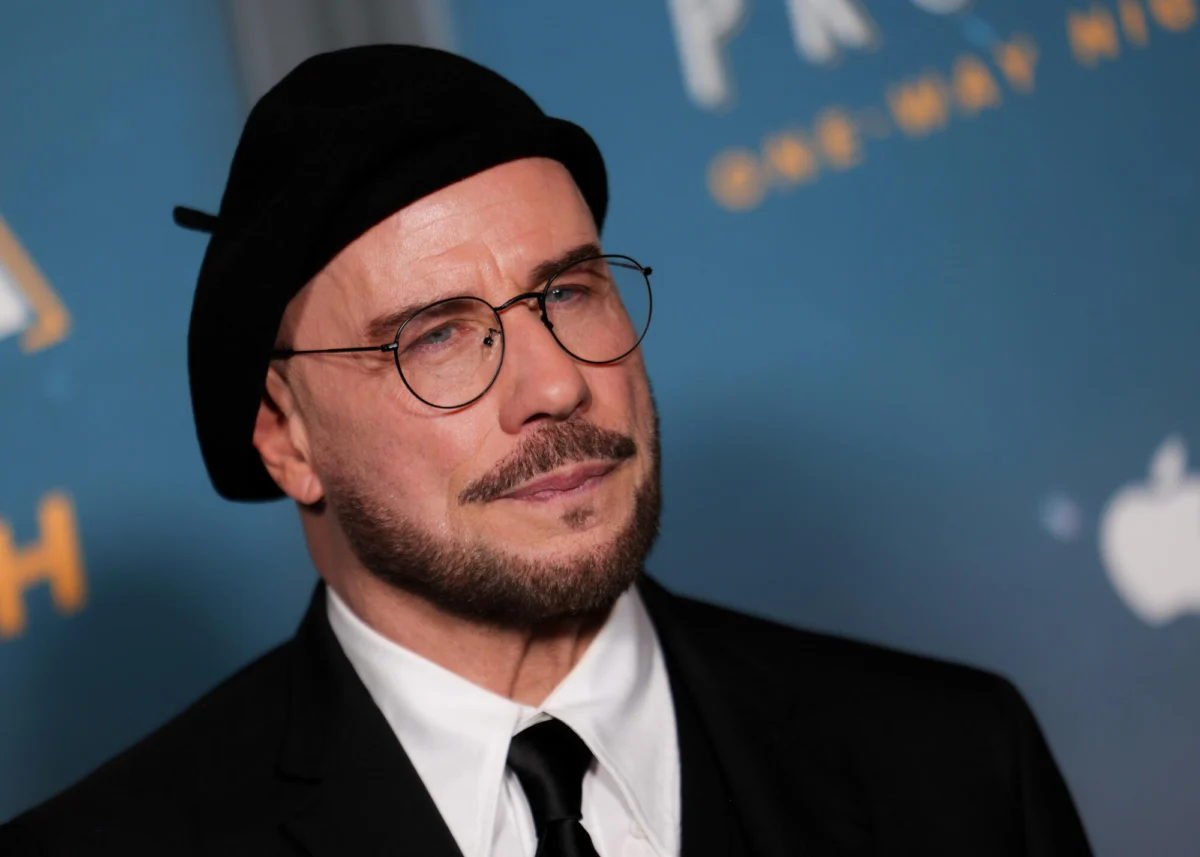
Introduction: A New Silhouette for a Hollywood Icon
For over half a century, the image of John Travolta has been etched into the collective consciousness of global cinema—from the swaggering, disco-dancing Tony Manero in Saturday Night Fever to the cool, philosophical hitman Vincent Vega in Pulp Fiction. Yet, as the legendary actor pivots toward a new chapter in his career behind the camera, he has unveiled a surprising, yet deliberate, stylistic evolution. Since his headline-grabbing appearances at the Cannes Film Festival earlier this month, Travolta has embraced the beret as his definitive trademark, a sartorial choice he claims is as much about professional identity as it is about fashion.
At the DGA premiere of his directing debut, Propeller One-Way Night Coach, held this past Thursday, Travolta offered an intimate look into the philosophy behind his new wardrobe. Far from a mere trend-chasing endeavor, the actor explained to Variety that the transition to the beret was a psychological shift designed to help him inhabit the headspace of a director, distinguishing his new creative life from his storied career as a performer.
The Philosophy of the Headpiece: Chronology of a Style
The journey to the beret began with a moment of existential reflection. Travolta, who has lived under the intense scrutiny of the public eye for five decades, found himself looking at thousands of photographs of his younger self.
"I looked at all the photographs of me for 50 years and I can’t tell you the difference," Travolta remarked during the premiere. "I started to not be able to differentiate, and I said, ‘Well, you’re not an actor really.’ I needed a visual anchor to signal that I was stepping into a new role."
The realization sparked a deep dive into the history of cinema’s greatest visionaries. Travolta began researching the sartorial habits of "old-school" directors, noting that many of the titans of the golden age utilized specific accessories—berets and glasses—to cultivate an air of artistic authority. "The beret has been around for 800 years," he noted. "The military—it’s an old-school thing. It was very cliché, but in a wonderful way. Those directors were likely reflecting the painters and musicians of their era."
By the time he arrived in Cannes, the transition was complete. Travolta now possesses a collection of at least 12 berets, a rotation that caught the attention of fashion critics and landed him on the "best-dressed" lists of Vogue, GQ, and Harper’s Bazaar.
Supporting Data: The Art of the "Directorial" Aesthetic
Travolta’s fascination with fashion is not a recent development. His appreciation for clothing began in his youth, significantly influenced by his brother-in-law, who worked in the industry during the 1960s.
"He worked for Vogue and Harper’s Bazaar and he would style me as a teenager," Travolta shared. "I had my first bell-bottoms, my first wide belt, my first double-breasted suit. I looked like Warren Beatty in Bonnie and Clyde. So, I’ve always been very aware of how women have more options in fashion than we do, and I’ve always wanted to explore that."
This perspective on the limitations of menswear is what drives his current creative output. During his discussion at the DGA, Travolta expressed a desire to push the boundaries of what men feel "allowed" to wear. "Guys don’t have enough to do," he noted. "They’re putting men in skirts because there’s a lack of something there… why not change it up? We can have fun, too."

The beret has become his vehicle for this "fun." It serves as a bridge between the classic, masculine aesthetic of 20th-century Hollywood and the more fluid, expressive fashion sensibilities of the modern era.
Official Responses and Familial Support
The adoption of the look has received full-throated support from those closest to the actor, specifically his daughter, Ella Bleu Travolta. Ella, who appears in Propeller One-Way Night Coach and has been a constant companion on the red carpet during the press tour, played an integral role in the styling process.
"We could have done twin berets, but today we decided to go Brigitte Bardot," Travolta said of their coordinated efforts. While they didn’t opt for matching headgear on this specific evening, Ella was quick to praise her father’s bold choice.
"To make an amazing and artistic decision and just rock it is so cool," Ella told Variety on the red carpet. "So many people play fashion choices safe. He’s so good with that, and he knows what looks good." Her endorsement highlights a recurring theme in the Travolta household: the encouragement of individuality and the rejection of the "safe" path.
Implications: The Director’s Debut and Future Vision
Propeller One-Way Night Coach, the project that catalyzed this stylistic shift, is a deeply personal endeavor for Travolta. Based on his 1997 children’s book of the same name, the film is a one-hour feature now available on AppleTV+. It marks a significant milestone in his career—the transition from the face on the screen to the hand behind the lens.
The implications of his new look extend beyond the red carpet. In an industry that often typecasts its stars, Travolta is actively deconstructing his own image. By adopting a signature that identifies him as a director, he is forcing audiences and critics alike to view his work through a different prism.
The beret is a symbol of intentionality. It suggests that the person wearing it is not merely fulfilling a contract, but exercising a creative vision. As Travolta continues to develop his directing portfolio, the "Director’s Cap" may well become as iconic as the white suit from Saturday Night Fever—a mark of a man who, after 50 years of being defined by others, is finally defining himself.
Conclusion: A Legacy in Constant Motion
John Travolta’s embrace of the beret is a microcosm of his broader approach to life and career: it is bold, slightly nostalgic, and entirely unapologetic. By looking back to the legends of the past to inform his future, he has successfully sparked a conversation about masculinity, professional branding, and the power of personal style.
Whether the beret becomes a permanent fixture in the Hollywood landscape or remains a phase in his directorial evolution, it has already served its primary purpose: it has shifted the focus from the actor who dances to the director who dreams. In a world where celebrities are often hyper-curated, Travolta’s desire to "change it up" and have fun serves as a refreshing reminder that the most powerful fashion statement is one made with confidence and a sense of history. As he moves forward with Propeller One-Way Night Coach, one thing is certain: the world will be watching, not just for his performance, but for his next creative move—and whatever he decides to wear while making it.
 Ali Ikhwan
 Iffa Jayyana
 Siti Muinah
