

The only thing truly consistent about the Emmy Awards is their inherent inconsistency. As the 25,000 members of the Television Academy cast their ballots, they inevitably create a tapestry of trends, snubs, and statistical anomalies that define the television landscape. For industry analysts and casual viewers alike, the fun of nomination morning lies in combing through the fine print to uncover the quirks that give the voting body its unique—and often confounding—charm.
As we dissect the 2026 Emmy nominations, it is clear that the voting membership, in their infinite wisdom, has opted for a mix of legacy respect and experimental appreciation. From centenarian narrators to the convergence of comic book universes, here is a comprehensive look at the fascinating data points that shaped this year’s race.
Main Facts: The Stars and The Storytellers
The acting branch, which constitutes a significant portion of the voting body, made its voice heard loudly this year. They clearly favored a “spread-the-wealth” philosophy, distributing nominations across a wide array of high-profile projects. Notable nods were secured by Riz Ahmed (Bait), Colman Domingo (The Four Seasons), Richard Gadd (Half Man), Billy Crudup (The Morning Show), Steve Carell (Rooster), Chase Infiniti (The Testaments), and Yahya Abdul-Mateen II (Wonder Man).
The inclusion of these names reflects a broader industry shift toward limited series and prestige dramas that offer actors a more focused, high-impact narrative arc. Whether it is the gritty realism of Half Man or the glossy, high-stakes drama of The Morning Show, the acting branch proved that they remain deeply invested in performances that challenge traditional character archetypes.
Chronology and Evolution: From ‘Aliens’ to ‘Alien: Earth’
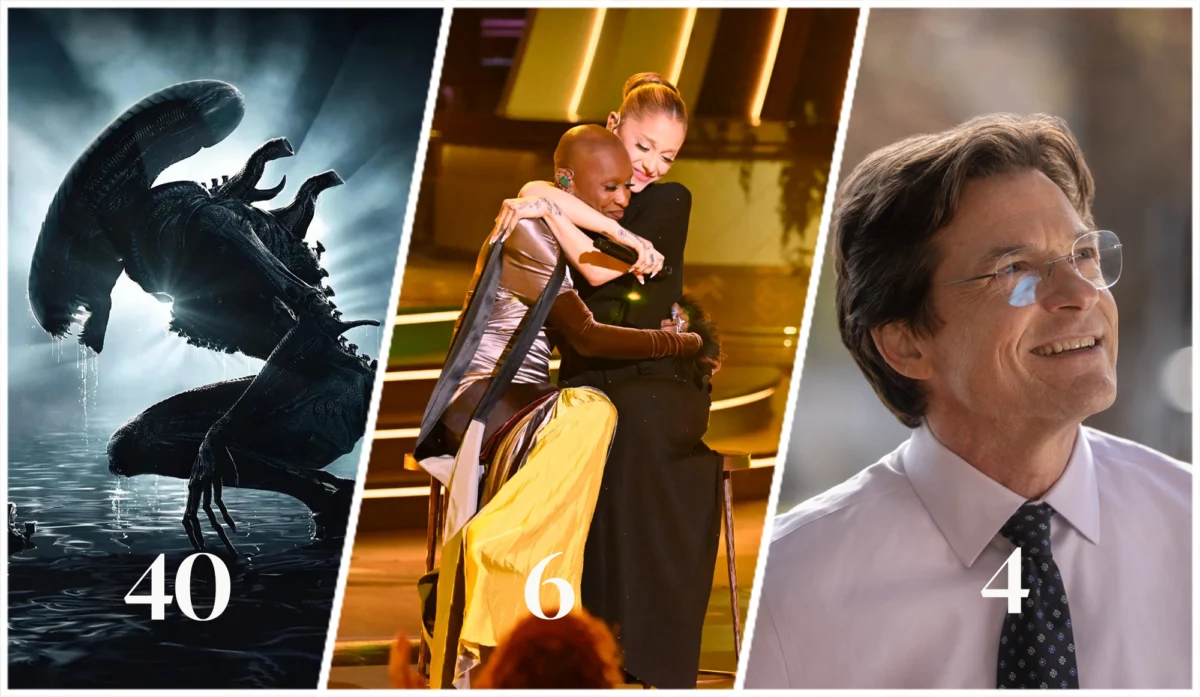
Television history is often written in the shadows of cinema, but occasionally, the two mediums sync in ways that feel poetic. A prime example of this temporal bridge is the arrival of Alien: Earth. It has been exactly 40 years since James Cameron’s Aliens electrified the box office, eventually securing an Oscar for Stan Winston’s groundbreaking visual effects. To see the franchise finally earn a corresponding Emmy nomination for its first television foray is a testament to the enduring power of the intellectual property.

Similarly, we are witnessing a revival of veteran creative forces. David E. Kelley, a titan of the medium, has returned to the spotlight in a way not seen in nearly three decades. It has been 27 years since Kelley was last nominated for Best Comedy Series for Ally McBeal—a project that fundamentally changed the tone of late-90s television. Now, with Margo’s Got Money Troubles competing against modern juggernauts like Hacks, Kelley finds himself in the rare position of being both a legacy figure and a current disruptor.
Supporting Data: By the Numbers
The 2026 ballot is rife with statistical oddities that highlight the changing nature of Emmy competition:
- The Documentary Drought: The category for Exceptional Merit in Documentary Filmmaking has dwindled to just two contenders: PBS’ The Librarians and National Geographic’s The Tale of Silyan. This marks the first time since the category’s inception in 2005 that such a slim field has been presented, suggesting a potential shift in how the Academy views the "exceptional" nature of long-form non-fiction.
- Directorial Milestones: Salli Richardson-Whitfield has etched her name into the history books as the first Black woman to earn double nominations for Best Drama Directing in a single year, recognized for her work on The Gilded Age and Task. Her presence in both the directing and producing categories for The Gilded Age underscores her status as one of the most vital architects in modern television.
- The Presidential Curio: Nick Offerman’s portrayal of Chester A. Arthur in Death by Lightning is not just a critical success; it is a historical outlier. He is only the third actor to ever portray the 21st president on screen, and the first to receive awards recognition for it.
- The Gilligan Effect: Vince Gilligan continues to defy expectations. His latest series, Pluribus, earned 18 nominations—a staggering figure that represents the most for a debut season of any show in his storied career. It is more than double the freshman haul of Better Call Saul and quadruple that of Breaking Bad.
Official Responses and Industry Sentiment
While the Television Academy remains notoriously tight-lipped regarding specific voting behavior, the general consensus among industry insiders is that the 2026 nominations represent a "re-calibration" of prestige.
"The voters are looking for projects that feel urgent," says one veteran awards consultant. "They aren’t just rewarding brand names anymore; they are looking for craft in every department." This sentiment is best evidenced by the performance of Wicked: One Wonderful Night. While the feature film Wicked: For Good was infamously ignored by the Academy Awards, the variety special cleaned up at the Emmys with six nominations, sweeping the technical categories including choreography, lighting, and music direction. It is a classic case of the "television glow-up," where voters find value in formats that film academies might overlook.
Implications: The Future of the Ballot
What do these numbers tell us about the future?

First, the "multihyphenate" is the new king of the ballot. Jason Bateman’s four nominations—spanning lead acting, supporting acting, directing, and executive producing—demonstrate that the Academy rewards those who can wear multiple hats. In an era of shrinking production budgets and high-concept shows, the ability to control a project from the director’s chair to the executive office is increasingly favored by voters.
Second, the Marvel and DC divide is officially irrelevant in television. Yahya Abdul-Mateen II, having previously won for HBO’s Watchmen (DC), is now in contention for Wonder Man (Marvel). He is the ultimate symbol of the cross-pollination of superhero storytelling. As he moves between these massive universes, he proves that the character, rather than the brand, is what wins over the acting branch.
Finally, we must acknowledge the sheer longevity of true talent. At 100 years old, David Attenborough remains the oldest nominee in the field, competing against himself for his narration work on A Gorilla Story and Ocean With David Attenborough. That he is viewed as a peer to the likes of Jodie Foster and Werner Herzog speaks to the universal reverence for his craft.
As we look toward the ceremony, the 2026 Emmy nominations serve as a reminder that television is a medium of constant motion. Whether it is a show finally getting its due after 40 years of franchise development, or a veteran creator returning to the stage after a generation-long hiatus, the ballot is a living document. It reflects not just the best of the year, but the evolving taste of a membership that is finally beginning to embrace the weird, the wonderful, and the unexpected.
The stage is set, the nominees are in, and if the history of the Emmys is any indication, the only thing we can expect is that the winners will be just as surprising as the nominations themselves.
 Ammar Sabilarrohman
 Siti Muinah
 Iffa Jayyana
