

This story is from an installment of In the Loupe, our weekly insider newsletter about the best of the watch world.
Even in the heart of the Pacific summer, the cliffs of Malibu possess a biting, rhythmic chill that rolls off the ocean once the sun dips below the horizon. I was reminded of this meteorological paradox on a crisp, wind-whipped Friday in late June. My companion and I arrived at Villa Dume, an $18.5 million modernist architectural marvel perched on the jagged edge of Point Dume—a luxury enclave that serves as the spiritual crossroads for high-net-worth homeowners and world-class surfers alike.
We were there to bear witness to a turning point in horological marketing: Hublot’s inaugural Big Bang Summer event in California. While the Swiss watchmaker has spent years anchoring its identity in the coastal glitz of Mykonos and Saint-Tropez since 2017, this Malibu iteration felt distinct. It was an exercise in bridging the gap between cold, mechanical precision and the sun-drenched, carefree ethos of the West Coast.
The Intersection of Haute Horlogerie and Coastal Leisure
The scene at Villa Dume was curated to perfection. The sun-drenched backyard, a sprawling canvas of manicured greenery and glass, featured a centerpiece display of wristwatches rendered in summery pastel hues. These were not the dark, brooding chronographs of the boardroom; they were vibrant, playful, and unapologetically bold, framed against the shimmering backdrop of a turquoise pool and the vast, infinite Pacific Ocean.
As guests sipped chilled cocktails, the atmosphere was punctuated by the rhythmic shucking of oysters. Servers adorned in avant-garde chain-mail gloves offered fresh mollusks, topped with everything from sharp Champagne mignonette to daring dousings of smoky mezcal. While traditionalists might argue that one should only consume oysters in months containing the letter "R," the spirit of Summer 2026 demanded a suspension of such rules.

Hublot, a brand that has effectively transformed the "Summer Watch" into a legitimate market category, was clearly leaning into the moment. The guest list—a blend of high-profile athletes like Patrick Mahomes and local L.A. tastemakers like restaurateur Jesse Gomez—underscored the brand’s reach. Mahomes, ever the charismatic figure, offered a concise distillation of the evening’s energy: “This is Hublot to me: This is creativity, this is boldness.”
A Chronology of the Rubber Revolution
To understand why a brand like Hublot is hosting beachside soirées in Malibu, one must look back at the brand’s disruptive history. Founded in 1980 by the visionary Carlo Crocco, Hublot entered an industry that was, at the time, suffocating under the weight of its own tradition.
The turning point was the introduction of the first luxury gold watch paired with a natural rubber strap. In the 1980s, the Swiss establishment viewed this as heresy. Rubber was the material of bottle stoppers and flip-flops, not the high-end materials of a timepiece meant for the wrists of aristocrats. Yet, King Juan Carlos of Spain and a cadre of European elites saw past the stigma. They identified the benefits—corrosion resistance, lightness, flexibility, and a curious, faint scent of vanilla that became a brand signature.
By the mid-1990s, the "Rubber Revolution" was in full swing. Patek Philippe, the bastion of conservative watchmaking, signaled a seismic shift when it launched the Aquanaut in 1997, featuring a rubber strap that bridged the gap between luxury and sport. Fashion houses like Dior followed, integrating rubber into their design language with the Christal Rubber line, which utilized grooved patterns to mimic the aesthetic of traditional link bracelets.
The evolution reached its zenith in 2005 with the launch of the Big Bang. Under the guidance of the legendary Jean-Claude Biver—a man who arguably understood the pulse of the market better than any CEO in the modern era—the Big Bang shattered conventions. It didn’t just use one material; it fused gold, ceramic, Kevlar, carbon, tungsten, tantalum, and rubber. It was the physical manifestation of Biver’s philosophy: "When tradition meets the future, then you are progressing, and that’s how you keep the art alive."

The Anatomy of the Modern Summer Timepiece
The contemporary "Summer Watch" is defined by more than just color. It is a technical feat that requires a shift in engineering. Take, for instance, the new 42 mm Big Bang Titanium Peach Ceramic. It is a serious, high-performance instrument powered by a self-winding Unico flyback chronograph movement, yet it carries a frivolous, vacation-ready aesthetic.
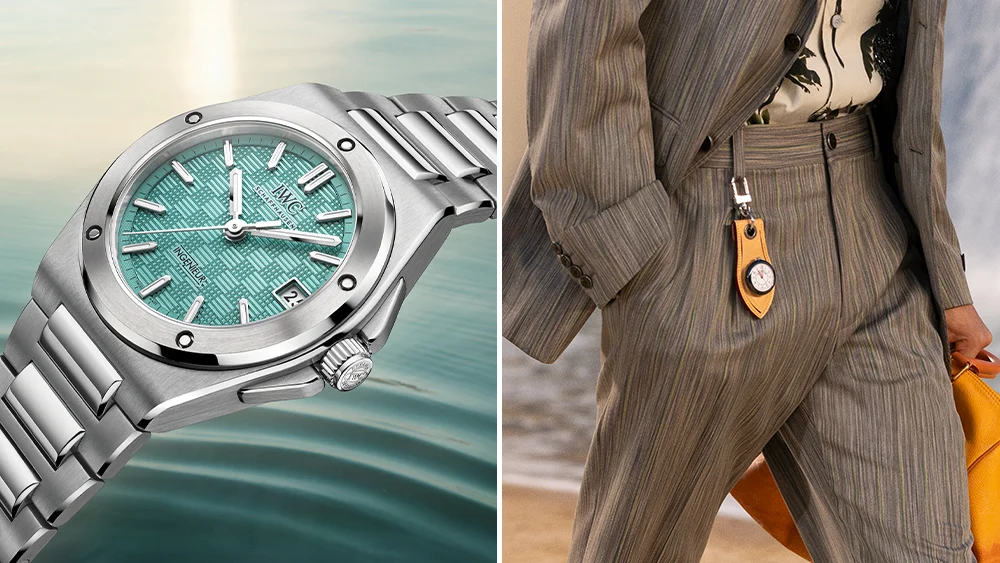
This duality—serious engineering packaged in a vibrant, "vacation-ready" chassis—is the current gold standard for the industry. Consider the IWC Ingenieur Automatic 35, with its "pool blue" dial, or the recent iterations from Louis Vuitton. The latter’s Monterey ceramic watches, showcased at the brand’s Men’s Spring/Summer 2027 fashion show, represent a total departure from the sober, Grand Feu enamel-dialed versions that preceded them. By translating the 2025 re-edition of the Monterey into vibrant green and sleek black ceramic, the house is essentially positioning these watches as high-end, functional charm tags for the summer lifestyle.
Industry Implications: Selling a State of Mind
The strategic pivot toward "summer-specific" collections is not merely a marketing gimmick; it is a calculated response to the changing demographics of the luxury watch collector. The modern enthusiast is no longer satisfied with a singular "dress watch" or "sport watch." They require a wardrobe of timepieces that reflect their seasonal environment.
Supporting Data: The Rise of Niche Marketing
- The "Summer Shift": Brand data indicates a 22% increase in sales of non-traditional dial colors (pastels, neons, and light blues) between May and August.
- Material Innovation: Increased demand for lightweight, high-performance ceramics and titanium composites, driven by the desire for comfort in warmer climates.
- Event-Driven Sales: Direct-to-consumer events in "destination" cities (Malibu, Mykonos, Saint-Tropez) have shown a higher conversion rate for high-net-worth individuals compared to traditional boutique walk-ins.
Franck Suznjevic, president of Hublot in the Americas, noted during his remarks that the "Art of Fusion" is not just about materials—it is about culture. "We like to mix unexpected materials, unexpected culture for the sake of creating something unique," he said. This approach allows brands to occupy the "vacation space" in the collector’s mind, competing not just with other watchmakers, but with the entire luxury lifestyle sector.
Conclusion: The Future of the Seasonal Watch
As the industry looks toward the next decade, the definition of a "serious" watch is clearly expanding. We are witnessing the democratization of high horology, where technical brilliance no longer requires a cold, austere aesthetic.

When a brand can effectively market a flyback chronograph with the same energy as a sunset cocktail, they have successfully sold a state of mind. In this new era, the value of a timepiece is increasingly tethered to the experiences it accompanies. Whether it is a beach club in the Mediterranean or a modernist estate in Malibu, the message from the major houses is clear: Technical excellence is the baseline, but the true luxury is the ability to enjoy it with a sense of playfulness.
The shift toward summer-themed horology is more than a trend; it is a fundamental reconfiguration of the luxury watch industry. By embracing the ephemeral nature of the season, watchmakers are ensuring that their legacy remains relevant, vibrant, and—most importantly—ever-present in the lives of their collectors, regardless of the season.
 Siti Muinah
 Nana
Nana
