

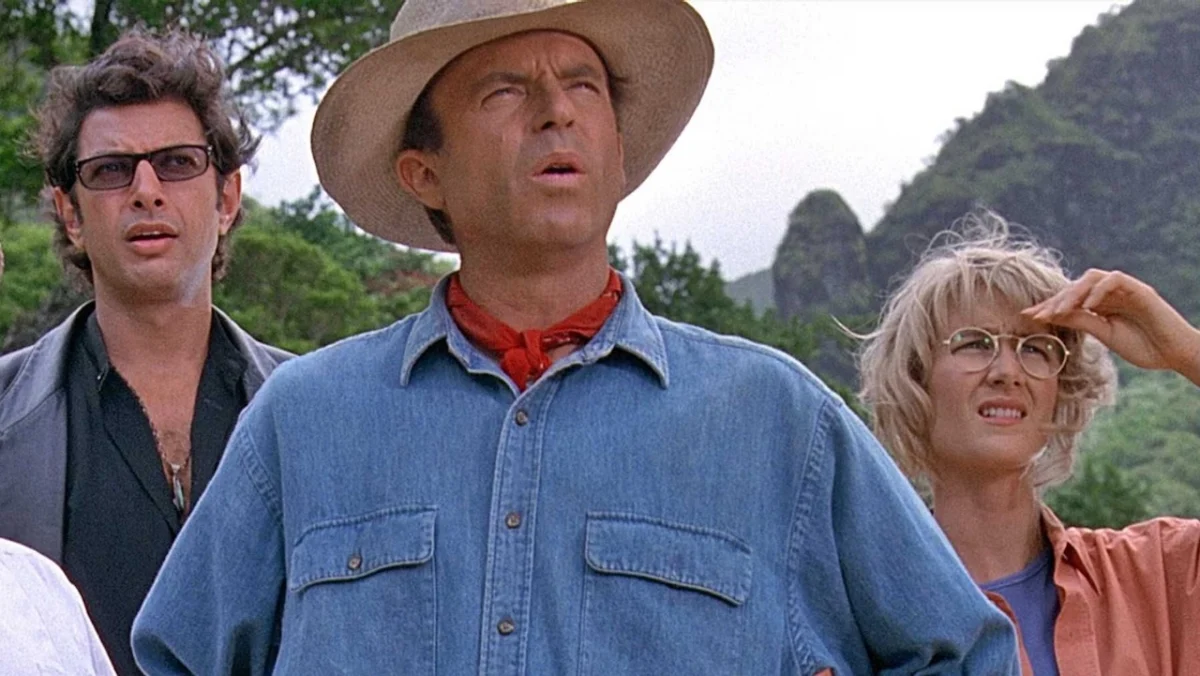
The world of cinema has lost one of its most versatile and enduring figures. Sam Neill, the New Zealand-based actor whose career spanned five decades and encompassed everything from high-concept science fiction to prestige television drama, passed away on Monday, July 13, 2026, in Sydney, Australia. He was 78 years old.
Known globally as the quintessential paleontologist Dr. Alan Grant in Steven Spielberg’s Jurassic Park, Neill leaves behind a legacy defined by intellectual charm, rugged vulnerability, and an unparalleled ability to ground high-stakes spectacle in genuine human emotion. His family released a brief, poignant statement confirming his passing: "He was surrounded by family and passed with the dignity that has characterized his whole life. The loss was sudden and unexpected but blessed by the fact that Sam remained cancer-free."
The announcement arrives as a profound shock to the global entertainment industry, particularly given that Neill had publicly shared his victory over stage-three blood cancer just three months prior, in April 2026.
The Life and Career of an Icon
Early Years and Foundations
Born in Omagh, Northern Ireland, in 1947, Nigel John Dermot "Sam" Neill relocated with his family to Christchurch, New Zealand, in 1954. It was in the sprawling, dramatic landscapes of the South Pacific that Neill developed the understated presence that would later become his trademark. After attending the University of Canterbury and honing his craft at the New Zealand National Film Unit, he transitioned from a documentary narrator and actor into the burgeoning New Zealand film scene of the 1970s.
His breakout role in Roger Donaldson’s Sleeping Dogs (1977) caught the international eye, eventually leading to his casting in the seminal Australian thriller My Brilliant Career (1979) alongside Judy Davis. This period cemented his reputation as a "thinking man’s" leading actor—a performer capable of conveying volumes with a singular, inquisitive glance.
A Chronology of a Storied Filmography
Neill’s filmography is a testament to an artist who refused to be pigeonholed. Throughout the 1980s and 90s, he moved seamlessly between genres:
- 1981: Omen III: The Final Conflict, where he played the Antichrist, Damien Thorn.
- 1990: The Hunt for Red October, establishing his dominance in the political thriller space as Captain Vasily Borodin.
- 1993: The turning point. Jurassic Park transformed Neill from a respected character actor into a global household name. His portrayal of Alan Grant—a man of science thrust into a nightmare of biological resurrection—anchored the film’s massive technical ambition.
- 1997: Event Horizon, a cult classic of cosmic horror that showcased Neill’s willingness to embrace dark, psychological complexity.
- 2000s–Present: His work continued to diversify, moving from the historical gravity of The Tudors (as Cardinal Wolsey) to the whimsical, self-aware cameos in the Marvel Cinematic Universe as the "Asgardian Actor" playing Odin in Thor: Ragnarok and Thor: Love and Thunder.
Supporting Data: The Jurassic Legacy
While Neill’s resume is vast, the shadow of Jurassic Park remains the most significant feature of his professional life. He returned to the role of Dr. Alan Grant in Jurassic Park III (2001) and rejoined the original cast for the franchise’s grand finale, Jurassic World Dominion (2022).
In a 2022 interview with Gizmodo during the press tour for Dominion, Neill reflected on the longevity of the franchise. His words now serve as a poignant reflection on his own place in the cultural firmament:
"We were making popular culture. But isn’t it strange how sometimes things that are made for popular consumption persist? You know, if you think, going back to my day, progressive rock—prog rock—took itself very seriously for a while. No one remembers it anymore. And that was made with serious intent. Whereas I don’t know, a song like ‘Be My Baby,’ it can never perish. And there’s something about that first Jurassic, it popped because it broke new ground… It was just something that sort of hit a chord at the time and it’s become curiously ageless. I’m not sure if I can completely explain why that is."
Official Responses and Industry Tributes
The outpouring of grief from the entertainment world has been instantaneous and widespread. Peers and collaborators have taken to social media and official channels to honor a man described by many as a "gentleman of the industry."
"Sam was a singular talent," read a statement from a long-time collaborator at Universal Pictures. "His ability to bring humanity to the most extraordinary circumstances is why audiences connected with him for over fifty years. He wasn’t just a star; he was a colleague who approached every role with a mixture of professional rigor and a dry, mischievous wit."
Fans have also been reflecting on his recent public battle with illness. Having announced his cancer-free status earlier this spring, the sudden nature of his passing—unrelated to his previous health struggles—has left a void that feels particularly sharp. His family’s emphasis on the fact that he was "cancer-free" serves as a small but significant comfort to the millions who had followed his recent health journey with hope.
Implications for Cinema and Legacy
Sam Neill’s death marks the end of a specific era of "pre-digital" stardom. He represented a bridge between the classic, classically trained acting style of the mid-20th century and the high-octane requirements of modern blockbusters.
The "Everyman" Specialist
What made Neill effective in a film like Jurassic Park was his innate ability to look like he truly belonged in a muddy field with a trowel in his hand, regardless of the CGI dinosaurs circling him. He brought a sense of grounded realism to fantastical scenarios. As the industry continues to pivot toward heavy digital reliance, actors with Neill’s ability to "anchor" a scene through pure, reactive emotion are becoming increasingly rare.
Television Evolution
Beyond film, Neill was a pioneer of the "prestige TV" era. His nomination for an Emmy for the miniseries Merlin (1998) showed that he understood early on that television was evolving into a medium capable of deep, character-driven storytelling. His turn as Chester Campbell in Peaky Blinders proved he could command the screen in the gritty, serialized landscape of the 21st century, playing the antagonist with a chilling, calculated intensity.
The Man Beyond the Screen
Off-screen, Neill was perhaps best known for his love of his vineyard, Two Paddocks, in Central Otago, New Zealand. A frequent presence on social media, he shared glimpses of his life as a farmer, winemaker, and enthusiast of his own animals—including his famous pig, Angelica. He possessed a warmth that stood in stark contrast to some of the colder, more detached characters he played. He was a man who found as much joy in a bottle of Pinot Noir as he did in the accolades of Hollywood.
Conclusion: A Curtain Call
As the film community begins the process of mourning, the question of his legacy naturally turns to his body of work. While he will be forever remembered as the man who introduced the world to the wonder—and the terror—of a resurrected prehistoric world, his true accomplishment was the consistency of his craft.
Whether he was navigating the horrors of a dying starship, walking the halls of Tudor England, or simply providing a voice for a beloved children’s book adaptation, Sam Neill brought a quiet dignity to every frame he inhabited. He leaves behind a world that is undoubtedly more vibrant for his contributions, and a void in the cinematic landscape that will not easily be filled.
In the final assessment, perhaps the "agelessness" he attributed to Jurassic Park is the most fitting description for his own career. Like the best of popular culture, Sam Neill has transcended the screen. He has become a part of the cultural tapestry, a familiar, reassuring, and undeniably talented presence that, while gone, will never truly be forgotten.
 Pevita Pearce
 Asro
Asro
 Lina Irawan
