

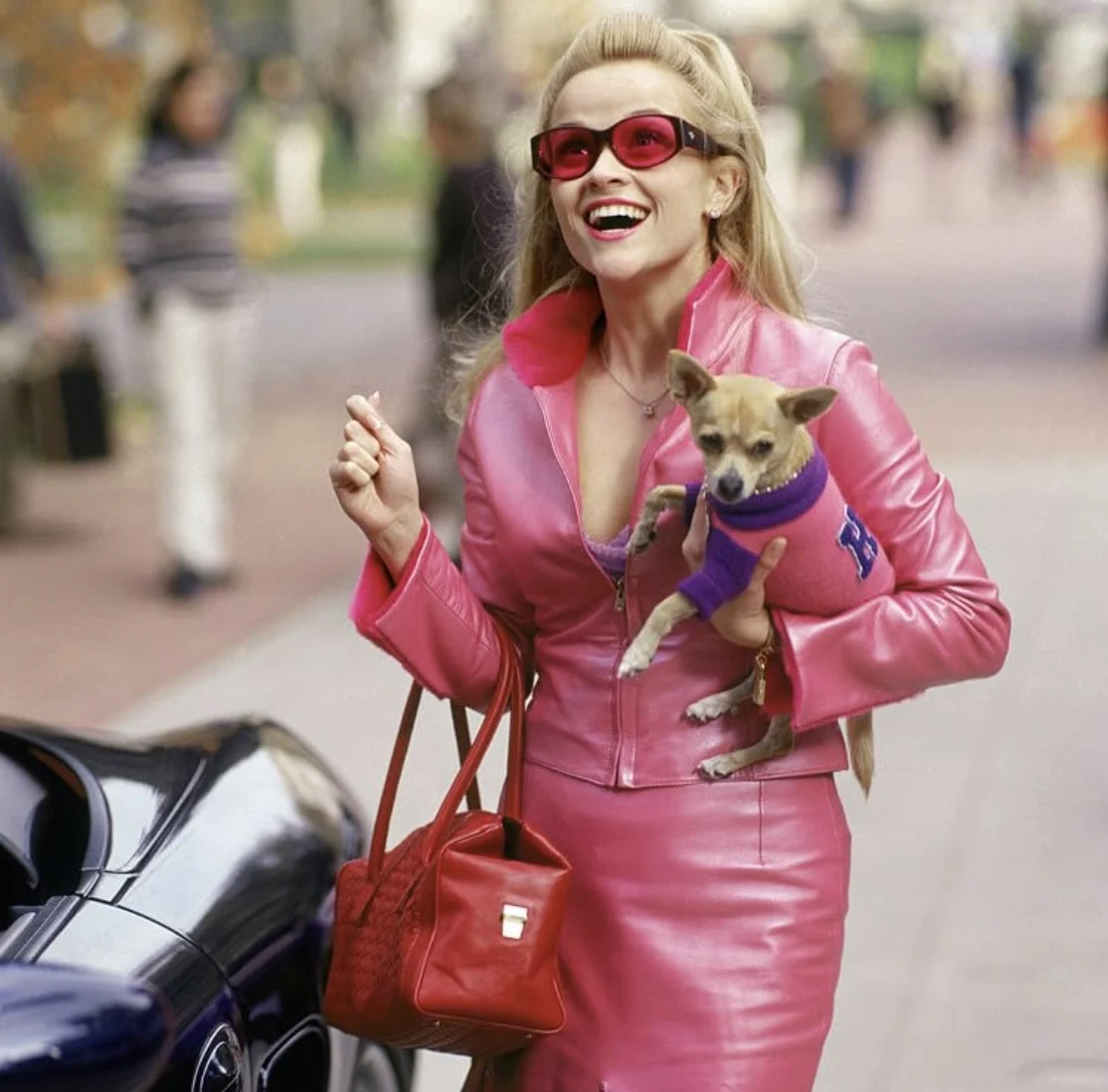
It is a testament to the unpredictable nature of Hollywood that one of the most enduring, culturally significant comedies of the 21st century was once considered a massive risk. In the summer of 2001, few industry insiders predicted that a film about a fashion-obsessed sorority girl heading to Harvard Law School would leave a lasting mark on the cinematic landscape. Yet, Legally Blonde—much like its protagonist, Elle Woods—defied expectations, proving that being underestimated is often the greatest advantage.
As the film marks its 25th anniversary, it has transitioned from a modest sleeper hit into a bonafide classic, its influence permeating everything from fashion trends to the career choices of a generation of female law students.
The Underdog Origins: A “Charmed” Production
The journey of Legally Blonde began not in a boardroom, but in the pages of an unpublished manuscript by Amanda Brown, who drew inspiration from her own real-life experiences attending Stanford Law School. When producer Marc Platt—now a legendary figure in Hollywood, having shepherded projects like La La Land and the Wicked films—optioned the book, he saw potential that others missed.
For screenwriters Kirsten “Kiwi” Smith and Karen McCullah Lutz, the development process was remarkably idyllic. "It was not on the radar of a lot of people when we made it," Smith recalls in an exclusive interview with Gold Derby. "It didn’t have a ton of cooks in the kitchen monitoring it. We were never replaced as writers, and we had first-time Australian filmmaker Robert Luketic directing. We got to make the movie we all wanted to make."
Lutz echoes this sentiment, describing the set as a "summer camp" environment. "The studio trusted Marc, and Marc trusted our script. It was just, ‘Let’s go, make a movie and have fun, ladies.’ It was a blessing."

Chronology of a Sleeper Hit
The film’s success was not an overnight fluke but the result of a highly strategic, out-of-the-box marketing campaign by MGM.
- The Development Phase: Smith and Lutz completed the script in a remarkably concise window, finishing roughly ten primary drafts. Platt provided surgical, high-level guidance, insisting that legal jargon and courtroom procedures remain authentic to maintain the stakes of the narrative.
- The Premiere: MGM invested heavily in the launch, transforming the premiere into a high-energy event at the Mann Village Theatre in Westwood, complete with Chihuahua rescues and professional mani-pedi stations.
- The Opening Weekend: While tracking suggested a modest $12 million opening, the film defied the odds, debuting at No. 1 with a staggering $20.4 million. The news was delivered to the writers by a shocked Marc Platt at 6:15 a.m. the following Monday.
- The Legacy: Made on a lean budget of $18 million, the film ultimately grossed $141.8 million worldwide, cementing Reese Witherspoon’s status as a comedy superstar and securing its place in pop culture history.
Behind the Scenes: The Craft of Comedy
The brilliance of Legally Blonde lies in its ability to balance campy humor with genuine heart. This was largely due to the collaborative environment fostered by Platt and the cast.
The "Bend-and-Snap" Evolution
One of the film’s most iconic sequences, the "Bend-and-Snap," was not an immediate fixture of the script. It was developed during the process of refining the B-plot involving Jennifer Coolidge’s character, Paulette. Initially, the writers struggled with the narrative arc for the nail salon scenes. By returning to their "North Star"—character dynamics and romance—they crafted a sequence that became a cultural touchstone. According to Smith, early cuts of the film featured an even longer version of the scene, which functioned as a near-musical number before being tightened for pacing.
Casting and Chemistry
Reese Witherspoon’s involvement was the linchpin of the film’s success. "She was the perfect person for the role," says Lutz. "She brought fierceness and determination while remaining deeply endearing and vulnerable."
Beyond the lead, the ensemble cast—including Selma Blair, Luke Wilson, Victor Garber, and the scene-stealing Jennifer Coolidge—elevated the material. The rehearsal process allowed for organic, off-script moments that added layers of authenticity to the characters. For instance, Alanna Ubach, who played one of Elle’s sorority sisters, utilized her real-life fluency in Vietnamese during a salon scene, a detail captured during the rehearsal period.

The Legal Reality of Fiction
While the film is famous for its pink aesthetic and fashion-forward protagonist, the writers were meticulous about the legal accuracy required to make the courtroom drama function.
"Making law school look interesting was the toughest thing to crack," Lutz admits. "Mark insisted that any legal statute cited had to be real." The writers scoured law books, eventually integrating the "sperm defense" to add both technical accuracy and comedic flair to the classroom scenes. By grounding the "fish-out-of-water" story in real academic pressure, the film ensured that Elle’s triumph was earned, not just handed to her.
Official Perspectives: The Writers Reflect
Looking back, Smith and Lutz view the experience as a rare, "charmed" moment in the industry. They credit the success of the film to a lack of interference and the presence of a strong leader in Marc Platt.
"We adore Mark so deeply," Smith says. "He fought for it to be its own unique creation."
The writers also highlight the invaluable contributions of costume designer Sophie De Rakoff Carbonnell, whose work defined the aesthetic of the era. Much of the wardrobe, it turns out, was kept by Witherspoon, who maintains an extensive archive of the film’s iconic looks.

The Broader Implications: A Lasting Cultural Impact
Twenty-five years later, Legally Blonde remains a beacon for women in male-dominated fields. It is not uncommon for lawyers and law students to cite the film as their primary motivation for entering the legal profession.
The film also served as a catalyst for female creators. "I meet a lot of young female screenwriting teams and film students who say the movie is referenced in different classes," Lutz notes. "It’s very cool that we’ve given that to a generation of filmmakers."
The movie effectively broke the mold for how female-led comedies were marketed and perceived. It proved that audiences were hungry for stories about women who refuse to compromise their identity—whether that identity includes an affinity for Prada or an expertise in constitutional law.
Conclusion
Legally Blonde has transcended its initial genre to become a symbol of intersectional empowerment. By refusing to pit Elle’s femininity against her intelligence, the film created a new archetype of success. As fans and new viewers continue to discover the film, its message remains as relevant as ever: you don’t have to change who you are to be taken seriously.
For Smith and Lutz, the boxes of old scripts in the garage and the plastic Delta Nu cup on the shelf are more than just memorabilia; they are symbols of a project that was made with pure joy and, against all odds, changed the course of their careers and the trajectory of Hollywood comedy. As we look back on these 25 years, the verdict is clear: Legally Blonde is, and always will be, a classic.
 Ammar Sabilarrohman
 Siti Muinah
 Iffa Jayyana
