

Introduction: A New Chapter for a Global Icon
Millie Bobby Brown, the powerhouse actress who rose to global superstardom as Eleven in Netflix’s Stranger Things, has spent the better part of a decade in the public eye. From red carpets to high-stakes film sets, Brown has been a fixture of youth culture. However, 2025 marked a profound pivot in her personal trajectory. Following her marriage to Jake Bongiovi in 2024, the actress embraced the role of motherhood, adopting her daughter and stepping into a chapter of life defined by newfound emotional depth and, according to the star herself, a commitment to "gentle parenting."
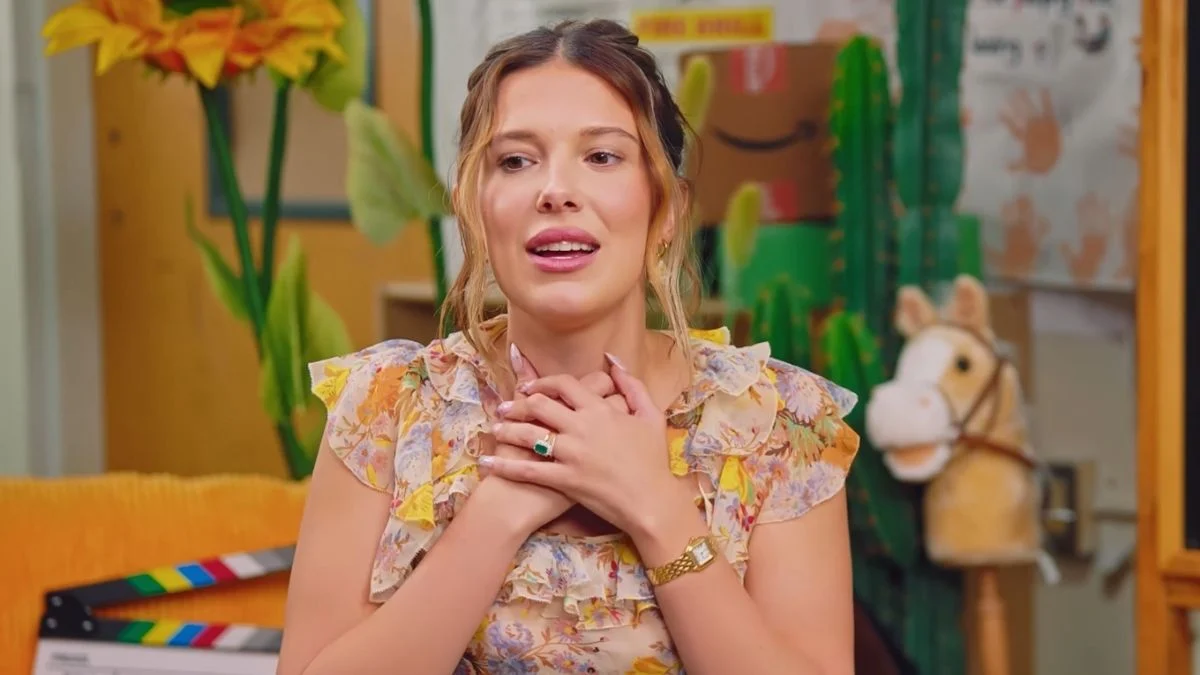
In a recent appearance on Us Weekly’s "Celebrity Substitute," Brown opened up about how the arrival of her daughter has fundamentally altered her worldview, her patience, and her philosophy on how to guide the next generation.
The Core Transformation: Embracing Gentle Parenting
For years, Brown was known for her fierce, driven, and occasionally intense persona—a byproduct of growing up on high-pressure film sets. During her interview, she candidly reflected on her former self, admitting that she likely would have taken a "boot camp" approach to mentorship or advice-giving in the past.
"I’m honestly worried that I’m not going to give good advice," Brown confessed during the segment. "I don’t want to knock anything out of them. I’m here as a mom now. So it’s a different lens. I think, honestly, before my daughter, I probably would have been like, ‘All right, here’s our boot camp.’"
When the host introduced the term "gentle parenting"—an evidence-based approach that emphasizes empathy, respect, and understanding rather than punitive discipline—Brown fully leaned into the concept. Her philosophy has shifted toward prioritizing the child’s individual identity, ensuring they feel "loved and supported" rather than molded to fit a specific expectation. This shift signals a departure from the "tough love" style often associated with child stars who have been raised in the machinery of Hollywood.
Chronology: From Teen Stardom to Maternal Maturity
To understand the significance of this shift, one must look at the timeline of Brown’s rapid transition into adulthood:
- 2016: Brown breaks out as a global sensation in Stranger Things, becoming one of the most recognizable faces in the world at age 12.
- 2018–2022: She establishes herself as an entrepreneur and producer, launching her beauty brand, Florence by Mills, and starring in the Enola Holmes franchise.
- 2024: Millie Bobby Brown marries Jake Bongiovi in a widely publicized ceremony, signaling a commitment to building a private, stable foundation.
- 2025: Brown adopts her daughter. This milestone marks the start of her most significant personal transformation to date, as she balances her thriving career with the responsibilities of motherhood.
- 2026 (Present): Brown begins speaking publicly about how the experience of raising a child has softened her approach to both parenting and her professional relationships, culminating in her recent advocacy for gentle parenting.
Supporting Data: The Psychology Behind the Change
The psychological implications of Brown’s pivot are significant. Gentle parenting is rooted in developmental psychology, focusing on the parent’s ability to regulate their own emotions so they can co-regulate with their child.
In her interview, Brown noted that the arrival of her daughter has provided her with a "different perspective." This is a common phenomenon among new parents, often referred to as "the parental brain shift," where the amygdala—the part of the brain responsible for threat detection and emotional processing—becomes more sensitive to the needs and cues of a dependent child.
Brown specifically mentioned that she now "deeply understands" the concerns of her own parents. While she previously grasped the concepts intellectually, the visceral reality of motherhood has provided a bridge of empathy that was previously absent. This newfound understanding has turned her into a more reflective, patient individual, moving away from the high-octane expectations of her youth toward a more compassionate, slow-paced existence.
Official Responses and Public Reception
The response to Brown’s parenting philosophy has been largely positive, though it has invited scrutiny from the "mom-shaming" contingents of social media. The actress has been a frequent target of unsolicited critiques, a reality she has addressed with grace and resilience.
Despite the noise, Brown continues to be transparent about her experiences. A recent red carpet appearance highlighted her genuine joy when asked about her daughter’s development. When a reporter inquired about a recent milestone, Brown beamed, sharing that her daughter had just learned to say "no."
The anecdote was not just a cute story; it underscored her commitment to raising an empowered child. By celebrating her daughter’s ability to set boundaries, Brown demonstrated that she is actively applying the principles of gentle parenting—valuing a child’s autonomy and voice—in her everyday interactions.
Implications for Her Career and Public Image
The implications of Brown’s shift are far-reaching. As an actress, she is currently in a transition phase. Having played the role of the "young prodigy" for a decade, she is now moving into a space where her personal brand is built on maturity and empathy rather than just raw ambition.
Professional Mentorship
Brown has previously acted as a role model for millions of young girls. By adopting a gentle parenting approach, she is shifting her influence. Instead of telling young fans to "grind" or "hustle," she is signaling the importance of emotional intelligence and self-compassion. This could lead to a more nuanced career path, where she takes on roles that emphasize human connection and family dynamics over the high-stakes, action-oriented roles of her adolescence.
The "Mom-Shaming" Barrier
Brown’s openness also highlights the persistent, toxic culture of "mom-shaming" in the digital age. By refusing to hide her parenting struggles or her learning process, she is inadvertently fighting back against the impossible standards placed on celebrity mothers. Her honesty—admitting that she is worried about giving good advice—is a radical act of vulnerability that makes her more relatable to her audience.
The Broader Cultural Context: The Rise of Gentle Parenting
Brown is part of a growing cohort of millennial and Gen Z parents who are rejecting the authoritarian styles of previous generations. In the context of her generation, this movement is about breaking cycles of generational trauma and fostering a safer space for emotional development.
By discussing her journey on platforms like "Celebrity Substitute," Brown is helping to destigmatize the idea that "being a mom" means having all the answers. Instead, she portrays parenting as a collaborative journey—a partnership between mother and child.
Conclusion: A Future Guided by Empathy
As Millie Bobby Brown continues to navigate the complexities of fame and family, her commitment to gentle parenting serves as a beacon for those who follow her. Her journey from the high-pressure environment of Stranger Things to the quiet, intentional life of a parent shows a remarkable level of personal growth.
She is no longer just the "girl who saved the world" in fiction; she is a woman actively working to build a world of support and love for her daughter. Whether she is discussing the nuances of setting boundaries or the simple joy of hearing her child say "no," Brown is proving that her greatest role yet may be the one she is playing at home.
In a world that often demands perfection, Brown’s embrace of patience, understanding, and "gentle parenting" is a refreshing, necessary reminder that growth is a lifelong process—one that requires us all to take a deep breath, look through a new lens, and lead with love.
 Neng Nana
 Azzam Bilal Chamdy
 Nana
Nana
