

The Call to Action: A New Era of Artistic Advocacy
In an era defined by rapid political polarization and increasing scrutiny over the boundaries of free expression, a powerful coalition of Hollywood’s most influential voices is preparing to take the stage in defense of one of democracy’s most fundamental pillars. Next month, the Committee for the First Amendment, spearheaded by legendary activist and actress Jane Fonda, will host "Rise Up, Sing Out: A Concert for the First Amendment," a high-profile event designed to channel the transformative power of performance into the fight against government repression and censorship.
The event, scheduled for June 14—coinciding with Flag Day—will be held at the historic Town Hall in New York City. The concert represents a significant escalation in the Committee’s efforts to mobilize the cultural sector against what its founders describe as an alarming trend of intimidation and legislative overreach that threatens the ability of artists and citizens alike to speak truth to power.
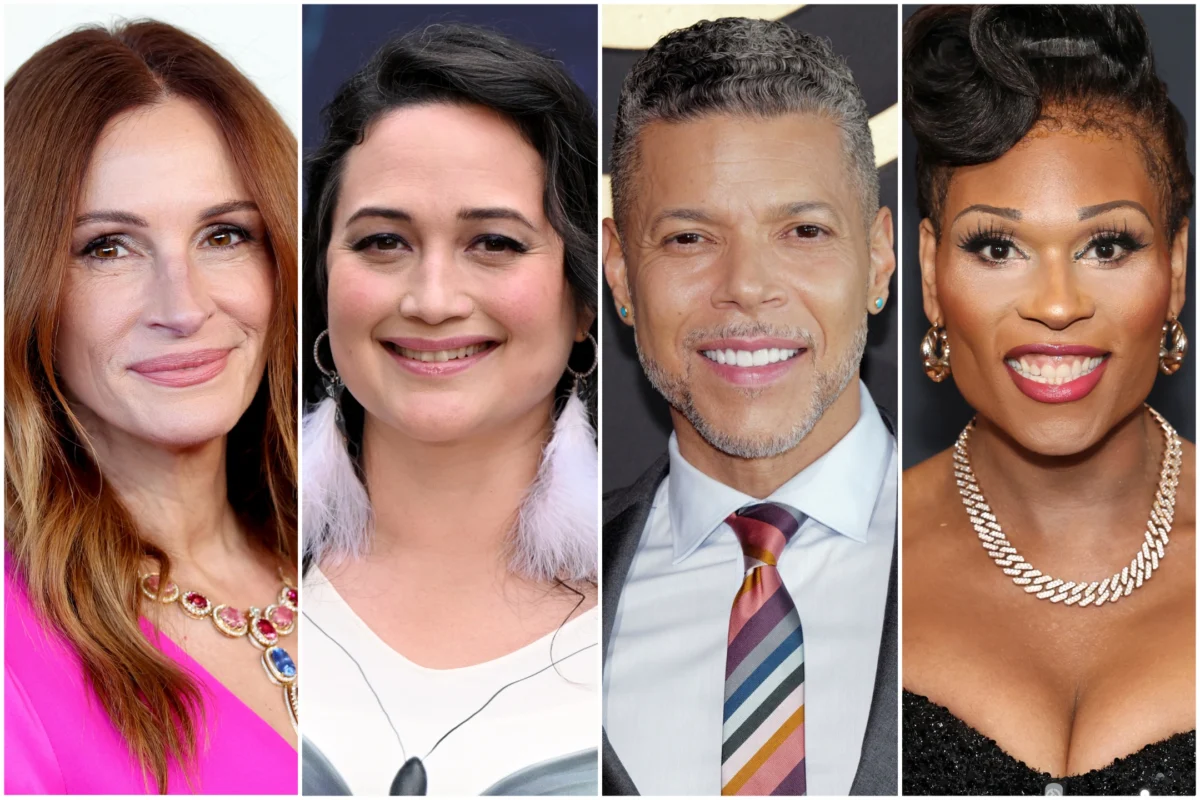
The latest additions to the concert roster read like a roll call of contemporary cultural excellence. Academy Award-winning icon Julia Roberts, Oscar nominee Lily Gladstone, activist and actor Wilson Cruz, and drag performer and television personality Peppermint have all been confirmed to participate. They join a marquee lineup that includes Bette Midler, Patti Smith, Joy Reid, Rufus Wainwright, and Sasha Allen.
The Chronology of Resistance: From the Red Scare to Today
The "Rise Up, Sing Out" concert is not merely a performance; it is a continuation of a legacy rooted in the mid-20th century. The Committee for the First Amendment was originally formed in the 1940s during the height of the McCarthy-era "Red Scare," a period defined by the Hollywood Blacklist and the systematic persecution of artists accused of subversive political affiliations.
The original organization served as a vital shield for those whose careers—and lives—were threatened by the House Un-American Activities Committee (HUAC). Among the founding members of that original collective was Henry Fonda, Jane’s father. His involvement in the movement to protect the creative community from political purges serves as the spiritual and historical anchor for the current iteration of the organization.
In October of last year, Jane Fonda announced the official relaunch of the Committee. The revival was sparked by a growing consensus among industry leaders that the protections once fought for in the 1940s are again under duress. The relaunch garnered immediate, massive support, with over 550 A-list stars—including Aaron Sorkin, Barbra Streisand, Viola Davis, Spike Lee, and Pedro Pascal—signing on to bolster the coalition. This move signaled a rare, unified front from a segment of society often criticized for its fragmentation, demonstrating that the threat to free expression has reached a threshold that demands collective action.
Supporting Data: A Coalition of Unprecedented Scale
The magnitude of the Committee for the First Amendment’s reach cannot be overstated. By aggregating more than 550 industry heavyweights, the organization has effectively created a centralized voice for the entertainment industry’s political conscience.
The roster of supporters is expansive, spanning generations and disciplines:
- Literary and Creative Forces: Aaron Sorkin, Judd Apatow, Bess Kalb.
- Iconic Actors: Julianne Moore, Natalie Portman, Julia Louis-Dreyfus, Susan Sarandon, Whoopi Goldberg, and Sean Penn.
- Social Justice Voices: Kerry Washington, Janelle Monáe, John Legend, and Wanda Sykes.
- Multi-Generational Icons: Lily Tomlin, Melanie Griffith, and Rosie O’Donnell.
This coalition is not just about celebrity; it is about infrastructure. The concert itself is a testament to this, boasting a world-class production team led by director Schele Williams, with music direction by Mary Mitchell Campbell and a script by Bess Kalb. The technical precision—from Jamie Roderick’s lighting design to Cody Spencer’s sound engineering—is intended to elevate the concert into a piece of political theater that is as polished as it is poignant.
Official Responses and the Philosophy of the Stage
The impetus for this movement is rooted in the conviction that art is not a luxury, but a weapon of defense for democratic values. In a statement released regarding the concert, Jane Fonda articulated the philosophy driving the Committee’s mission:
"We can’t sit idly by while our rights are at stake," Fonda stated. "History shows us that when democracy is threatened, song becomes one of our most powerful weapons. Right now, we are at a critical crossroads. It’s time for us to rise up, raise our voices and stand up against a government that refuses to put its people first. We are fighting back the best way we know how to: with our community and in solidarity."
This sentiment reflects a shift in how celebrity activism is perceived. Rather than focusing on singular charitable causes, the Committee is focused on the institutional protection of the First Amendment itself. By framing the concert as an act of "solidarity" against "industry complicity," the organizers are acknowledging that the threats to free speech come not only from overt government mandates but also from a culture of self-censorship and fear within the corporate entertainment landscape.
Implications: The Political Landscape and the Role of the Artist
The timing of this concert, falling on Flag Day, is a deliberate reclamation of symbols. By occupying a space as culturally significant as New York’s Town Hall on a day dedicated to national identity, the Committee is asserting that the First Amendment is not a partisan issue, but an essential component of the American experiment.
The implications of such a high-profile gathering are profound. If the Committee succeeds in translating the energy of the concert into long-term legislative or legal advocacy, it could create a permanent firewall against future attempts to stifle dissent. Furthermore, the inclusion of voices like Peppermint and Lily Gladstone underscores an intersectional approach to free speech, highlighting that the most vulnerable targets of censorship are often those from marginalized communities.
For the industry, the "Rise Up, Sing Out" concert serves as a litmus test. Can the entertainment industry sustain a united front against political intimidation? As the concert approaches, the organizers have made it clear that the goal is not just a successful performance, but a lasting movement.
Tickets are currently available via Ticketmaster and the official Rise Up, Sing Out website. For those unable to attend in person, the concert will be available to stream for free, ensuring that the message of the event is accessible to a global audience. As doors open at 6:45 p.m. ET on June 14, the message from the stage will be unambiguous: the era of silence is over, and the era of the collective voice has begun.
The success of this endeavor will likely be measured not just by the ticket sales or the stream count, but by the extent to which it encourages artists across the country to speak without fear, reinforcing the belief that, as Fonda suggests, song and story remain our most potent instruments for change.
 Sagoh
Sagoh
 Pevita Pearce
 Jia Lissa
