

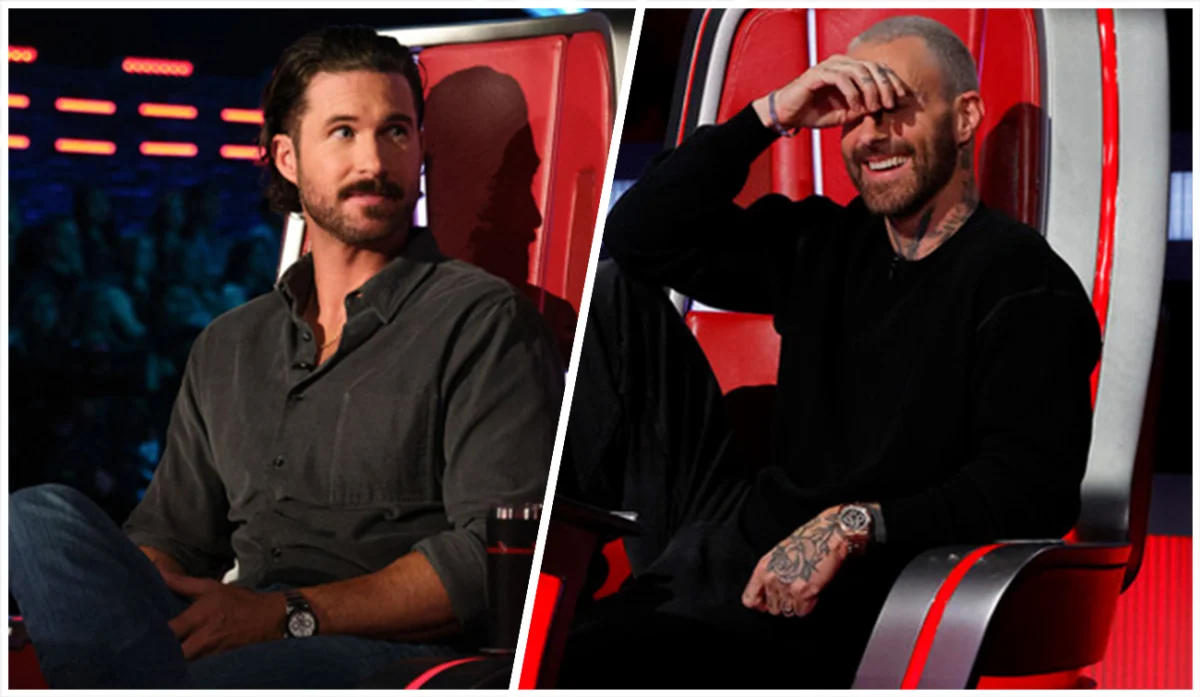
The high-stakes journey of The Voice Season 30 has reached a definitive milestone. As the final notes of the Blind Auditions faded on October 6, coaches Kelly Clarkson, Riley Green, Queen Latifah, and Adam Levine successfully finalized their rosters. With only seven spots remaining at the start of the night, the pressure was palpable for the ten hopefuls who took the stage, each vying for a chance to secure a coveted spot in the upcoming Battle Round.
As the dust settles, the four coaches have curated teams that represent a diverse spectrum of musicality, genre-bending vocalists, and raw, untapped potential. With the teams now locked, the narrative of the season shifts from the search for talent to the grueling, strategic preparation required for the next phase of the competition.
The State of the Teams: Coaches Weigh In
The completion of the Blind Auditions is never just about filling seats; it is about architectural strategy. Each coach approaches the formation of their team with a distinct philosophy. Queen Latifah, whose team is characterized by a soulful and eclectic mix, described her roster as a collection of artists with "flavor for days." For the Queen of hip-hop and soul, the focus remains on finding unique vocal signatures that can stand out in a crowded market.
Kelly Clarkson, a veteran of the format, expressed profound confidence in her selection. "I have a little bit of everything," she noted, framing her team as "the team to beat" heading into the Battles. Clarkson’s ability to mentor across genres has been a hallmark of her tenure, and her squad this season appears no different.
Adam Levine, returning to the chair with his signature intensity, remains focused on the emotional resonance of a performance. For Levine, the criteria for a turn were simple yet stringent: the artist had to make him "feel something special." His conviction that the season 30 champion resides within his roster suggests a high level of expectation for his proteges.
Riley Green, serving as the final coach to complete his team, reflected on the intensity of the process. Having filled his final slots, Green emphasized that the real work—the mentorship and the development of these artists—is only just beginning. His enthusiasm for the journey ahead highlights the deep connection the coaches form with their teams during the grueling weeks of rehearsals.
Chronology of the Final Auditions
The evening was marked by a blend of triumph and heartbreak as the final ten artists stepped into the spotlight.

Lillie Kolich: The Four-Chair Showstopper
The night began on a high note with 25-year-old Lillie Kolich from Albuquerque, N.M. Performing a poignant rendition of "back to friends," Kolich ignited a fierce four-chair turn. The ensuing debate between the coaches was a masterclass in persuasion. Riley Green offered to help her navigate the Nashville scene, while Kelly Clarkson proposed a collaborative performance. Ultimately, it was Queen Latifah who secured the win, noting that Kolich’s ability to reinvent a modern hit was the hallmark of a potential champion.
Brendan Coulter: Redemption in Toledo
Brendan Coulter, a 27-year-old from Toledo, Ohio, returned to the stage with a sense of purpose. Having narrowly missed his opportunity in Season 25, Coulter’s performance of "Liar" was a testament to persistence. Despite his initial desire to join Team Kelly, he was swayed by Riley Green’s strategic pitch regarding his vocal versatility. By choosing Team Riley, Coulter solidified his spot in the competition, proving that second chances can lead to breakthrough moments.
Kavi Nyx: Bridging Cultures
Seventeen-year-old Kavi Nyx of Atlanta brought a sophisticated musicality to the stage with her performance of "Wildflower." Her incorporation of Indian classical music scales caught the attention of both Adam Levine and Kelly Clarkson. While Adam championed her unique technical approach, it was Kelly’s promise to help refine her vocal control that won the young artist over.
Evan James and Lance Tenazas: Adding Depth
The mid-point of the episode saw two powerful male vocalists join the fray. Evan James (22, Highland, Mich.) brought a distinct R&B flair to a country classic, earning spots on Team Adam. Meanwhile, Lance Tenazas (22, Mission Viejo, Calif.) impressed with his incredible breath control, landing on Team Kelly. Both artists represent the "genre-bending" trend that has defined this season’s casting.
Wade Turner and Brayden Howell: Closing the Door
The final auditions were rounded out by 18-year-old Wade Turner and 19-year-old Brayden Howell. Turner’s performance of "This Town" was so compelling that Kelly Clarkson remarked he deserved a four-chair turn. Ultimately, he chose Team Adam. Brayden Howell, meanwhile, brought the honky-tonk atmosphere to the stage with his cover of "Friends in Low Places," making him the perfect final addition to Team Riley.
Supporting Data: The Disappointments
The nature of the Blind Auditions dictates that not every exceptional voice finds a home. Zalissa, a 26-year-old from Memphis, delivered a powerful performance of "Sweet Thing," yet failed to turn a chair. Kelly Clarkson noted the "badass" nature of her voice but lamented that the song choice failed to highlight her unique strengths.
Similarly, 17-year-old Isabella Juliet from Gilbert, Ariz., and 29-year-old Bela Pierce from Lakeland, Fla., were sent home. In a moment of genuine kindness, Riley Green stepped onto the stage to record a social media video with Isabella, highlighting the camaraderie that persists even amidst the cutthroat competition.

The Battle Round Begins: A Glimpse into the Future
As the curtain closed on the Blind Auditions, the show immediately transitioned into the Battle Round. Team Riley’s Brandy Neelly and the duo Ferryn & Brinkley were tasked with rehearsing Miranda Lambert’s "Mama’s Broken Heart" under the guidance of guest mentor Carly Pearce.
The rehearsal process provided a fascinating look at the internal mechanics of the competition. Pearce challenged the artists to embrace the "crazy" within the song, while simultaneously coaching them on the subtleties of vocal restraint. The performance itself was a highlight, showcasing the "blood harmony" of the sibling duo, Ferryn & Brinkley. Ultimately, Riley Green chose the duo, citing the distinct advantage of having a harmonizing pair in a competition saturated with soloists.
Implications for the Season
With the rosters finalized, the focus shifts to the tactical landscape of the competition. The composition of the teams reveals a deliberate attempt by the coaches to diversify their offerings:
- Team Kelly is heavy on technical precision and vocal range.
- Team Riley leans into traditional country roots while maintaining an edge with modern, pop-adjacent talent.
- Team Queen focuses on soul, "flavor," and unique artistic identity.
- Team Adam prioritizes emotional impact and singular, "special" voices that stand out from the crowd.
The competition is now poised for the Battle Round, where the true strength of these teams will be tested. The coaches must now play the role of master strategist, pairing their own artists against one another and deciding who moves forward to the Knockouts.
As the season progresses, the narrative will likely be dominated by the tension between individual talent and the ability to conform to the collaborative requirements of the stage. The coaches’ confidence is high, but as history has shown, The Voice is rarely predictable. Whether the eventual winner comes from the powerhouse that is Team Kelly or the carefully curated ranks of Team Adam remains to be seen. What is certain is that the level of talent displayed in Season 30 has set an exceptionally high bar, promising one of the most competitive seasons in the show’s history.
The stage is set, the teams are full, and the battle for the title of The Voice begins in earnest. For the artists, the journey from amateur talent to polished performer is just beginning. For the audience, the true spectacle of the season is yet to come.
 Basiran
 Nana Wu
 Evan Lee Salim
