

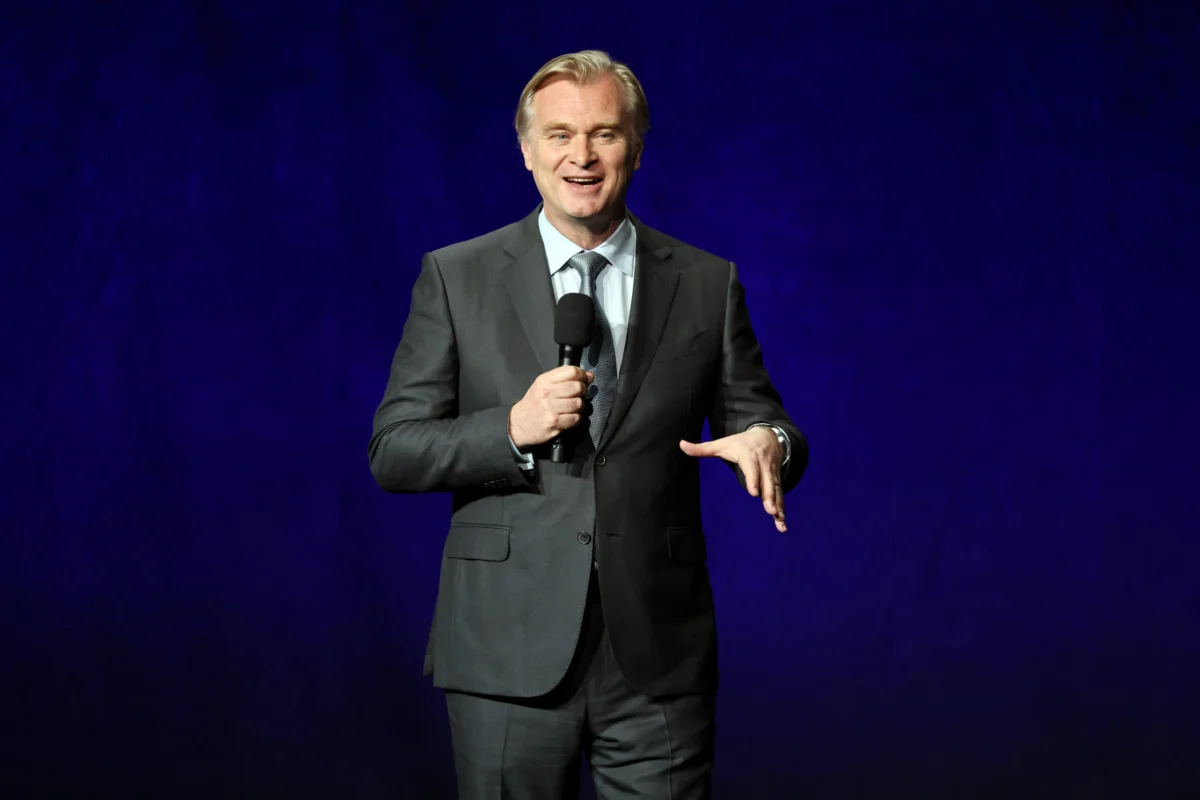
As the film industry gears up for the 99th Academy Awards, the conversation surrounding Christopher Nolan’s latest cinematic odyssey—fittingly titled The Odyssey—has taken a definitive turn. While industry pundits and die-hard cinephiles spent the latter half of 2026 speculating on a historic, record-breaking night for the visionary director, it has been officially confirmed that Nolan will not be pursuing a nomination in the Best Original Song category for the film’s haunting end-credits track, "When I’m Home."
The decision marks a pivot from early prognostications, which had suggested that Nolan might attempt to replicate the unprecedented four-statue sweep achieved by Sean Baker during the 2025 awards cycle for Anora. By stepping back from the song category, Nolan’s path to the podium is narrowed, though his presence at the 2027 Oscars remains one of the most anticipated narratives of the season.
The Genesis of the Speculation
Following the July release of The Odyssey, Gold Derby’s initial analysis suggested that the film was positioned to become a dominant force at the 99th Academy Awards. With a sweeping narrative scope and the technical precision synonymous with Nolan’s filmography, analysts forecasted a total of four potential nominations: Best Picture, Best Director, Best Adapted Screenplay, and Best Original Song.
The interest in the latter category was fueled by the unconventional pedigree of the track "When I’m Home." The song features a powerhouse lineup of collaborators, including Academy Award-winning composer Ludwig Göransson, acclaimed singer-songwriter James Blake, and hip-hop icon Travis Scott, who portrays "The Bard" within the film’s diegetic world. The composition’s lyrics incorporate lines of dialogue spoken by Scott in the film—lines penned by Nolan himself. This artistic overlap invited comparisons to director Jacques Audiard, who successfully navigated the Academy’s complex songwriting criteria to share a Best Original Song Oscar for his contributions to the lyrics of "El Mal" from Emilia Pérez.
The Mechanics of Academy Eligibility
The decision to remove Nolan from the songwriting credits for awards consideration is rooted in the rigorous and often opaque policies of the Academy of Motion Picture Arts and Sciences regarding the Music Branch.
According to official Academy rules, the Best Original Song category is subject to strict limitations:

- The Two-Statue Standard: No more than two statuettes are typically awarded for a single song.
- The Three-Writer Exception: A third statuette may be granted if the Music Branch Executive Committee determines there are three "essentially equal" contributors.
- The Rare Fourth: A fourth statuette is only permitted in "a very rare and extraordinary circumstance," a threshold that is rarely met and even more rarely requested.
By submitting only Göransson, Blake, and Scott as the primary songwriters, the team behind The Odyssey has avoided the bureaucratic friction that would have been required to petition for a fourth statuette for Nolan. It appears that the director, ever the pragmatist regarding his own work, chose to defer to his collaborators, allowing the song to be judged on its own merits rather than as a vehicle for his own personal award tally.
Chronology of a Creative Collaboration
The creation of "When I’m Home" was a process of organic collaboration that mirrored the film’s production cycle.
- Mid-2025: During the principal photography of The Odyssey, Travis Scott was cast as "The Bard," a character tasked with grounding the film’s more abstract, mythic themes. Nolan, known for his hands-on approach to scriptwriting, integrated the character’s poetic dialogue into the fabric of the film’s internal lore.
- Late 2025: As post-production commenced, the idea of a musical coda began to take shape. Ludwig Göransson, Nolan’s frequent collaborator, brought in James Blake to help refine the sonic landscape.
- Early 2026: The track was finalized, blending Nolan’s scripted lyrical elements with the experimental production styles of Blake and Scott.
- July 2026: The Odyssey debuted to widespread critical acclaim. Within weeks, the buzz surrounding the film’s technical prowess—specifically its sound design and music—led to widespread speculation about an Oscar sweep.
- December 2026: The official decision to exclude Nolan from the song submission was finalized, streamlining the campaign strategy for the 99th Academy Awards.
Supporting Data and Industry Context
Why does this matter in the broader scope of the 2027 race? In recent years, the intersection of film and music has become a strategic battleground for awards season. The "Best Song" category often serves as a barometer for a film’s cultural footprint.
For Nolan, who has long been recognized for his mastery of sound and visual storytelling, the song was never a vanity project, but rather a thematic extension of the film’s narrative. However, the optics of "pulling a Sean Baker"—a reference to the sheer volume of awards won by Anora—carry a certain weight in Hollywood. By opting out, Nolan effectively signals that his campaign focus remains on the "Big Three": Picture, Director, and Screenplay.
Statistical trends show that directors who focus their campaigning efforts on the core cinematic categories often fare better with the Academy’s voting body, which sometimes views "multi-hyphenate" nominations with skepticism unless the contribution is deemed purely foundational. By bowing out of the song race, Nolan maintains the gravitas of his directorial campaign, avoiding the potential perception that he is "padding" his resume.
Official Responses and Internal Logic
While there has been no formal press release from the Nolan camp regarding the decision, insiders suggest that the director was entirely "copacetic" with the arrangement. In the high-stakes environment of the Oscars, where every nomination is a hard-fought battle, the decision reflects a level of professional maturity.

For the collaborators—Göransson, Blake, and Scott—the decision is a boon. It allows the Academy voters to evaluate the song as a product of these three specific musical minds, without the distraction of a "Christopher Nolan credit." It allows the song to be judged by its melodic structure, its production, and its emotional resonance, rather than the political weight of its writer-director.
Implications for the 99th Academy Awards
With the news confirmed, the landscape of the 99th Academy Awards is starting to crystallize. Nolan is effectively locked into three primary categories. This shift in the Odyssey campaign strategy has several implications:
- Focused Narrative: The campaign can now focus exclusively on the film’s structural and directorial merits. This is essential, as the competition in the Best Picture and Best Director categories is shaping up to be among the most competitive in the last decade.
- The "Three-Nod" Ceiling: While some might see three nominations as a reduction from the initial "four-nod" dream, it remains an enviable position for any filmmaker. It ensures that Nolan remains a central figure in the conversation without the added pressure of potential "over-nomination" backlash.
- A Clearer Path for Competitors: By vacating a potential spot in the Best Song category, Nolan has opened the door for other musical artists and films to vie for the nomination. This, in turn, creates a more diverse field in a category that has recently been dominated by high-profile pop-culture crossovers.
Conclusion: A Master at Ease
Ultimately, the news that Christopher Nolan will not be competing for a Best Original Song Oscar for The Odyssey is less about what he is losing and more about what he is choosing to protect. A director of his caliber does not need to win in every category to solidify his legacy.
As we look toward the 99th Academy Awards, the focus returns to the work itself. Whether or not he takes home the gold for Picture, Director, or Screenplay remains to be seen. But one thing is certain: Christopher Nolan’s legacy is not built on a single song, but on the enduring power of his storytelling. He has proven time and again that he is willing to let the work speak for itself—even when that means stepping back from the spotlight to let others share in the acclaim.
As for the fans and critics who were hoping for a four-statue record-breaker? They will surely be satisfied with three. After all, when you are Christopher Nolan, three Oscar nominations is more than enough to confirm your status as one of the defining voices of modern cinema.
 Asro
Asro
 Nana Wu
 Evan Lee Salim
