

For the past three years, the annual Fashion’s New Guard report has served as a vital international compass, mapping out the most inventive, disruptive, and promising design voices from across the globe. Conceived by fashion editors as a mechanism for early discovery, the franchise transcends the mere sport of predicting "the next big thing." Rather, it offers a deliberate platform for emerging creatives whose vision outpaces their resources, aiming to validate the exhausting, high-stakes reality of building a luxury house from the ground up.
Behind every boundary-pushing debut lies an ecosystem of long hours, creative gambles, financial sacrifices, and an unwavering belief in an aesthetic before the broader market has learned to articulate it. These eight independent designers—hailing from Toronto, Caracas, Mexico City, Paris, Amsterdam, Tokyo, and New York—operate far outside the safety nets of heritage conglomerates. Yet, through distinct regional perspectives and hyper-intentional supply chains, they are laying the groundwork for a more thoughtful, narrative-driven fashion landscape.
Main Facts: The 2026 Global Cohort
The latest iteration of Fashion’s New Guard spotlights eight distinct labels whose founders range from veterans of legacy European ateliers to self-taught artisans leveraging local heritage. Operating on timelines that span from brands founded within the last seven years to micro-labels launched just twelve months ago, this cohort rejects cookie-cutter commercialism in favor of world-building.
The geographical and creative spread is expansive:
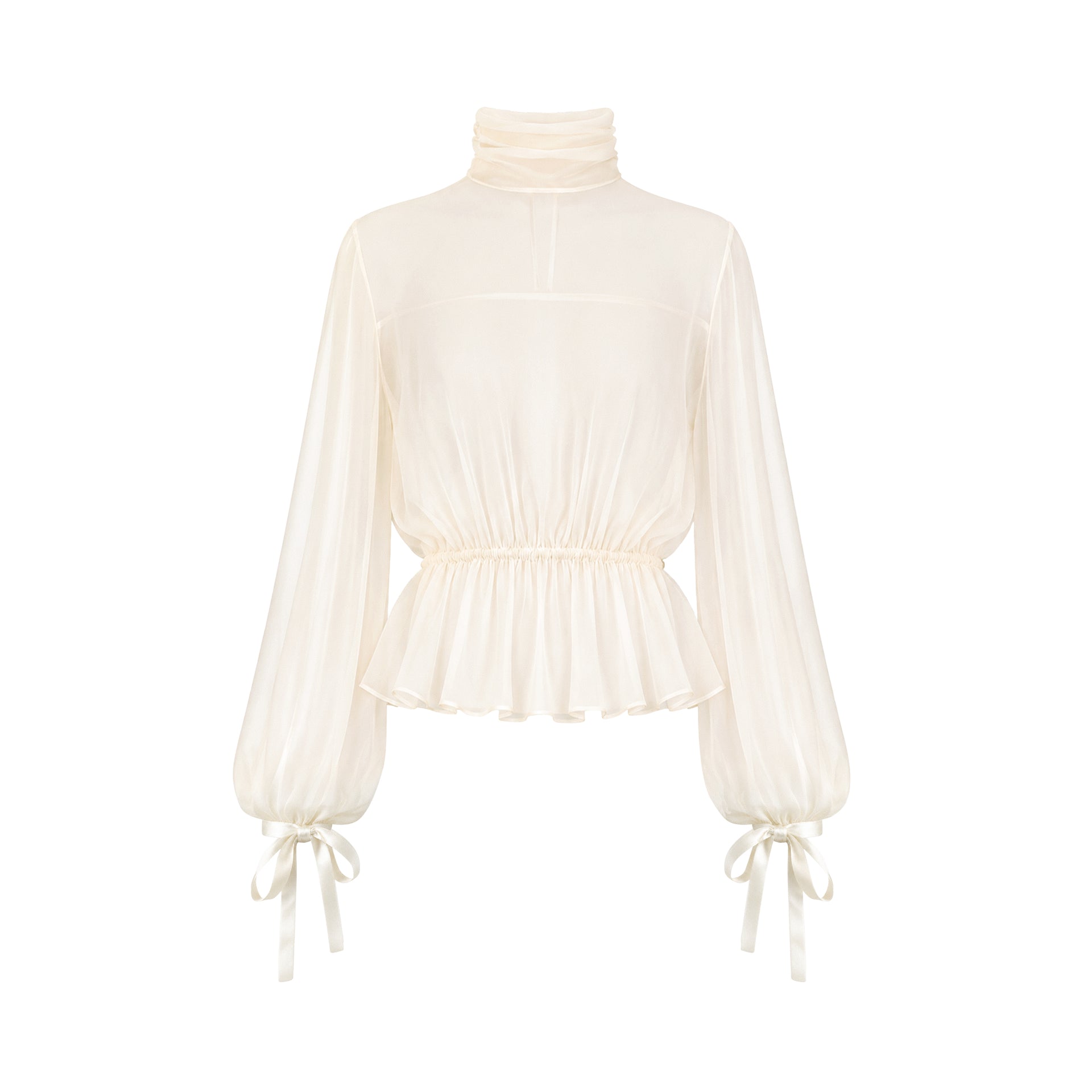
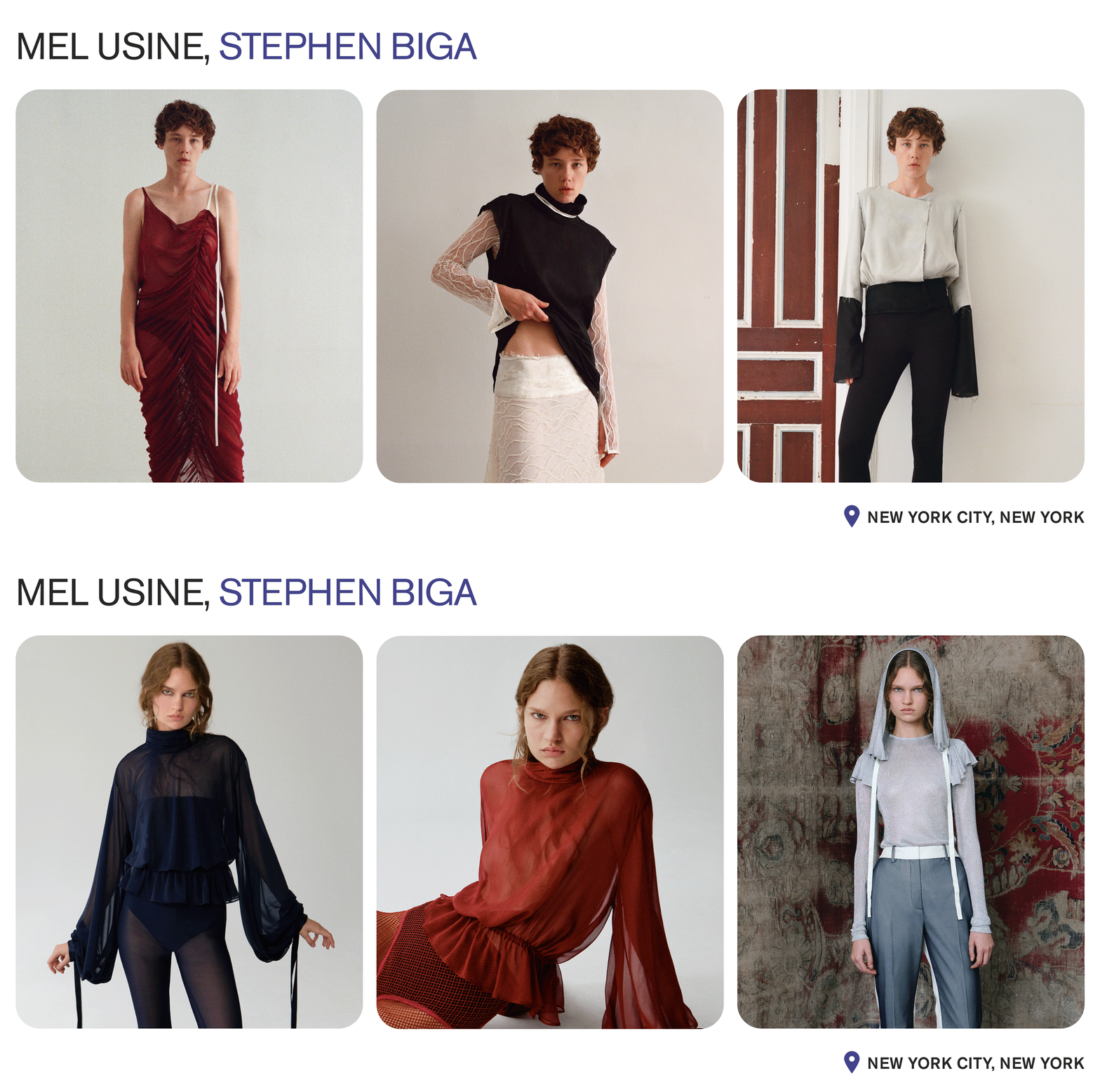
- Mel Usine (New York): Founded by Parsons alumnus Stephen Biga, blending medieval French lore with modern New York street style.
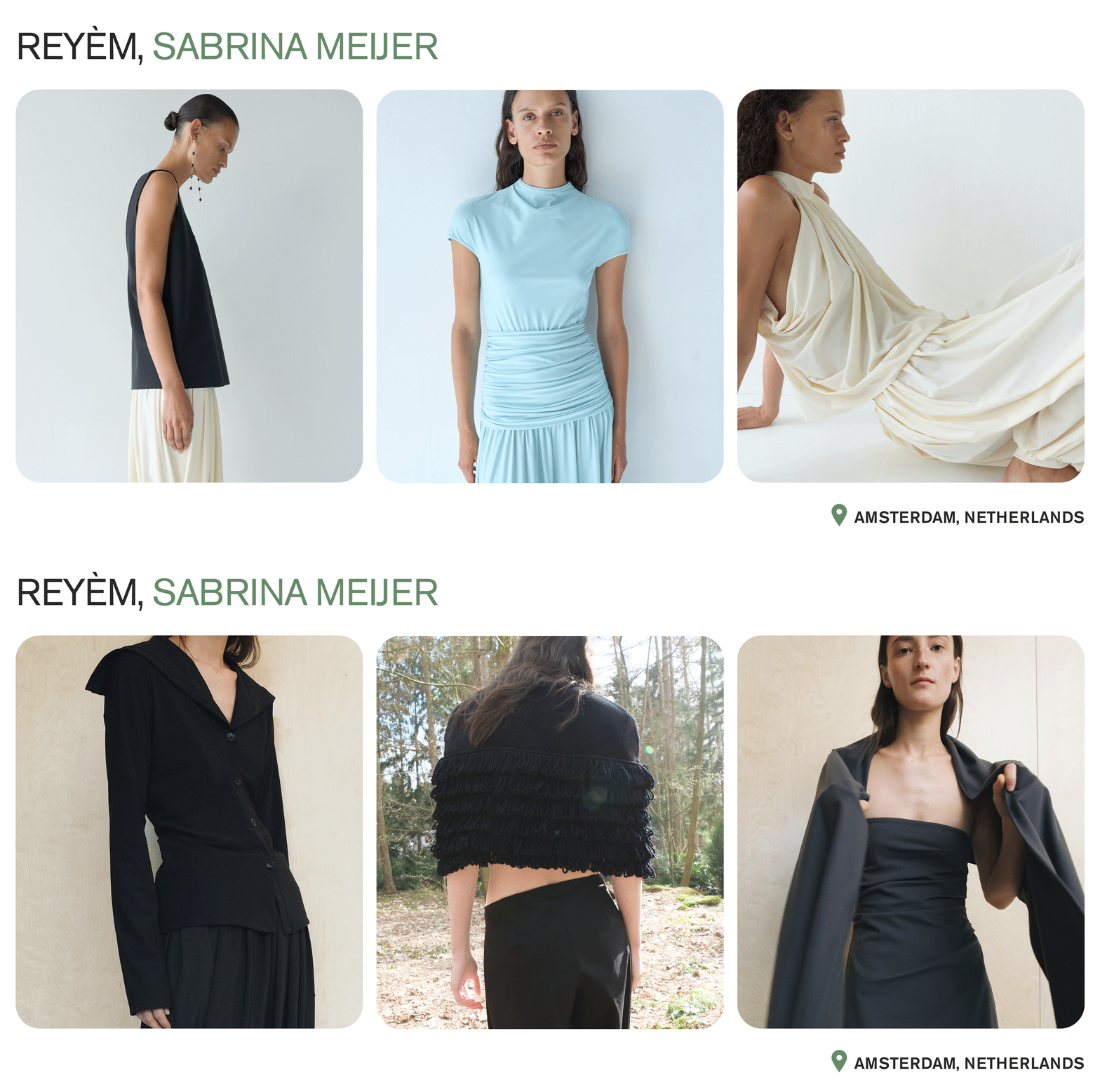
- Reyêm (Amsterdam): Founded by Sabrina Meijer, merging ’90s minimalism with technical, Oeko-Tex-certified Italian jersey.
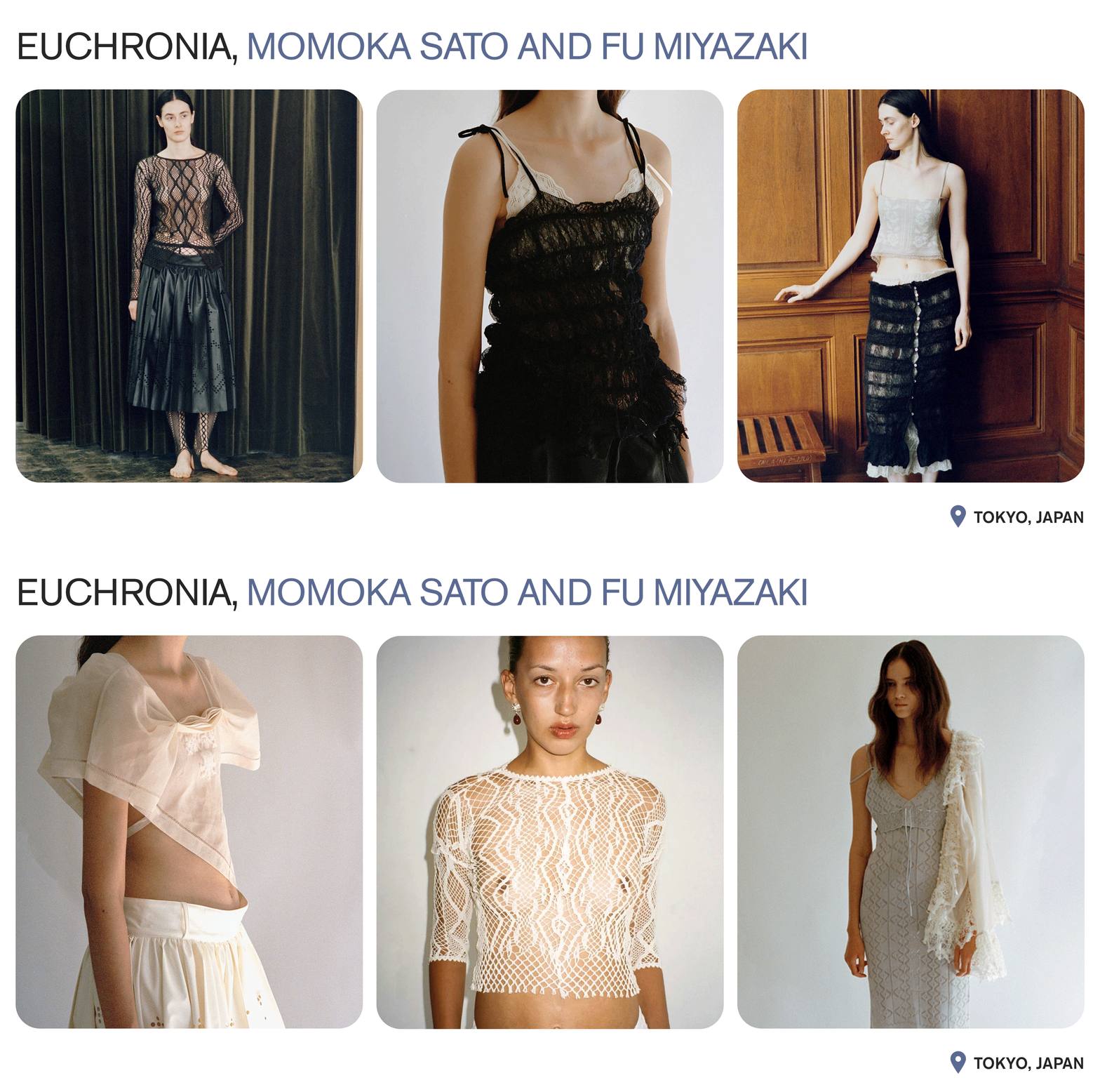
- Euchronia (Tokyo): Founded by Momoka Sato and Fu Miyazaki, functioning as an artisanal lace collective rooted in the Japanese philosophy of wabi-sabi.
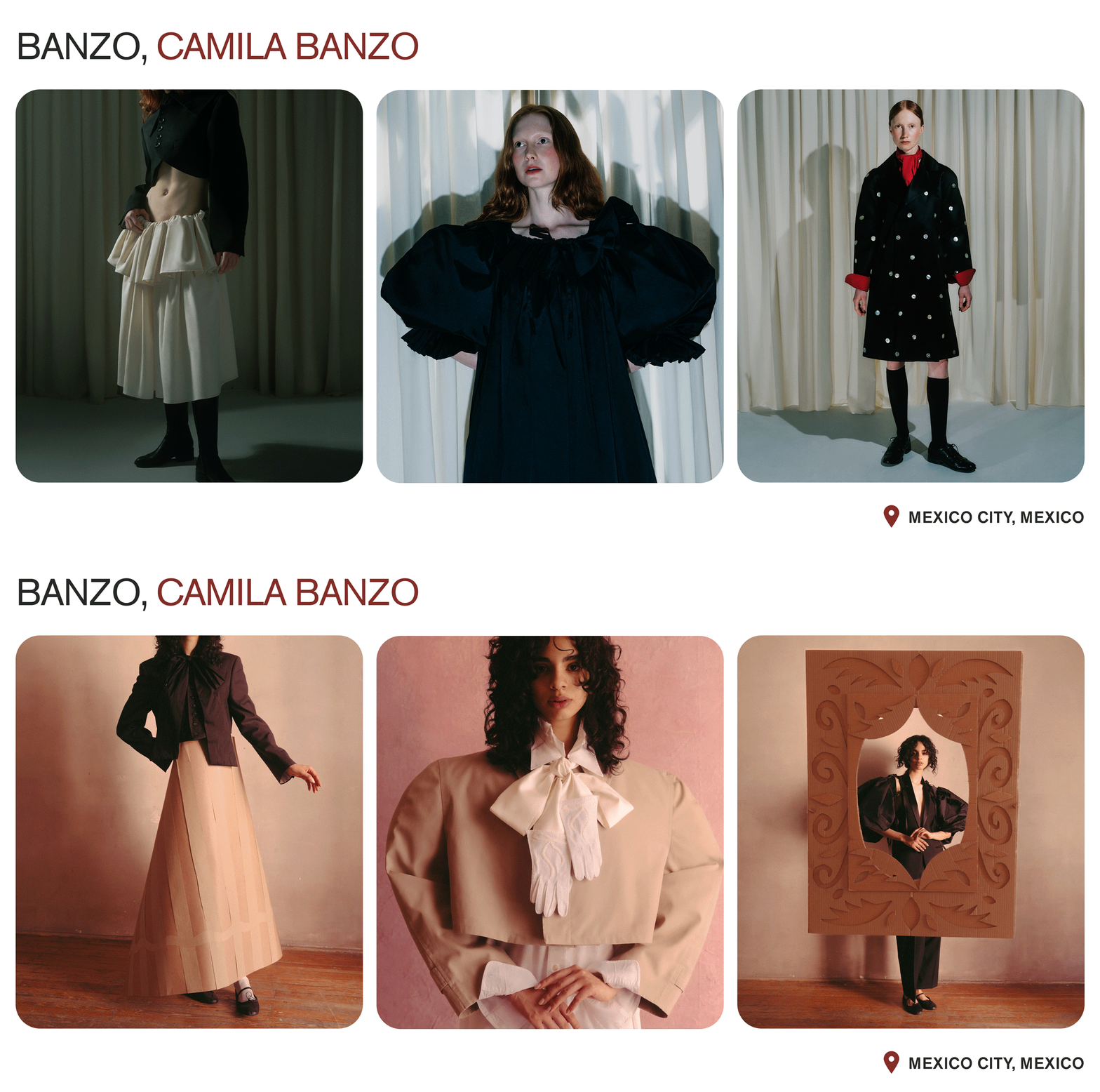
- Banzo (Mexico City): Founded by Camila Banzo, turning the luxury paradigm on its head through zero-waste upcycling and surrealist construction.
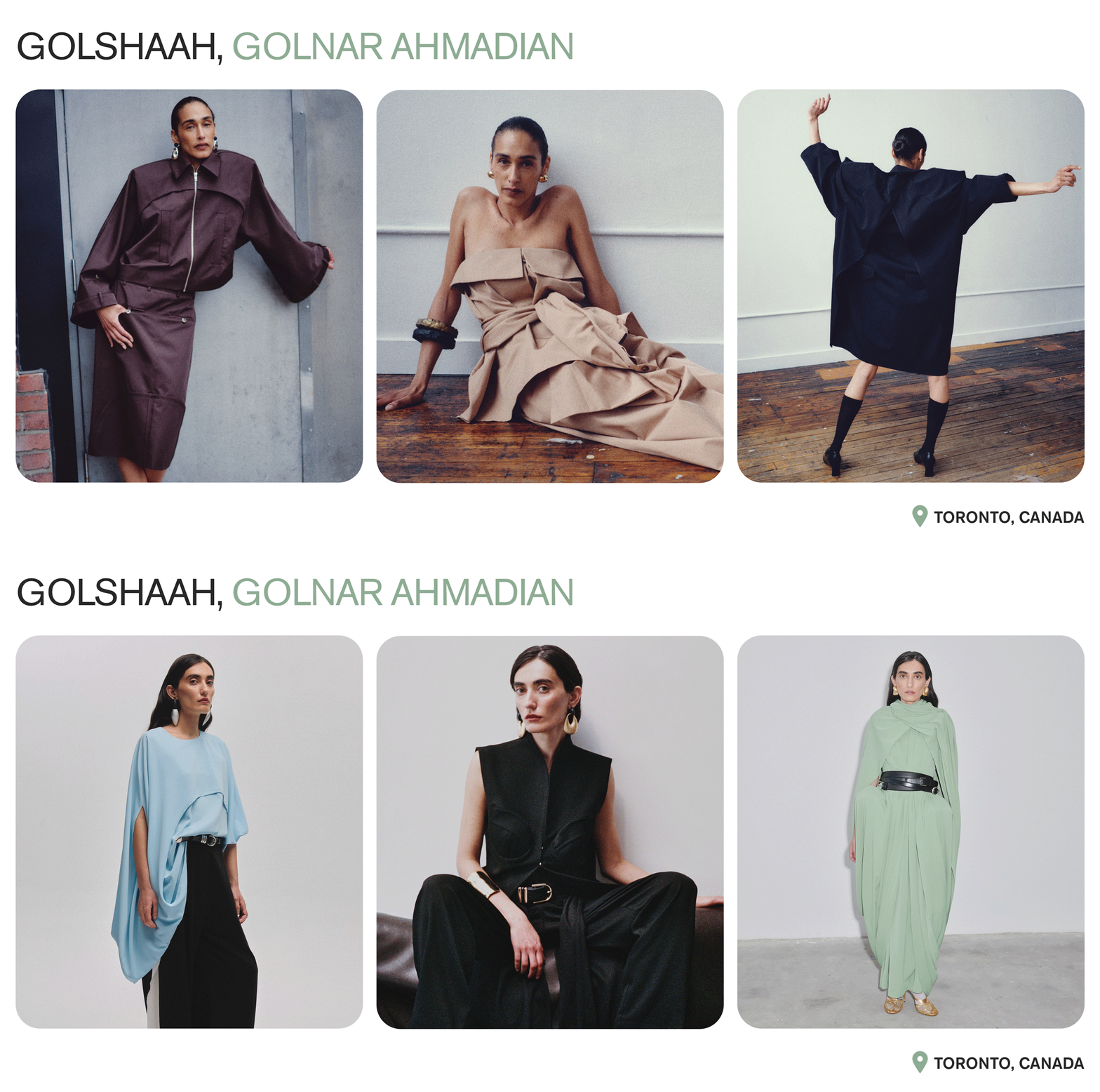
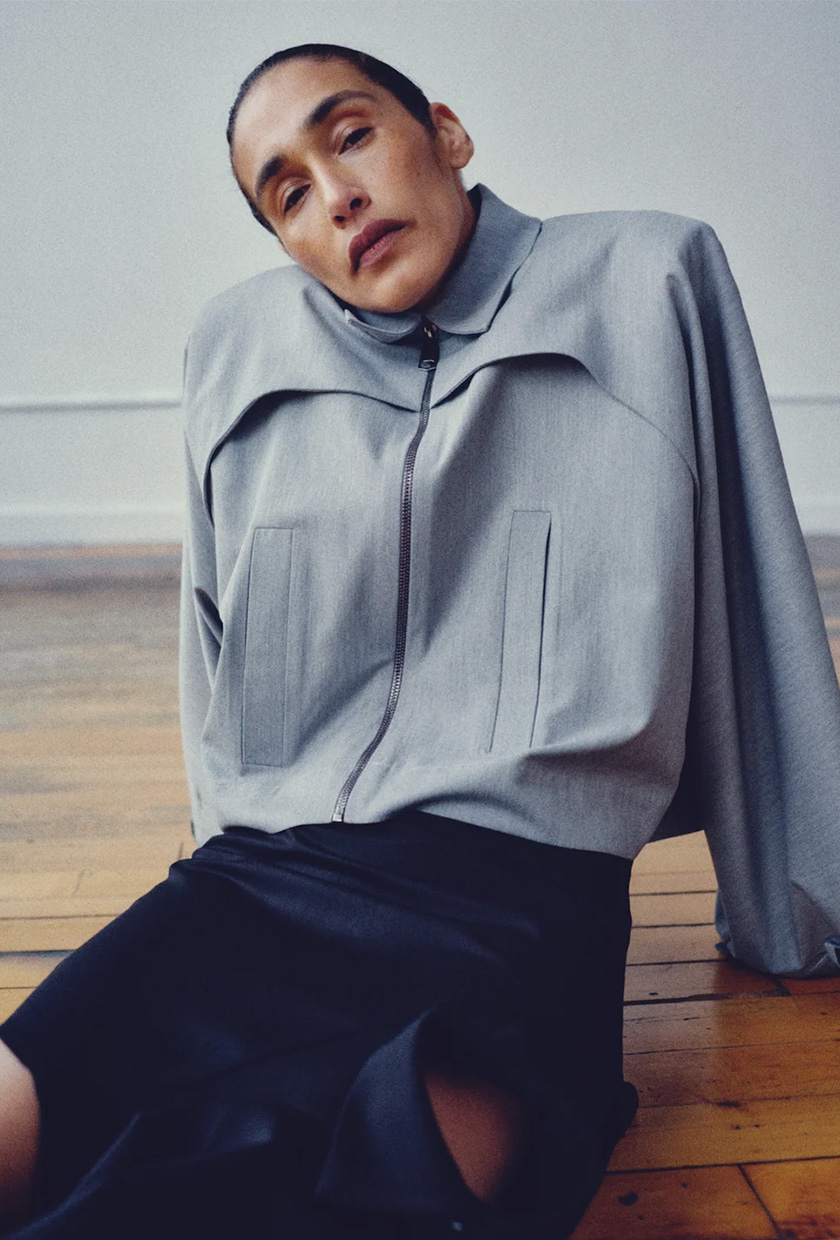
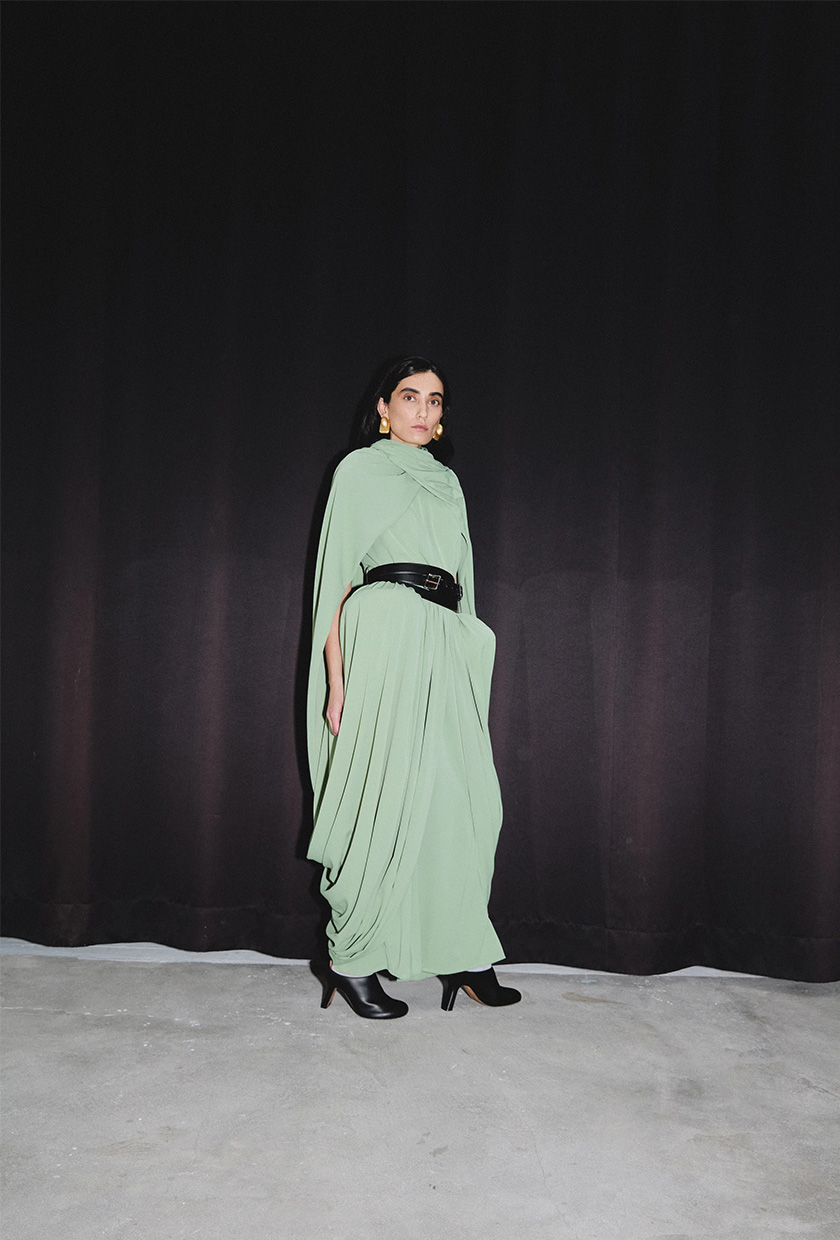
- Golshaah (Toronto): Founded by Golnar Ahmadian, an architectural, Iran-born designer and LVMH Prize semifinalist known for sculptural tailoring.
- Puerta Negra (Caracas): Founded by Catalina Quintana, exploring Venezuelan memory, architecture, and romanticized history.
- Thuylầm (New York/Los Angeles): Founded by Mikayla Tseng, an athlete-turned-designer creating delicate, small-batch luxury produced in Northern Italy.
- Leïna de La Valette (Paris): Founded by an alumnus of Chloé and Givenchy, bridging French elegance, Japanese craft, and Brazilian sensuality using vintage silk and kimono deadstock.
Chronology of Emerging Disruption
The trajectories of these designers trace unconventional pathways, reflecting how the contemporary fashion pipeline has fractured away from traditional corporate channels.
The Formative Years and Accidental Launches
- Early Inspirations (Childhood to 2010s): For many in this class, the seed of design was planted early. Momoka Sato won a quilting competition at age 10 in Japan; Camila Banzo received her first sewing machine at 12; Leïna de La Valette identified her calling as a seven-year-old in Brazil surrounded by her grandmother’s patternmaking school and silk factory. Meanwhile, Stephen Biga of Mel Usine was commuting into Manhattan on Saturdays during high school to take classes at FIT.
- The Pivot to Independence (2019–2023): Sabrina Meijer launched Reyêm in Amsterdam in 2019 to bridge the gap between comfort and elegance. In 2021, amidst pandemic lockdowns, Camila Banzo began deconstructing vintage garments from her Mexico City shop La Vintaje, giving birth to Banzo. By 2022 and 2023, Golnar Ahmadian established Golshaah after working in architecture and accessories, while Momoka Sato launched Euchronia, formalizing a half-decade study of bobbin lace.
Recognition and Global Milestones
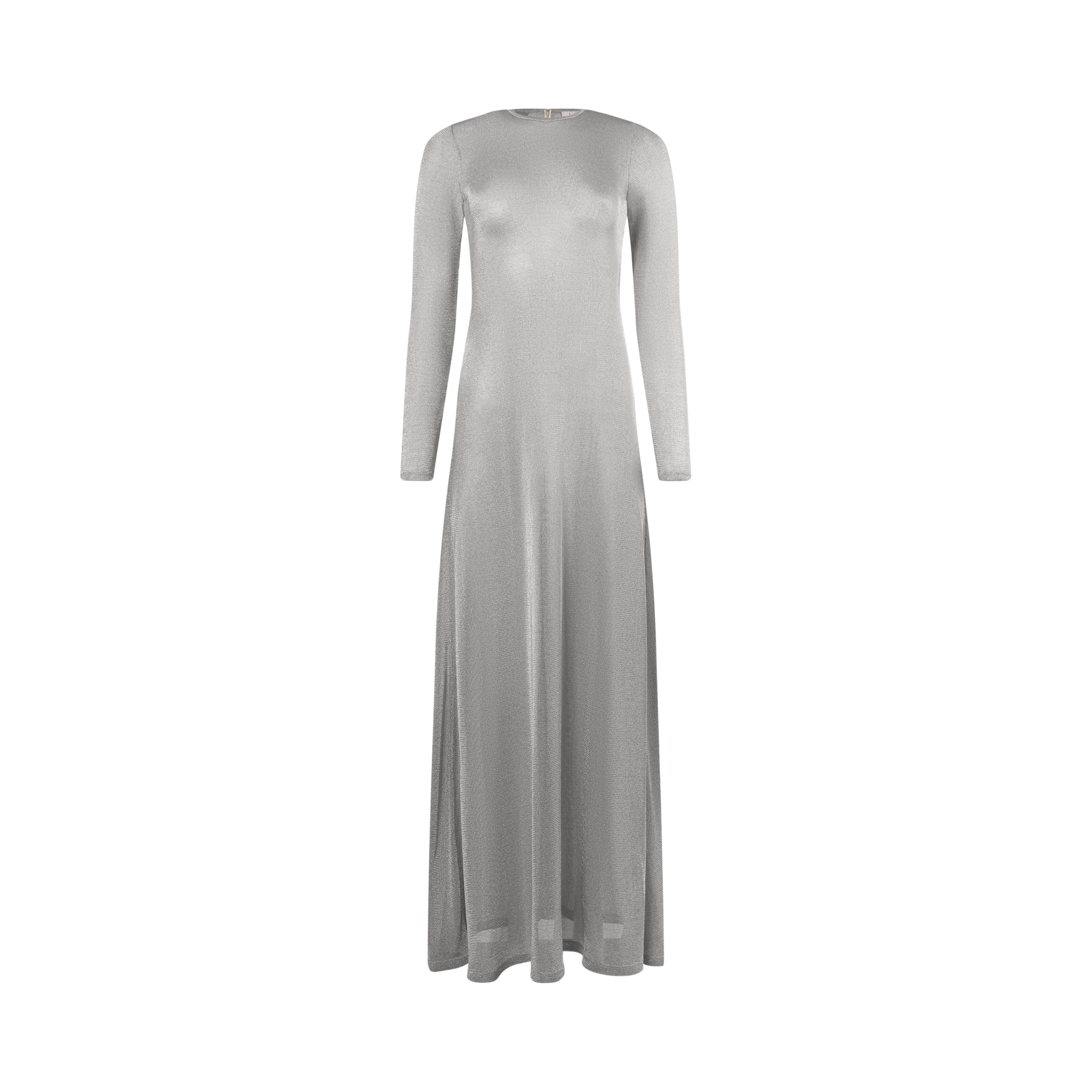
- The 2025–2026 Breakthroughs: Mel Usine made a massive splash with its S/S 25 collection, quickly catching the eye of celebrities like Gracie Abrams—who wore the brand’s Veronique chain-mail knit gown for her Vogue summer cover shoot. Simultaneously, Golshaah garnered international critical acclaim, being named a semifinalist for the prestigious 2026 LVMH Prize alongside winning the Emerging Talent Award at the Canadian Arts & Fashion Awards (CAFA).
- The Horizon (2026–2027): This current period marks aggressive institutional and structural growth. Leïna de La Valette was selected for the AZ Academy Business for Designers program (sponsored by Richemont and Accademia Costume & Moda) and is preparing for her private Paris atelier launch in September 2027. Concurrently, Thuylầm is gearing up for its largest collection yet for Spring/Summer 2027, shifting production entirely to a specialized family-run mill in Northern Italy.
Supporting Data & Economic Realities
While the runway imagery of these brands is rooted in poetry, myth, and high-art references, their operational models are anchored by pragmatic, hard-nosed economic realities. The transition from creative expression to viable enterprise requires exhaustive fiscal discipline.
Supply Chain and Sustainability Metrics
- Localized and Circular Production: Sustainability for this new guard is not a marketing buzzword; it is an economic necessity dictated by scale. Banzo utilizes 100% pre-existing vintage materials, entirely bypassing traditional carbon-heavy supply chains. Leïna de La Valette sources exclusive textile leftovers from French ateliers and antique kimono silks from Japan.
- Technical Innovation: Reyêm relies on a single signature fabric: Italian recycled, Oeko-Tex-certified stretch jersey originally engineered for sports and swimwear. The fabric is durable, quick-drying, matte-finished, and UV-protective, allowing for zero-crease longevity.
- European Artisanship: Brands like Reyêm and Thuylầm anchor their manufacturing in Portugal and Northern Italy, maintaining tight-knit, direct relationships with family-run mills to ensure short lead times, rigorous quality control, and zero overproduction through small-batch releases.
Financial Viability Insights
The founders are candid about the financial architecture required to sustain an independent label in a saturated market:
- The Spreadsheet Reality: Sabrina Meijer of Reyêm offers blunt counsel to aspiring founders: "Do you love numbers? That’s genuinely the first question I ask anyone who tells me they want to start a brand… If you don’t get your numbers right, you don’t have a business. You have an expensive hobby."
- Strategic Forecasting: Meijer emphasizes building a financial model for future distribution models—such as wholesale margins—from day one, ensuring the brand can absorb sudden retail opportunities without breaking unit economics.
Official Responses: Voices from the Studio
When asked about the philosophies driving their houses, these designers emphasize authenticity, multicultural identity, and deep intellectual engagement over fleeting digital trends.
- On Myth and World-Building (Stephen Biga, Mel Usine):
"The Mel Usine world is romantic but mysterious. It is feminine but not fragile. It is historical yet modern… Plan, plan, plan. Understand your world and what you’re trying to say before thinking about how it translates to the market. If it already exists, pivot."
- On Memory and Material (Momoka Sato, Euchronia):
"The concept of the brand is ‘memory x lace.’ Throughout history, lace has often appeared during life’s most memorable moments… Through Euchronia, I explore themes such as precious memories, the delicacy of lace, and the Japanese aesthetic of wabi-sabi."
- On Multicultural Synthesis (Leïna de La Valette):
"I’m trying to create an aesthetic that reflects my multicultural identity: French elegance, Japanese philosophy, and Brazilian sensuality. My goal is to create bridges between these three continents and develop a hybrid language that balances these three influences."
- On Resilience and Identity (Golnar Ahmadian, Golshaah):
"As an emerging designer, I entered an industry where I had to learn many things along the way… The answer to pursuing anything today is to stay true to yourself and trust your instincts. Believe in what you feel will work for you."
Implications for the Future of Global Fashion
The rise of this global cohort signals a structural shift in how luxury is defined, valued, and consumed. For decades, the industry’s economic gravity pulled relentlessly toward mega-conglomerates based in traditional European capitals, favoring massive production volumes and algorithmic trend-chasing.
The success of Fashion’s New Guard points to several critical implications for the future:
- Decentralization of Creative Power: By proving that viable luxury houses can be launched and scaled from Caracas, Toronto, Mexico City, and Amsterdam, these designers are breaking the monopoly of traditional fashion capitals. Their local environments—whether the surrealist chaos of Mexico City or the cycling-friendly weather of Amsterdam—directly inform functional, highly distinctive design solutions.
- The Death of Fast-Paced Conformity: Founders like Camila Banzo and Mikayla Tseng warn against the trap of chasing micro-trends. By prioritizing slow growth, self-funding, and small-batch production, these brands insulate themselves against the burnout and inventory waste plaguing larger commercial players.
- Intellectual Rigor as a Differentiator: Consumers are increasingly fatigued by superficial branding. When a dress by Mel Usine is rooted in medieval French river nymph folklore, or a garment by Euchronia is informed by the choreography of Pina Bausch and antique lace dissection, the consumer is buying into an intellectual narrative.
Ultimately, these eight designers demonstrate that the future of fashion does not belong to those who shout the loudest in the digital town square. It belongs to those who build quiet, resilient worlds from the ground up—balancing artistic integrity with rigorous financial literacy, and transforming personal heritage into global resonance.
 Ammar Sabilarrohman
 Muslim
 Dwi Wanna
