

The landscape of podcasting is undergoing a seismic shift. As the medium matures, the traditional reliance on static audio RSS feeds is being challenged by a new, visual-first reality. With YouTube emerging as a primary search engine for discovery and listeners increasingly demanding a multi-sensory experience, creators are finding that the "audio-only" era is rapidly becoming a relic of the past.

This transformation is not merely about adding a camera to a recording studio; it is about the fundamental restructuring of how content is produced, distributed, and consumed. As platforms like Podeo.ai change the barrier to entry for video production, the industry is entering a high-stakes race to capture audience attention through dynamic visual storytelling.
Main Facts: The Visual Pivot
For years, the podcasting industry operated under the assumption that audio was an intimate, "eyes-free" medium—perfect for commuting, exercising, or performing household chores. However, data from 2026 confirms that YouTube has ascended to the top of the podcast consumption hierarchy.

The primary driver of this trend is discovery. While traditional podcast directories are often criticized for their closed ecosystems and lack of social sharing capabilities, YouTube provides a robust algorithmic engine that propels new shows into the feeds of potential listeners.

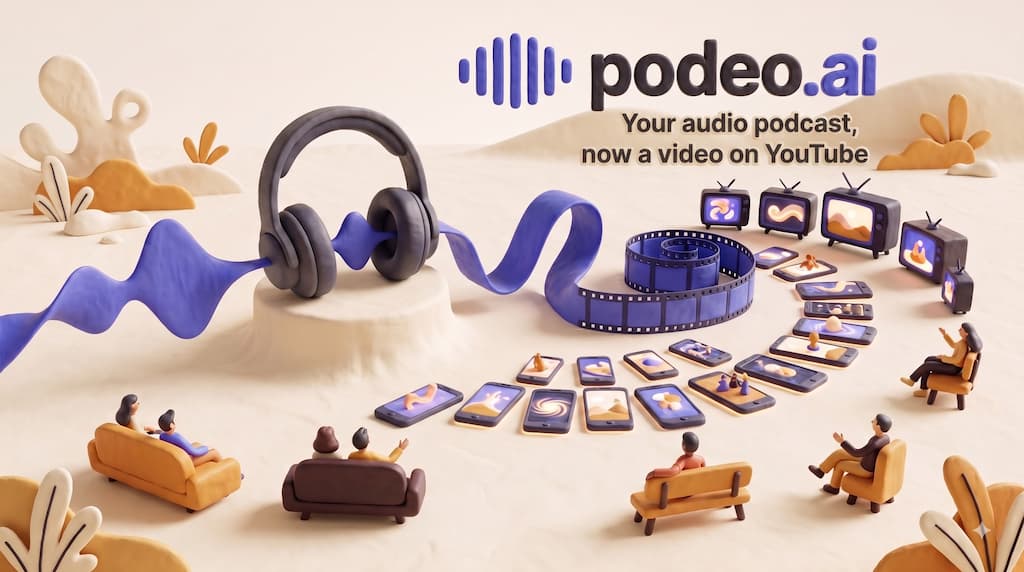
To bridge the gap between legacy audio production and modern expectations, tools like Podeo.ai are now offering automated solutions. By utilizing AI to analyze audio files and generate synchronized video assets—complete with stock footage, motion graphics, and contextual imagery—creators can now transform an hour-long audio episode into a polished video production in roughly 20 minutes. This shift allows independent creators to compete with major production houses, ensuring that "audio-first" shows are not left behind in the video-centric algorithm.

A Chronology of Consumption: From Radio to AI-Video
The journey of the podcast medium has been a rapid climb:

- 2004–2010: The RSS Foundation. Podcasting begins as a niche hobby for tech enthusiasts. The RSS feed is the undisputed king, and discovery is almost entirely word-of-mouth or through curated blogs.
- 2011–2018: The Golden Age of Audio. The release of shows like Serial cements podcasting as a legitimate cultural force. Platforms like Apple Podcasts dominate, but remain "black boxes" regarding user behavior and discovery data.
- 2019–2023: The Great Monetization. Big tech enters the fray. Spotify and Amazon invest billions in original content and exclusive licensing deals, pushing the industry toward a fragmented, platform-specific model.
- 2024–2026: The Visual Revolution. Video becomes the new standard. YouTube aggressively integrates podcasting features, including dedicated landing pages and RSS ingestion. The industry shifts from "listening" to "watching," with AI-generated video workflows becoming a standard tool for professional creators.
Supporting Data: The Current State of the Charts
Market data from October 2026 illustrates the dominance of major networks and the evolving nature of platform influence. In the United States, The Daily continues to hold the #1 spot on Apple Podcasts, signaling that news-centric content remains the bedrock of the medium. Conversely, The Joe Rogan Experience maintains its stronghold on the Spotify charts, highlighting how exclusive distribution deals and a strong visual component on video platforms drive massive, consistent engagement.

Regional success stories are also emerging as key indicators of market health. In Ireland, Shooting Star Unwrapped has made a significant impact as the highest new entry in the Non-Profit category, proving that niche, mission-driven content can still break through the noise if distributed effectively. In the United Kingdom, The Rest Is Science dominates the Science category, demonstrating that academic and deep-dive content is thriving in a climate that favors authoritative, long-form discussions.

The AI Implications for Creators
The introduction of tools like "Podeo Copilot" and "Podeo Director" marks a transition from manual editing to AI-assisted curation. The implications for the average podcaster are profound:

- Lowered Production Costs: Historically, video production required a dedicated crew, expensive lighting, and hours of post-production editing. AI-driven video generation reduces this cost to nearly zero, leveling the playing field.
- Increased Discoverability: Videos uploaded to YouTube are indexed by Google. This allows podcasts to surface in general web searches, a feat that is notoriously difficult for standard audio-only RSS feeds.
- The "Punchier Intro" Mandate: As video content is often consumed in short, high-energy bursts, creators are being forced to rethink their show structures. AI tools that suggest "punchier intros" are guiding creators toward more efficient pacing, which inadvertently improves retention rates even for the audio-only versions of their shows.
However, this reliance on AI also brings risks. As the market becomes flooded with AI-generated video content, the "human touch" becomes the ultimate premium. Creators who use AI to handle the technical heavy lifting must work twice as hard to ensure their editorial voice and personality remain authentic.

Industry Perspectives: The Human Voice in an AI World
The current season of the podcast High Notes tackles the elephant in the room: the AI voice. As technology improves, the line between human and machine performance blurs. This shift isn’t just about production efficiency—it is about the ethical implications of using synthetic voices to replicate human emotion.

Industry experts suggest that as AI becomes more capable, legal frameworks will struggle to keep up. Performers, voice actors, and even casual content creators are now facing a reality where their vocal likeness can be licensed, protected, or exploited. This tension between innovation and protection is expected to be the defining conversation of the next three years.

Implications for the Future
What does this mean for the future of podcasting? The industry is likely to split into two distinct tiers:

- The Cinematic Tier: Major shows that embrace high-production video, multi-camera setups, and live-streamed elements. These shows will prioritize the YouTube/TikTok/Instagram Reels ecosystem.
- The Authentic Tier: Shows that lean into the "raw audio" aesthetic, focusing on intimacy and community interaction. These creators will survive by cultivating deeply loyal fanbases who value the unpolished, authentic connection that video often obscures.
For the independent creator, the advice is clear: Do not ignore the visual signal. Even if you are not ready to film a full studio production, utilizing AI-driven video tools to repurpose your audio into visual content is no longer optional—it is a necessity for growth.

As we move toward the end of 2026, the metrics of success have changed. It is no longer just about download numbers; it is about cross-platform reach, social engagement, and the ability to convert an accidental YouTube viewer into a long-term, loyal listener. The RSS feed is still the heart of the podcasting industry, but the visual content is the face—and in the modern attention economy, the face is what people notice first.

For those looking to expand their reach, the tools available today offer a unique opportunity to experiment. Whether it is the documentary-style storytelling found in "American History Hit," the historical mysteries explored in "Zaskia," or the lighthearted village comedy of "Matters Arising," the medium of podcasting remains a vibrant, evolving space. As the technology continues to shift, those who adapt to the visual-first mandate will likely be the ones who define the next decade of digital audio.
 rifanmuazin
 Evan Lee Salim
 Reynand Wu
