

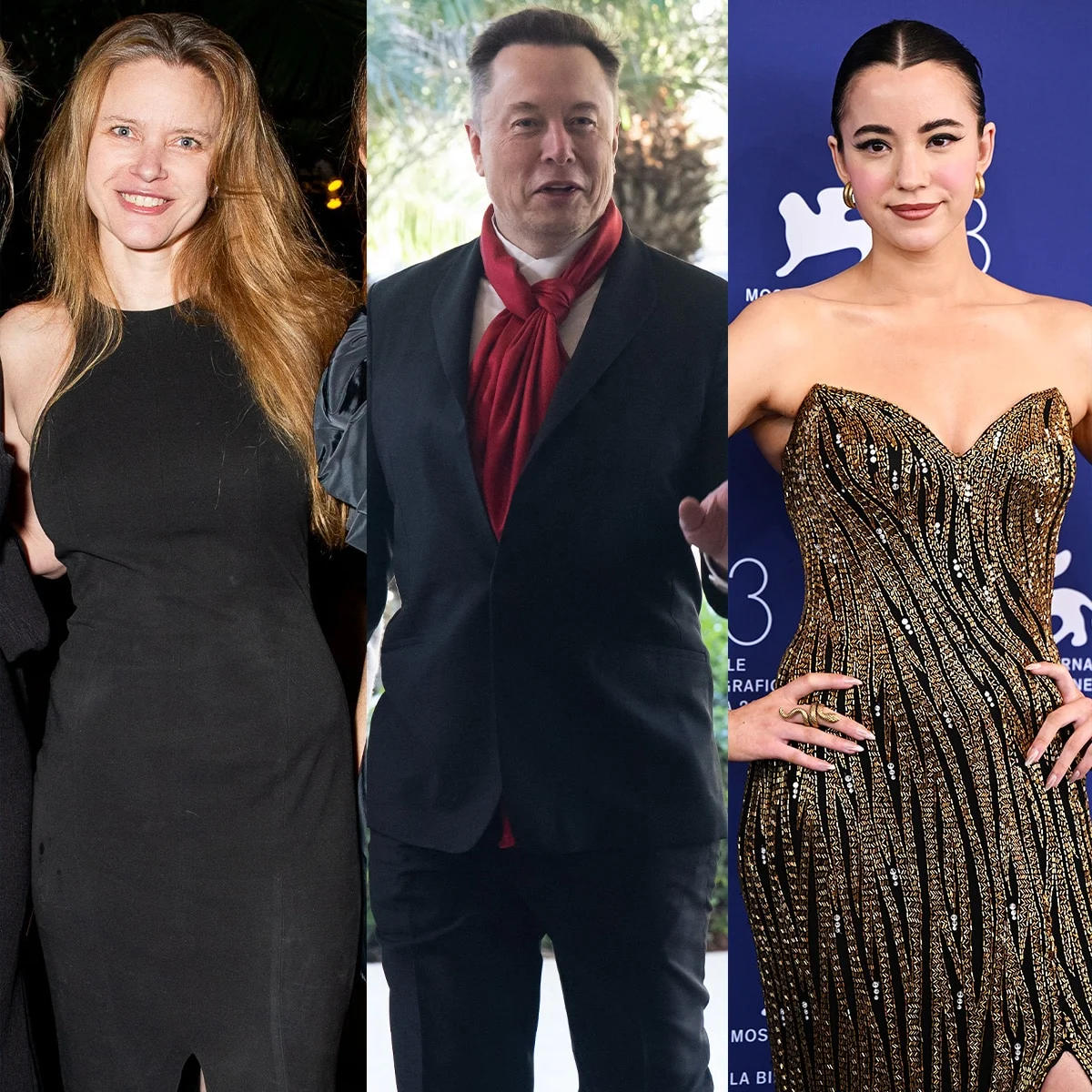
Elon Musk has long made his ambitions for humanity clear: he wants to colonize Mars, revolutionize energy, and secure the future of consciousness. However, a burgeoning narrative—crystallized in Alex Gibney’s 2026 documentary Musk—suggests that the billionaire’s drive to secure the future is as much biological as it is technological. With 14 known children across multiple high-profile relationships, Musk’s personal life has become a focal point of intense public scrutiny, characterized by a complex interplay of power, unconventional family structures, and a recurring pattern of rapid-fire reproduction.
The "Legion" Strategy: A Biological Imperative?
At the heart of the current conversation surrounding the SpaceX founder is a candid admission from his ex-girlfriend, Ashley St. Clair. In the documentary Musk, St. Clair reveals that the CEO’s desire to propagate is not merely a lifestyle choice but a deliberate, almost strategic, mission. According to St. Clair, Musk expressed a desire to "create a legion of children before the civil war," a sentiment that aligns with his public pronouncements regarding global population decline.
In 2024, Musk stated that having children is "the most optimistic thing that somebody can do." Yet, for those within his inner circle, this optimism appears to follow a rigid, almost industrial blueprint. Justine Musk, the billionaire’s first wife, describes the experience of being a partner to the entrepreneur as akin to being part of an "assembly line." She notes that individuals in his orbit have even referred to the mothers of his children as "the breeders," a label that underscores the detached, systematic nature of the relationships described in the film.
A Chronology of Uncoupling and Expansion
Musk’s romantic history is marked by intense beginnings and, frequently, abrupt conclusions. His trajectory reveals a man who balances world-altering business ventures with a deeply complicated domestic life.
- 2000–2008: The Foundation with Justine Musk. After selling his company, Zip2, for $307 million, Musk married his college sweetheart, Justine Wilson. The early days were described by Justine as "blissful," defined by simple rituals like reading in bookstores. However, the tragedy of losing their first child, Nevada, to SIDS in 2002, shifted their approach to life. In an attempt to heal, the couple turned to IVF, leading to the birth of twins Griffin and Vivian in 2004, followed by triplets Kai, Saxon, and Damian in 2006.
- The Post-Wealth Shift: As Musk’s wealth and global profile ballooned, Justine reports a marked shift in the power dynamic. She describes a growing sense of "contempt" and the emergence of "gaslighting" tactics, where conversations were reportedly manipulated to leave her disoriented. The marriage ended in divorce in 2008.
- The Modern Era: Since then, Musk has fathered children with musician Claire "Grimes" Boucher and Neuralink executive Shivon Zilis. Most recently, the public learned of the arrival of a child, Romulus, with Ashley St. Clair in late 2024. The dissolution of his partnership with Zilis—who publicly announced they had been "let go" personally, despite reports of a message of love just days prior—highlights the volatile nature of his private life.
Supporting Data: The Playbook of Influence
The Musk documentary provides an unsettling look at how the billionaire interacts with those closest to him. One of the most striking anecdotes comes from Ashley St. Clair, who recounted a night in a hotel room where Musk was falling asleep to an audiobook about Kublai Khan—the Mongolian emperor famous for fathering dozens of children with various wives and concubines. This historical fascination seems to mirror his current reality, with St. Clair remarking on the "Gatling gun of sperm" in his direct messages as he reportedly scouted for more partners to continue his legacy.
The financial and legal structures surrounding these relationships are equally revealing. St. Clair alleged that she was presented with a nondisclosure agreement, masked as a child support document, which offered a lump sum of $15 million and a monthly stipend of $100,000 for 21 years. She ultimately refused the deal, choosing instead to speak openly about her experience. Musk has vehemently denied these claims, stating on X that "she was never offered that and has a history of making false claims." St. Clair has pushed back, citing her pursuit of a law degree and the potential impact such allegations could have on her professional character requirements.
Official Responses and the "Hit Piece" Narrative
Elon Musk has remained characteristically vocal regarding his disdain for the documentary. Prior to its release, he dismissed the project as a "hit piece," a sentiment he reiterated after the film’s premiere at the Venice International Film Festival. Musk characterized the documentary as a "fatal sin of being boring for 4 hours" and argued that the interviewees were merely individuals with an "axe to grind."
When reached for comment regarding the specific allegations made by Justine Musk and Ashley St. Clair, Tesla’s public relations department did not provide a statement. However, Musk’s digital footprint serves as his primary defense. On X, he has previously defended his ex-wife Justine as an "amazing woman," even while simultaneously labeling the documentary participants as part of a "hit list" of detractors.
Implications: The Father, The CEO, and The Legacy
The implications of Musk’s personal choices extend beyond the headlines. As the wealthiest man in the world, his influence over technology and policy is undisputed; however, the testimonies regarding his personal life suggest a man whose internal world is as tumultuous as his professional one.
The Impact on the Next Generation
Justine Musk’s commentary on their daughter, Vivian Jenna, offers a sobering perspective on the intersection of public ideology and private family trauma. She describes the estrangement between Musk and his daughter—who came out as transgender in 2020—as a failure of empathy. According to Justine, while Musk publicly railed against the "woke mind virus," he made no attempt to bridge the gap with his own child. This suggests that for Musk, abstract ideologies often supersede individual, human relationships.
The "Dangerous Neighborhood" of the Mind
Perhaps most telling is Justine’s description of Musk’s childhood. She recalls that he often spoke of a "dangerous neighborhood" in his mind, referencing a habit of jerking awake in fear of violence. This psychological inheritance, coupled with his high-stakes career, may explain the "assembly line" approach to his family. By creating a large, controlled, and protected family unit, Musk may be attempting to mitigate the existential fears that have haunted him since his youth in South Africa.
A Legacy in Flux
The "legion" strategy, while framed as a noble effort to prevent population collapse, is increasingly viewed by critics as a mechanism for control. Whether one views Musk as a visionary protecting the future of the species or a man struggling to manage the human consequences of his own ego, one thing is certain: the private life of Elon Musk is no longer private. As the children involved in these high-profile unions grow older, the narrative of the billionaire’s "legion" will shift from one of biological ambition to one of complex familial legacy, with all the inherent joys and fractures that entails.
Ultimately, the documentary Musk serves as a stark reminder that even the men who build the future are bound by the past, and that no amount of engineering, wealth, or ambition can shield one from the messy, unpredictable nature of human connection.
 Lina Irawan
 Muslim
 Ammar Sabilarrohman
