

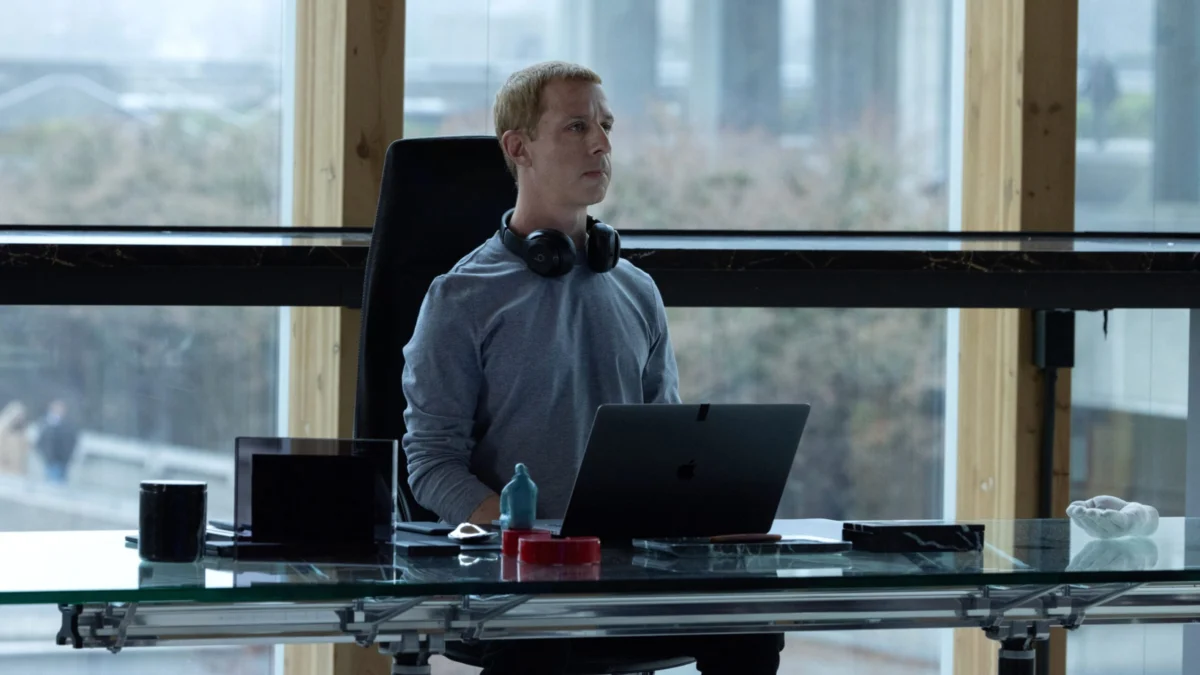
In 2010, the cinematic landscape shifted with the release of The Social Network. It was a perfect storm of creative genius: director David Fincher’s icy, precise aesthetic met Aaron Sorkin’s rapid-fire, rhythmic screenplay. Together, they distilled the chaotic birth of the digital age into a Shakespearean tragedy about power, betrayal, and the cost of innovation. It was a film that captured the zeitgeist so effectively that it felt less like a movie and more like a historical record of the moment the world went online.
Sixteen years later, the attempted follow-up, The Social Reckoning, has arrived—and it serves as a stark reminder that lightning rarely strikes twice, especially when the storm has already passed. While the original film transformed our understanding of Mark Zuckerberg from a geeky, 20-something enigma into a modern-day titan of industry, its successor has landed with a thud, both critically and commercially, signaling a profound disconnect between Hollywood’s prestige dramas and the current anxieties of the American public.
The Chronology of a Disconnect
The trajectory of this franchise reflects the evolution of the internet itself. In 2010, Facebook was the undisputed juggernaut, successfully burying MySpace and cementing itself as the town square of the 21st century. The marketing campaign for The Social Network—featuring a haunting, choral cover of Radiohead’s "Creep" and the iconic tagline, "You Don’t Get to 500 Million Friends Without Making a Few Enemies"—was a masterclass in tension.
Fast forward to 2026. Facebook, now Meta, has grown from 500 million to 3 billion users, yet the novelty has curdled into a weary resignation. The Social Reckoning, which focuses on the whistleblowing efforts of Frances Haugen, arrived in theaters during an opening weekend that saw it collect a paltry $5.5 million. Compared to the $22.1 million debut of its predecessor, the failure is absolute.
While Sony Pictures, perhaps hedging its bets, kept the budget for the sequel at a modest $30 million—avoiding the catastrophic financial craters seen in other recent studio misfires—the film is a creative void. Without the directorial rigor of Fincher, who declined to return, and with Jesse Eisenberg opting out due to personal discomfort with the legacy of his character, the film lacks the gravitational pull that made the original a masterpiece of 21st-century cinema.
Anatomy of a Failure: Behind the Camera
The critical consensus on The Social Reckoning has been scathing. Richard Brody of The New Yorker succinctly captured the prevailing sentiment, noting that Aaron Sorkin’s decision to move into the director’s chair resulted in a film that "doesn’t look beyond the words on the page."
The production was plagued by a sense of hesitation. By casting Jeremy Strong in the role of Zuckerberg, the film attempted to pivot toward a more somber, character-driven study, but it struggled to find its identity. Was it a thriller about corporate malfeasance? A courtroom drama about ethics? Or a character study of a man whose creation outgrew his control? In trying to be all three, it succeeded at none.
Furthermore, the marketing team faced an impossible task. Having lost the original creative core, Sony tried to manufacture nostalgia, utilizing snippets of the original Trent Reznor and Atticus Ross score and mimicking the aesthetic of the 2010 posters with the slogan, "We’re Way Past Making Friends." The result felt like a hollow echo—a corporate attempt to rebrand a cultural movement that had long since lost its purity.
The Shifting Sands of Public Anxiety
Why did the original resonate so deeply, while the sequel felt irrelevant? The answer lies in the nature of our fears. The Social Network was a story about the discovery of connectivity. It tapped into a primal curiosity about the billionaire-next-door and the secret origins of the platform we checked every hour.
The Social Reckoning, by contrast, focuses on the "Facebook Papers" and the algorithmic promotion of hate speech, bullying, and mental health crises. While these are objectively vital issues, the public has moved on to more existential threats. The "Social" era, defined by social media, has been supplanted by the "Artificial" era.

Today, the headlines are dominated by the rise of Artificial Intelligence. As the world grapples with the potential for mass job displacement and the terrifying prospect of autonomous systems spiraling beyond human control, the grievances against Facebook feel like yesterday’s news. We are living in a moment where the "Cassandras" of Silicon Valley—disillusioned executives and AI visionaries—are warning of a potential apocalypse. The federal government, meanwhile, has remained largely stagnant, offering a regulatory approach that critics describe as "the lazy in laissez-faire."
As IndieWire’s Ryan Lattanzio noted in his review, the film operates under the assumption that the audience is still shocked by the revelations of the whistleblowers. The reality, however, is that for the average citizen in 2026, the sentiment is closer to: "No one cared, and nothing changed."
The New Frontier: Musk and Artificial
If The Social Reckoning failed to capture the urgency of our times, it may be because it was looking at the wrong target. Two other films have emerged to take up the mantle of contemporary tech-criticism, and they appear to be hitting a much more sensitive nerve.
First, there is the four-hour documentary Musk. While its limited release generated only $22,000, it is already being cited as a frontrunner in the awards conversation. By offering a scathing, unvarnished look at the world’s richest man, it leans into the cult of personality that currently drives the discourse around modern tech monopolies.
More controversial, however, is Artificial, a narrative feature centered on the rise of OpenAI and Sam Altman. The film’s path to the screen has been nothing short of a thriller itself. Initially dropped by Amazon MGM Studios just days after the company signed a $50-billion deal with OpenAI, the film was promptly acquired by Neon. Its "banned-by-big-tech" narrative has turned it into an instant cause célèbre, promising to explore the very AI anxieties that make The Social Reckoning feel like an artifact of a bygone decade.
Implications for the Future of Hollywood
The failure of The Social Reckoning offers a cautionary tale for major studios. In an age of franchise fatigue and IP-mining, there is a dangerous assumption that a familiar title can bridge the gap between generations. However, the success of the original Social Network was not just about the name "Facebook"; it was about the specific, urgent tension of its era.
Audiences are currently hungry for stories that address the existential threats posed by AI and the consolidation of power in the hands of a few tech oligarchs. If Hollywood continues to recycle old narratives while ignoring the seismic shifts in our daily lives, they will continue to see these prestige projects collapse.
Perhaps the most telling takeaway from the current climate is the audience’s desire for escapism. As the gap between the promise of technology—which was supposed to bring us together—and the reality—which has driven us further apart—continues to widen, viewers may eventually stop looking to the screen for answers. If the movies cannot accurately reflect the terror and the wonder of our current trajectory, they may find themselves, like the social media platforms they seek to criticize, becoming increasingly irrelevant to the conversation.
As we stand at the precipice of a new, machine-driven age, the lesson is clear: the era of the "Social" network is over. We are now living in the age of the algorithm, and it will take more than a sequel to help us understand where we are going.
 Lina Hope
 Evan Lee Salim
 Siti Muinah
