

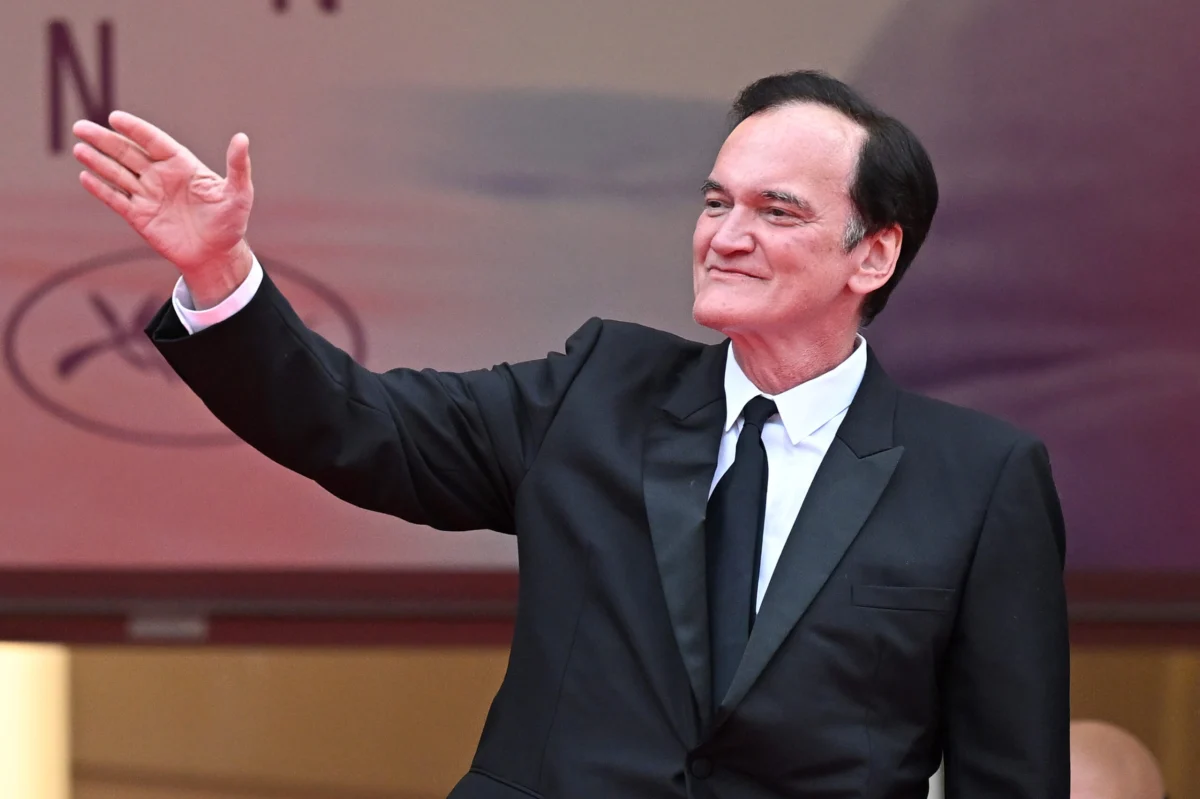
The Unlikely Migration: From Celluloid to the Stage
Shakespeare. Ibsen. O’Neill. And now, the master of the hyper-violent, pop-culture-infused homage: Quentin Tarantino.
For decades, the London West End has stood as the ultimate bastion of theatrical prestige, a stage where the world’s most formidable playwrights have cemented their legacies. Yet, in a move that has sent shockwaves through the global arts community, the director of Pulp Fiction and Inglourious Basterds is stepping away from the camera lens to embrace the immediate, visceral intimacy of the London stage.
Tarantino has announced he will write and direct The Popinjay Cavalier, described in early production notes as a "rambunctious comedy of deception and disguise inspired by the grand swashbuckling epics of stage and screen." The production, which promises to blend Tarantino’s signature snappy, rhythmic dialogue with his legendary penchant for stylized mayhem, marks the most significant crossover event in modern theater history. Joining him in this creative gamble is the chameleon-like Sacha Baron Cohen, whose own penchant for the absurd and the provocative makes him an ideal vessel for the Tarantino aesthetic.
Chronology of a Career Pivot
The road to the West End has not been a straight line for the filmmaker. Tarantino’s relationship with the theater has been, to put it mildly, complicated.
- Early 2000s: Tarantino’s previous attempt at theatrical immersion came in 2003, when he starred in an ill-fated revival of Frederick Knott’s thriller Wait Until Dark. The production was met with critical skepticism, and Tarantino’s performance was often cited as a cautionary tale for film directors attempting to navigate the boards.
- 2019-2023: Following the global success of Once Upon a Time in Hollywood, Tarantino began shifting his focus toward literary projects, specifically his novelization of the film and his critiques of film history.
- 2026 (August): Rumors began to circulate regarding a "major stage project" involving high-profile Hollywood talent.
- 2026 (September): Official confirmation arrives. The Popinjay Cavalier is announced with a production team featuring powerhouse producer Sonia Friedman.
- February 23, 2027: Scheduled start of previews for The Popinjay Cavalier.
- March 18, 2027: Official opening night at a yet-to-be-disclosed West End venue.
Supporting Data: The Powerhouse Production
The ambition of this project is underscored by the team behind it. Sony Pictures Entertainment, the studio that shepherded Tarantino’s ninth film to critical acclaim, is serving as a co-producer. This partnership signals that the production will likely mirror the scale and visual detail of a major motion picture, despite being confined to a proscenium arch.
Crucially, the involvement of Sonia Friedman—a titan of the theater industry—lends the project instant credibility. Friedman, whose credits include the Tony-winning revival of Merrily We Roll Along and the critically lauded Stereophonic, is known for her ability to navigate the intersection of commercial appeal and artistic integrity. Her presence suggests that The Popinjay Cavalier will be far more than a vanity project; it is being positioned as a serious contender for the year’s major theatrical awards.

The Official Word: "Don’t Be Gentle"
The reaction from the principals involved has been as colorful as the scripts Tarantino is famous for writing.
In a brief, formal statement, Tarantino expressed a palpable sense of excitement: "I’m keen with anticipation to give the West End a great night out."
Sacha Baron Cohen, never one to mince words, offered a more characteristic response that underscored the director’s gravitational pull in the industry. "Quentin called, I said yes before he even got to say his first ‘motherf—er,’" Baron Cohen stated. "When the best director in the world calls, you don’t ask questions. I am beyond delighted that we will be losing our West End virginity together; I have made him promise not to be gentle."
Implications for the Film Industry and the Stage
The shift of a filmmaker of Tarantino’s stature to the theater raises significant questions about the "finality" of his cinematic career. For years, Tarantino has maintained that he would retire from feature filmmaking after his tenth movie. While he recently penned the script for The Further Mis-Adventures of Cliff Booth—a project he has handed off to David Fincher to direct—the debut of his own original play creates a new branch of his creative output.
The Auteur in Two Mediums
Historically, the crossover between film and theater has been a mixed bag. Legends like Elia Kazan and Mike Nichols managed to navigate both spheres with a grace that few others have matched. However, there is a distinct difference between directing a script written by Tennessee Williams or Edward Albee and directing one’s own original work.
Tarantino is attempting to do the latter. If The Popinjay Cavalier proves to be a success, it could pave the way for a "second act" for the director that exists entirely outside of the studio-driven Hollywood system. If he finds that the theater offers the creative freedom he has been seeking in his post-retirement phase, we may see a transition of other auteurs following suit.

The "Broadway Transfer" Question
While the focus is currently on London, the industry is already whispering about a "Broadway transfer." In the world of prestige theater, a successful West End run is often merely the prologue to an American premiere. Given the commercial weight of the names involved, it is highly probable that if the London production gains traction, the producers will look to bring the show to New York. This would satisfy the appetite of domestic audiences who have been mourning the impending end of Tarantino’s film career.
A New Chapter for the West End
For the West End, this represents a significant shift in audience demographics. Tarantino brings with him a massive, global fanbase—the kind of audience that typically consumes his work via digital streaming or home video but may not be traditional theatergoers. If The Popinjay Cavalier succeeds in bridging the gap between "cult film enthusiast" and "theater patron," it could be a massive economic boon for the London stage, potentially revitalizing the sector by introducing a new generation to the joys of live performance.
Conclusion: The Final Cut?
As we look toward the spring of 2027, the theatrical world holds its breath. Will Tarantino’s transition be a triumphant homecoming for the "auteur" format in theater, or will it serve as a reminder that the skills required to captivate a theater audience are fundamentally different from those that win Oscars?
Regardless of the outcome, the sheer audacity of the move is undeniably "Tarantino-esque." He is entering a space where he is not the king, where the rules of editing are replaced by the rules of the stage, and where the performance must be recreated perfectly, night after night. It is a high-stakes, high-wire act, and if the early hype is any indication, the West End is about to get a lot louder, a lot faster, and a lot more dangerous.
For now, we wait for the lights to dim, the curtain to rise, and for the first line of dialogue to echo through the theater. If nothing else, we can be certain of one thing: the stage will never be the same again.
 Lina Hope
 Siti Muinah
 Nana Wu
