

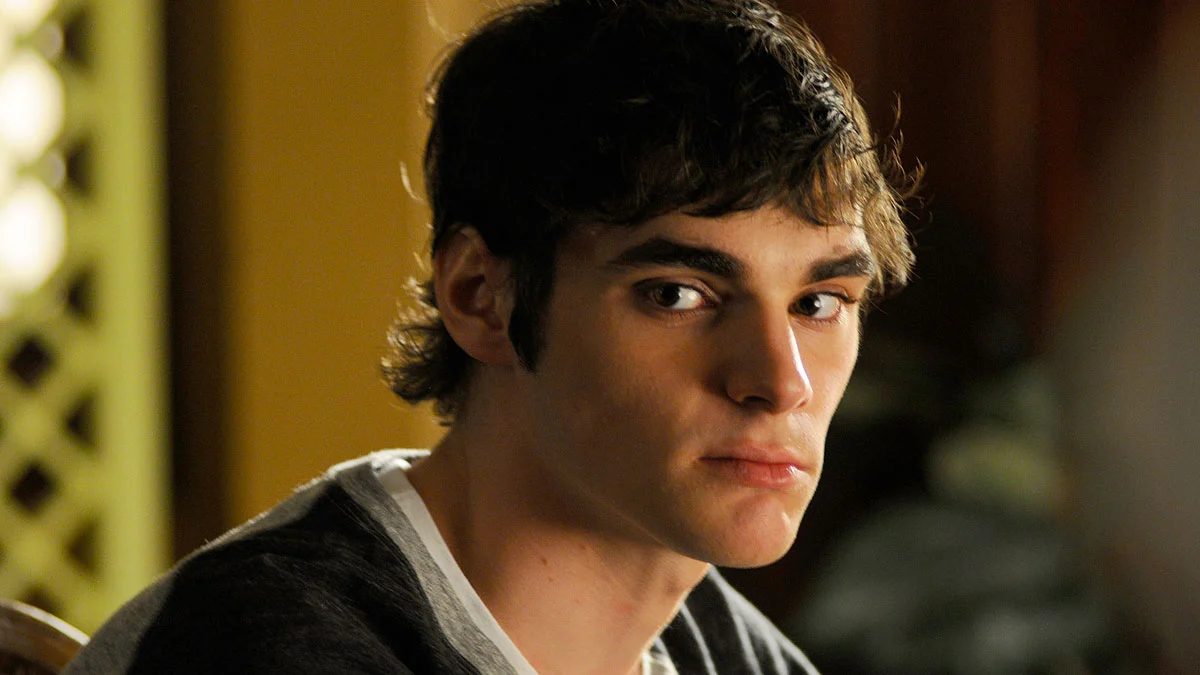
The entertainment industry is in mourning following the tragic death of actor R.J. Mitte, best known for his defining, critically acclaimed portrayal of Walter Jr. on AMC’s groundbreaking crime drama Breaking Bad. Mitte passed away on October 12, at the young age of 34.
As news of his passing reverberated across the globe, former co-stars, colleagues, and industry peers took to social media and shared statements with major entertainment publications to honor his legacy. The outpouring of grief paints a vivid picture of a young man who was not only a gifted actor and fierce advocate for disability representation in media, but also a beloved friend, set-mate, and source of genuine warmth to those who knew him best.
Main Facts: The Passing of a Television Icon
R.J. Mitte’s sudden death has left a profound void in the hearts of television fans and television creators alike. Best recognized for playing Walter White Jr.—affectionately known as "Flynn"—Mitte brought an authentic representation of cerebral palsy to millions of living rooms worldwide across Breaking Bad‘s five celebrated seasons.
While details surrounding the exact cause of death remain private out of respect for his grieving family, the immediate response from his professional community underscores the lasting impact he left behind. Mitte was more than just a character on a television screen; he was a trailblazer who challenged Hollywood’s historical casting norms, proving that authentic representation matters and that talent knows no boundaries.
His role in Breaking Bad earned him widespread recognition, but his off-screen persona—characterized by perseverance, kindness, and advocacy—solidified his status as an inspiring figure to fans facing their own adversities.
Chronology: A Life and Career Defined by Resilience
To understand the weight of R.J. Mitte’s passing, one must look back at a life defined by overcoming obstacles and seizing extraordinary opportunities.
Early Life and Diagnosis
Born Roy Frank Mitte III on August 21, 1992, in Lafayette, Louisiana, Mitte faced medical challenges from the very beginning of his life. Born via emergency cesarean section, he stopped breathing for several minutes, resulting in a mild case of hypoxic-ischemic encephalopathy. At the age of three, he was officially diagnosed with cerebral palsy.
Despite doctors initially suggesting he might face permanent mobility restrictions, Mitte’s fierce determination—bolstered by extensive physical therapy, leg braces, and crutches during his childhood—helped him build remarkable strength and coordination.
The Move to Hollywood and Breaking Bad (2006–2013)
In 2006, Mitte and his family relocated to Hollywood, California, where he initially sought work as an extra and background actor. Recognizing his unique look, natural charisma, and physical authenticity, he soon began studying under renowned talent manager Ryan Glasgow and acting coach Susan Batson.
The defining turning point of his career arrived in 2008 when he auditioned for a new AMC pilot titled Breaking Bad, created by Vince Gilligan. The role of Walter White Jr., a resilient teenager with cerebral palsy whose father is diagnosed with terminal lung cancer, required an actor who could genuinely portray the physical manifestations of the condition. Mitte not only secured the part, but he also embraced the challenge of leaning into the physical aspects of the character—sometimes even exaggerating his speech patterns and gait to match the progression requested by the showrunners, a physical toll that required conscious effort long after cameras stopped rolling.
Throughout the show’s legendary run, Walter Jr. served as the moral compass of the series. His unwavering loyalty to his father contrasted sharply with the criminal underworld Walter Sr. (Bryan Cranston) was constructing. Mitte’s performance earned him critical praise and a Screen Actors Guild (SAG) Award nomination for Outstanding Performance by an Ensemble in a Drama Series.
Post-Breaking Bad Endeavors and Advocacy
Following the conclusion of Breaking Bad in 2013, Mitte continued to work in television, film, and modeling. He appeared in independent features such as Dixieland (2015), the horror film The Recall (2017), and the thriller Standing Up for Sunny (2019).
Beyond acting, Mitte became a prominent advocate for individuals with disabilities. He served as the spokesperson for Inclusion in the Arts, a non-profit organization dedicated to advocating for full inclusion of diverse artists in entertainment, and participated in various campaigns aimed at reshaping how physical and developmental disabilities are perceived in the media.
Supporting Data: The Legacy of Breaking Bad and Disability Representation
To contextualize Mitte’s cultural footprint, it is helpful to examine the monumental success of Breaking Bad and the sparse landscape of disability representation in modern television at the time of the show’s premiere.
- Critical Acclaim: Breaking Bad is widely regarded as one of the greatest television series of all time, securing 16 Primetime Emmy Awards during its broadcast history.
- Ensemble Recognition: As part of the core cast, Mitte shared in the cultural phenomenon, appearing in over 50 episodes across the series’ 62-episode run.
- Breaking Barriers: According to studies by organizations like the Ruderman Family Foundation, actors with disabilities have historically accounted for less than 2% of all characters on television, and the vast majority of those roles were played by able-bodied actors. Mitte’s prominent, multi-dimensional casting broke crucial ground, proving that authentic representation elevates storytelling.
Official Responses: Tributes from Co-Stars and Peers
The entertainment community rallied together to honor Mitte’s memory, sharing deeply personal anecdotes and expressions of profound sorrow.
Aaron Paul
In a statement shared with The Hollywood Reporter, Aaron Paul—who played Jesse Pinkman, Walter Jr.’s reluctant criminal counterpart—expressed utter devastation:
"I am at a loss. I am heartbroken over this news. RJ, I love you my friend. You will be missed. And to whoever happens to be reading this, please know you are loved, and you are not alone. Always remember that."
Paul’s poignant addendum serves as a reminder of the mental health struggles that can affect anyone, adding a layer of deep empathy and community care to his public farewell.
Dean Norris
Dean Norris, who portrayed Hank Schrader—Walter Jr.’s tough-talking, law-enforcement uncle—shared his grief over losing someone he watched grow up on a high-pressure television set:
"Though RJ didn’t play my TV son, I always looked out for him as a young kid on set. He was a sweetheart of a young man and will be greatly missed. This is so heartbreaking, I can’t believe it. Thinking of him and his family."
Marlee Matlin
Acclaimed Oscar-winning actress Marlee Matlin took to X (formerly Twitter) to share her heartbreak:
"My heart is shattered. There will never be another like RJ Mitte. You will always have a place in my heart. RIP."
J.B. Blanc
Actor J.B. Blanc, who worked alongside Mitte during his time in the Albuquerque-set universe, posted a warm remembrance:
"RJ Mitte has passed. We spent a little time together when I was shooting Breaking Bad. He was lovely and this is very sad news indeed. Rest in Peace."
Implications: The Industry Loss and Future Representation
The loss of R.J. Mitte at just 34 years old resonates deeply within the entertainment industry, prompting reflections on both his personal warmth and his professional legacy.
A Shift in Industry Standards
When Mitte stepped onto the set of Breaking Bad in 2008, inclusive casting was far less prioritized than it is today. By inhabiting Walter Jr. with such grace, nuance, and unwavering dignity, Mitte helped pave the way for a new generation of performers with disabilities to demand leading, complex roles rather than being relegated to tokenized or stereotypical portrayals. His legacy will undoubtedly inspire casting directors, writers, and showrunners to continue pushing boundaries and seeking authentic voices.
Remembering the Man Behind the Character
While fans will forever remember him sitting at the breakfast table asking for veggie bacon or confronting his father in a Las Cruces parking lot, those who worked with him will remember his infectious smile, his professional work ethic, and his advocacy for those who felt unseen.
As tributes continue to pour in from around the world, R.J. Mitte’s light remains undimmed. He leaves behind a rich body of work, a transformed landscape for disability representation in media, and a community of friends and fans whose lives were permanently enriched by knowing him.
Rest in peace, R.J. You will always be remembered.
 Layla Zulfa
 Nana Muazin
 rifanmuazin
