

Introduction: A High-Stakes Transition
The revolving door of the Trump administration’s communications office has reached another milestone with the appointment of Katie Zacharia as the new White House Press Secretary. Stepping into the role following the departure of Karoline Leavitt, Zacharia finds herself at the center of a volatile political ecosystem. However, her tenure began not with a period of quiet transition, but with immediate and pointed skepticism from both the political press corps and the cultural establishment.
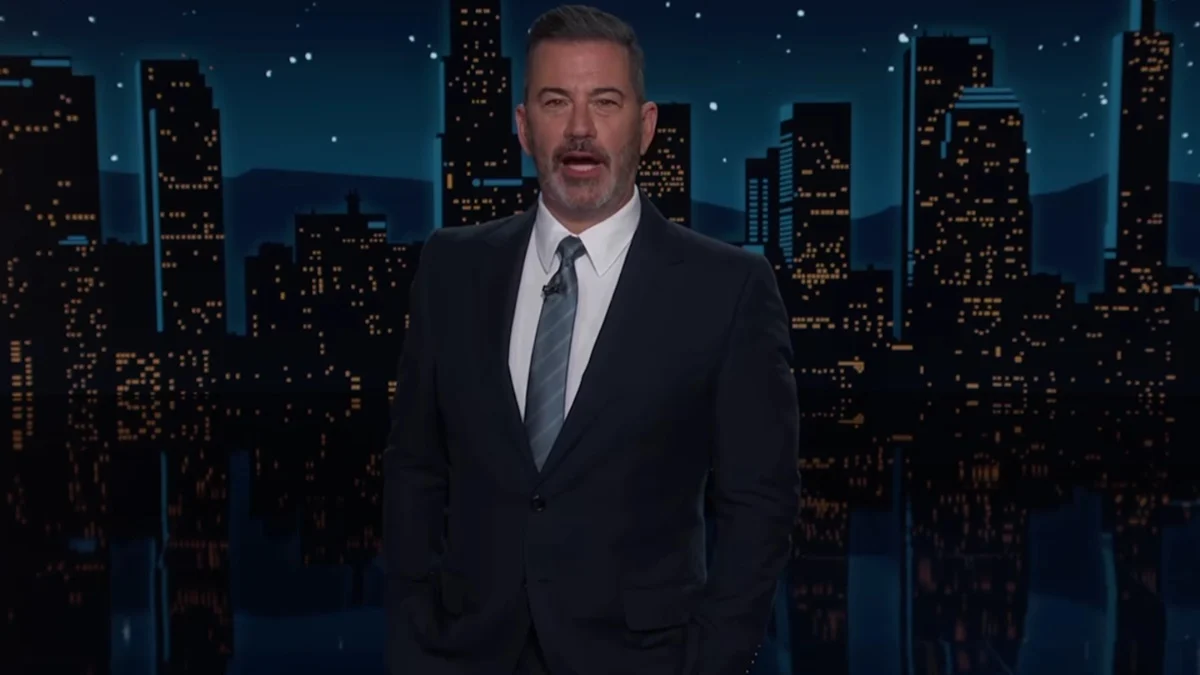
As the sixth individual to helm the podium during President Trump’s tenure, Zacharia faces the daunting task of navigating an increasingly polarized media landscape. Her debut—a tightly controlled, 14-minute briefing—has already become a flashpoint for public discourse, fueled by a scathing takedown from late-night host Jimmy Kimmel, who questioned everything from her rhetorical delivery to her ideological history.
Chronology: From Conservative Commentary to the Podium
The Path to the White House
Zacharia’s ascension to one of the most visible roles in American government was swift. Prior to her current appointment, she served as a junior spokesperson for former Homeland Security Secretary Kristi Noem. Her career trajectory is marked by a background in conservative media, where she built a reputation as a combative commentator. This history, while lauded by her supporters as evidence of ideological alignment with the administration, has provided significant ammunition for her critics.
The Debut Briefing
On Tuesday, Zacharia held her first official press briefing. The event was notably brief, lasting only 14 minutes and featuring questions from just three news outlets. For veteran observers of the White House beat, the brevity of the session suggested a strategy of limited engagement—a common tactic for administrations seeking to minimize the risk of unscripted errors. However, the optics of the session, characterized by Zacharia reading extensively from prepared notes, became the primary subject of immediate critique.
Jimmy Kimmel’s Critique: Comedy as Political Commentary
Late-night television has long served as a mirror for the frustrations of the American public, and on Tuesday’s episode of Jimmy Kimmel Live!, the host did not hold back. Kimmel’s monologue functioned as a systematic deconstruction of the press secretary’s debut.
The Rhetorical Delivery
Kimmel focused heavily on the visual and auditory experience of the briefing. Mocking Zacharia’s reliance on a prepared script, he quipped, “Her reading is good for an 11-year-old,” before rhetorically asking his audience how the administration managed to place a fourth-grader in a position of such significant national importance. By focusing on the delivery rather than the content, Kimmel tapped into a recurring theme in political satire: the perceived lack of professional gravitas in the current administration’s personnel choices.
Ideological Baggage and "Pizzagate"
Beyond her performance, Kimmel targeted Zacharia’s digital footprint. He highlighted her previous work as a conservative commentator, specifically citing past social media posts in which she leveled accusations of pedophilia against Democrats. Kimmel further criticized her for “giving weight” to the “Pizzagate” conspiracy theory, a fringe narrative that has been thoroughly debunked. In a move that blended comedy with biting political irony, Kimmel suggested that if Zacharia were truly committed to her past rhetoric, she should be leading the charge for consequences for anyone mentioned in the Trump-Epstein files.
The Box Office Forecast
Kimmel’s critique extended to Zacharia’s predictive accuracy regarding pop culture. He aired a clip of the press secretary previously asserting that the film The Odyssey—a project she labeled as “woke”—would be a financial failure. Kimmel contrasted this with the film’s reported $1.8 billion global haul, using the discrepancy as a punchline to undermine her credibility as an objective analyst of facts.
Supporting Data: The Volatility of the Press Office
The White House Press Secretary role is traditionally seen as the bridge between the executive branch and the public. Under the current administration, however, the role has become significantly more fluid.
- The Turnover Rate: Zacharia is the sixth person to hold this title during the current Trump administration. This high rate of turnover suggests a deliberate, perhaps unsustainable, pace of change that creates a constant need for orientation and a lack of institutional memory.
- Engagement Metrics: The 14-minute duration of her first briefing is significantly shorter than the historical average for initial press introductions. While brevity can be an asset in crisis management, it often signals a lack of transparency to the press pool.
- Professional Backgrounds: The shift from traditional career spokespeople to social media-savvy, movement-conservative influencers marks a fundamental change in the function of the office. The strategy appears to prioritize message discipline over institutional diplomacy.
Official Responses and Administrative Strategy
To date, the White House has offered no formal response to Jimmy Kimmel’s monologue, adhering to a policy of ignoring late-night critiques to avoid giving them oxygen. Internally, however, there are signals that the administration views Zacharia’s style as a feature, not a bug.
Supporters within the conservative media ecosystem have praised her for being “unfiltered” and for refusing to play by the traditional rules of the press briefing room. Her allies argue that the “mainstream media” is unfairly targeting her because she represents a departure from the establishment norms they are accustomed to. They contend that the mockery of her clothing—which Kimmel compared to a Delta Air Lines preboarding announcement—is a symptom of a biased press more interested in optics than substance.
Implications: A Shift in Governance and Communication
The reaction to Katie Zacharia’s debut highlights a widening chasm in American political communication.
The Erosion of the Press Briefing
The traditional White House press briefing was once considered a vital component of the democratic process, serving as a venue for substantive inquiry. If the current trend continues, the briefing may become an increasingly performative space—a place where the administration delivers prepared talking points while limiting the scope of adversarial questioning.
The "Influencer" Model of Politics
Zacharia’s rise suggests that the administration is prioritizing ideological loyalty and digital presence over traditional diplomatic experience. This "influencer" model of governance aims to bypass the traditional press by speaking directly to a base that shares the press secretary’s worldview. However, as Kimmel’s segment demonstrated, this model carries a significant risk: when the spokesperson is the message, any personal misstep or past controversy becomes a direct liability for the President.
The Question of Staying Power
The most significant question remaining is whether Zacharia can withstand the intense scrutiny that defines the modern White House. Kimmel’s suggestion that she is already a candidate for “Trump’s worst press secretary” is a provocative label, but one that speaks to the high expectations—and the high stakes—of the position. For Zacharia, the path forward requires not just mastering the mechanics of the podium, but effectively navigating a landscape where every word, outfit, and past tweet is subject to national ridicule or praise.
As she settles into the role, the political world will be watching to see if the brief, scripted sessions are merely a starting point or a permanent feature of her tenure. For now, the "trial by fire" continues, and in the high-stakes theater of Washington D.C., the only certainty is that the next news cycle is never more than a few hours away.
 Azzam Bilal Chamdy
 Nila Kartika Wati
 Lina Hope
