

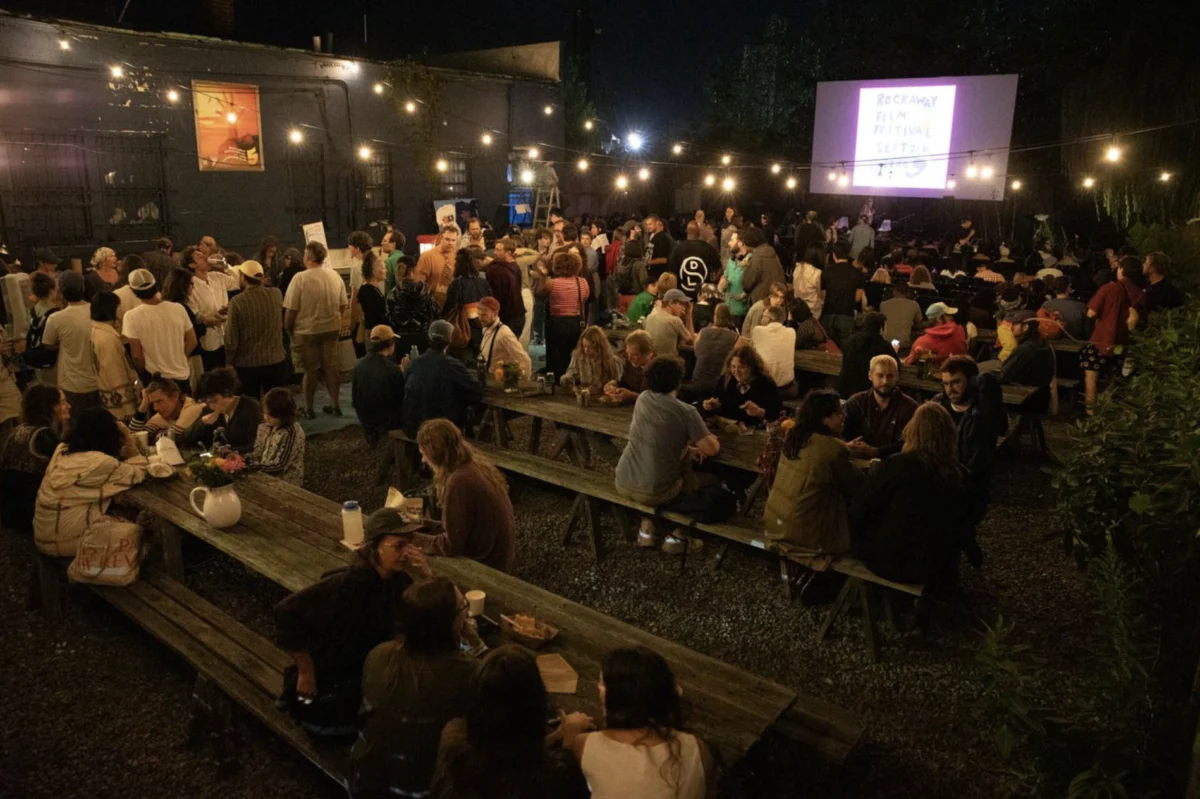
In the wake of the recent closure of the Kips Bay AMC—a fixture that served as a cultural anchor for its neighborhood—the term "cinema desert" has once again entered the public lexicon. While New York City remains arguably the world’s most vibrant cinematic landscape, boasting an unparalleled density of independent theaters, prestigious archives, and a deeply cinephile population, the reality for the city’s fringes is starkly different. For the 125,000 full-time residents of the Rockaways, a peninsula stretching into the Atlantic, the concept of a "cinema desert" is not a metaphor; it is a lived, geographical reality.
Sam Fleischner, an acclaimed filmmaker and the Artistic Director of the Rockaway Film Festival, argues that the erosion of local theaters is more than just a real estate trend. It is a fundamental threat to the way we assemble, converse, and imagine our shared future. As the industry leans into a model of algorithmic sameness, Fleischner and his team are attempting to prove that the future of cinema lies not in the multiplex, but in the community-built, hyper-local venue.
A Legacy Lost: The Geography of Cinema in the Rockaways
To understand the current crisis, one must look at the historical trajectory of the peninsula. Throughout the 20th century, the Rockaways were a thriving hub for the silver screen. At its peak, the area hosted nine distinct movie theaters, ranging from opulent movie palaces in Far Rockaway to the architectural curiosity of a cinema built directly over the water on the Arverne pier. These were not mere profit centers; they were the town squares of the mid-century, places where the community converged to witness the collective dream of film.
The slow decline of these institutions mirrored the broader national trend of suburban sprawl and the centralization of the multiplex. The Surfside Twin, which stood as the final holdout, shuttered its doors in 1996. Since that year, the 125,000 residents of the Rockaway peninsula have faced a logistical burden: accessing high-quality cinema requires an arduous journey, often exceeding an hour each way, to reach the nearest theater. This isolation, while seemingly mundane, represents a massive deficit in the cultural infrastructure of the outer boroughs.
The Arverne Experiment: Building a Cultural Petri Dish
In 2018, the Rockaway Film Festival was born out of a desire to rectify this imbalance. What began as a "low-stakes experiment" to test if a community-driven, ephemeral cinema could thrive has blossomed into a vital cultural institution. For the past six years, the organization has operated the Arverne Cinema, a temporary, community-constructed, open-air theater that has defied the odds of the modern exhibition market.

The success of the Arverne Cinema lies in its refusal to be merely a screening room. Fleischner describes the space as a "cultural petri dish," where the experience begins well before the first frame hits the screen. By integrating food, live music, dancing, and—most importantly—the direct exchange between filmmakers and the audience, the festival has transformed the act of watching a movie from a passive consumption exercise into an active, social event.
"The Rockaways themselves are an inherently cinematic place," Fleischner notes. "The vast, open sky, the shifting light, the proximity to the Atlantic, and the constant movement of air and sea traffic create a unique visual language. The diverse, global background of our residents has produced a culture that is as multifaceted as the films we hope to show."
The "Sameness" Machine: Art vs. The Algorithmic Multiplex
The current crisis in exhibition is tied to the industrialization of the medium. The modern cinema landscape is increasingly dominated by a system that prioritizes franchise IP, standardized storytelling, and formulaic production. While the demand for the latest blockbuster is understandable, Fleischner argues that the dominance of this model creates a "machine for manufacturing sameness."
When profit becomes the sole organizing principle of a cinema, the theater ceases to be a community space and becomes a retail environment. This explains why, as the industry struggles to replicate the "event" nature of cinema, the generic multiplexes—designed for mass-market consumption—are the first to fail.
"In a society governed by capital, we often view anything not driven by profit as a burden or a charity case," says Fleischner. "But aren’t the most valuable aspects of our culture those that exist precisely because they resist the logic of the marketplace? The idea that we should do something simply because it enriches our lives, rather than because it generates a quarterly return, is becoming increasingly fragile. We need to defend that space."

Loneliness and the Architecture of Assembly
Beyond the aesthetic and economic arguments lies a sociological one. In an era defined by a "loneliness epidemic," the digital age has forced us to consume culture in isolation, tethered to personalized feeds and handheld screens. The collective experience of cinema—sitting in the dark with strangers, reacting in unison to a shared narrative—is a primal human need, akin to gathering around a fire.
Evidence from across New York City suggests that audiences are starving for this connection. Repertory screenings, 35mm film series, and micro-cinema artist presentations are consistently selling out, proving that if you provide a curated, high-quality experience, the audience will show up. People are not just buying a ticket; they are buying into a community.
Looking Forward: A Model for Sustainable Independent Cinema
The Rockaway Film Festival is currently in the midst of fundraising for a permanent home, a project that promises to be a blueprint for other underserved regions. The proposed space is designed for maximum versatility: it will function as a cinema, a performance venue for live music and puppet theater, a community hub for debate, and a space for film production.
This model of "flexible infrastructure" is intended to make the venue economically sustainable by diversifying its utility. By prioritizing cooperation over competition, the festival hopes to inspire a network of small-scale, independent cinemas across the United States.
"We want to move away from the centralized commercial distribution system that treats every town like a blank slate," Fleischner explains. "A cinema should be as unique as the community it serves. If we can share knowledge, infrastructure, and resources, we can provide meaningful, sustained support for artists and filmmakers while giving audiences a place to gather that doesn’t feel like a sterile mall."

Implications: Cinema as a Public Good
The implications of this vision are far-reaching. If we accept that cinemas are, in fact, a "public good"—comparable to libraries or parks—we change the way we fund and maintain them. A cinema strengthens the local economy, supports local artists, and cultivates the next generation of storytellers.
The future of film will not be decided by the algorithms of streaming platforms or the boardrooms of global conglomerates, but by the physical spaces we choose to preserve and create. As we navigate an increasingly digitized and isolated world, the act of going to the movies becomes a radical, necessary gesture.
As Fleischner emphasizes, the survival of cinema depends on our ability to protect spaces for collective imagination. "We must recognize that building and maintaining these spaces is, above all, a human endeavor. We are trying to answer a fundamental question: Where will we gather? How will we connect in real life? The answers to those questions are the foundation upon which the future of art is built."
As the Rockaway Film Festival moves toward its goal of a permanent home, it stands as a testament to the fact that when we prioritize the human element over the industrial, we do not just save a theater—we strengthen the very fabric of our communities. In the dark of the cinema, we are not just audience members; we are a society, learning once again how to see the world together.
 Evan Lee Salim
 Azzam Bilal Chamdy
 Lina Irawan
