

By Olivia Tauber | Published October 6, 2026
The people staring out from your smartphone screen do not exist. They have no childhood memories, no tax bills, and no physical heartbeats. Yet, the corporate entities behind them—and the real-world content creators whose sweat, timing, and material are systematically copied to build them—are very much real.
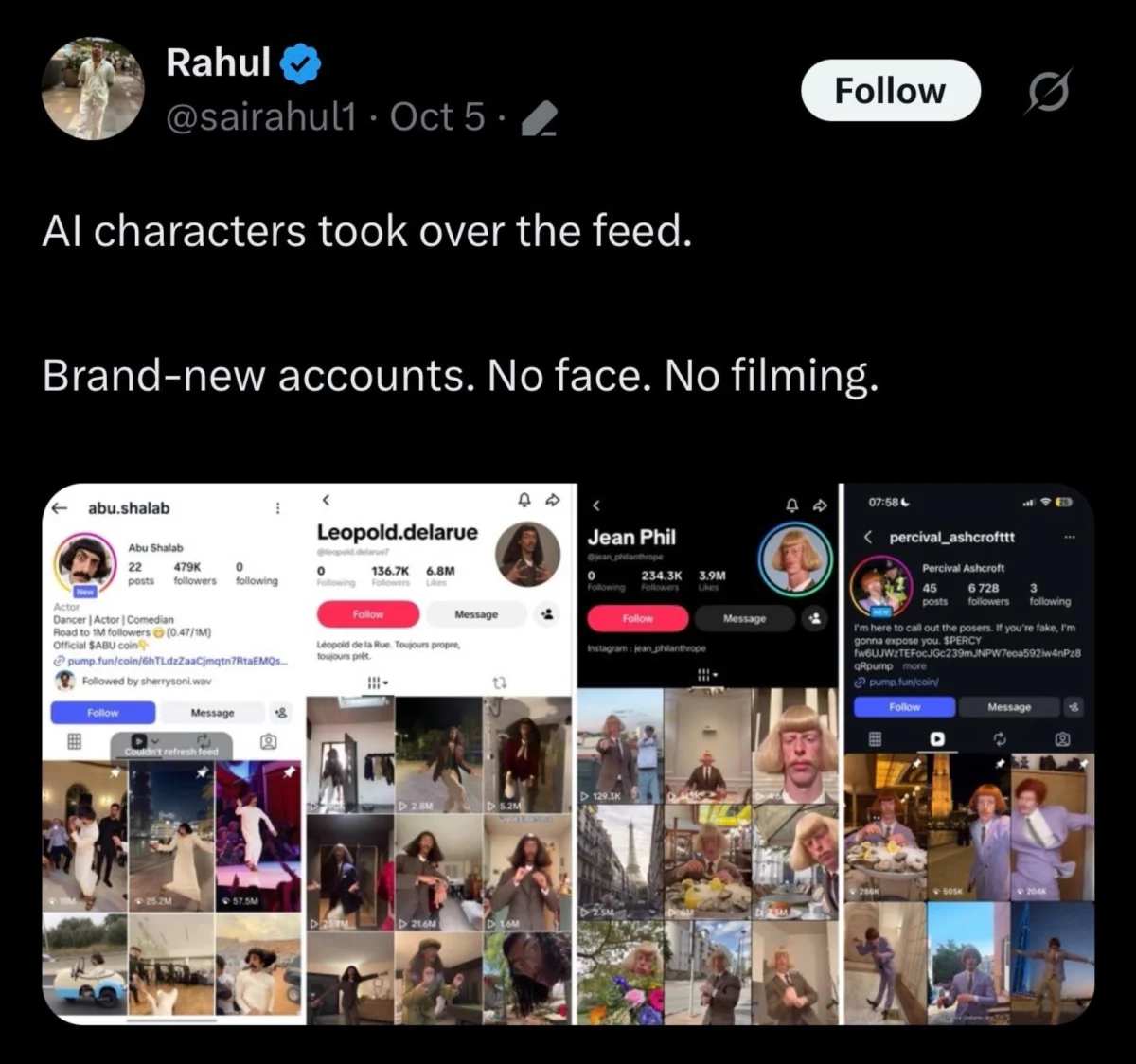
Welcome to the wild west of the AI creator economy. It is a burgeoning digital ecosystem where a few keystrokes can manufacture an idealized model, a lifestyle guru, or a viral stand-up comedian. Proponents market it as the ultimate democratization of digital fame: no cameras, no expensive lighting rigs, and no physical presence required. But beneath the veneer of hyper-efficient marketing lies a darker reality plagued by intellectual property theft, exploited physical standards, and a growing existential crisis for real human creators.

Main Facts: The Anatomy of the AI Influencer Boom
The premise of the synthetic influencer industry is built on frictionless scalability. Rather than spending years building a personal brand through organic trial and error, operators can spin up an entirely fictional persona using generative artificial intelligence.
The architecture of this business is supported by a robust ecosystem of specialized software. Platforms like Higgsfield (with its Genjutsu tool), HeyGen, and ElevenLabs allow operators to synthesize photorealistic faces, clone authentic movements, and generate human-sounding voices. A creator can map a fictional character sheet—a series of reference images establishing a synthetic person from multiple angles—onto raw footage, effectively replacing a human performer with an AI avatar while retaining precise lighting, camera framing, and motion.
The financial engine driving these operations is equally pragmatic. While organic view counts on platforms like TikTok and Instagram rarely translate to direct payouts, they serve as powerful top-of-funnel marketing for monetizable endpoints. Operators direct millions of monthly views toward subscription-based adult platforms like OnlyFans and Fanvue, or sell courses and digital communities teaching others how to replicate the process.

Companies like Barcelona-based agency The Clueless have operationalized this concept entirely. Managing AI personalities such as Aitana López—a 26-year-old virtual fitness model with hundreds of thousands of followers—they secure lucrative brand deals with global enterprises like Amazon, L’Oréal, and Coca-Cola. Similarly, firms like Inception Point AI boast rosters of over 100 synthetic characters hosting podcasts, commenting on celebrity gossip, and offering lifestyle advice.
Chronology: From Novelty to Industrialized Plagiarism
The timeline of virtual influencers dates back several years to early digital experiments like Lil Miquela and Shudu, who primarily functioned as high-fashion novelties for luxury houses like Balmain. However, the trajectory shifted dramatically in late 2025 and accelerated exponentially through 2026, transitioning from high-budget corporate campaigns to grassroots, automated "clone farms."
- Early Experiments (2018–2023): Virtual models emerge primarily as digital art projects or controlled corporate marketing campaigns, requiring heavy manual rendering and dedicated CGI teams.
- The Generative Explosion (Late 2024–2025): The widespread availability of consumer-grade text-to-video and face-swapping tools drastically lowers the barrier to entry. Independent operators realize they can mass-produce content without technical artistic backgrounds.
- The Comedian Cloning Epidemic (September–October 2026): Accounts like "@tiffany.bbyx" and "@aylenskye3000" rapidly amass hundreds of thousands of followers by posting stand-up comedy and sketch videos. Behind the scenes, these synthetic figures are exposed for wholesale theft of material, routines, and physical mannerisms belonging to real-world comedians.
- Platform Cracks Down and Adapts (Late 2026): Major tech companies including Meta, TikTok, and YouTube scramble to deploy synthetic media labeling tools, while platforms like YouTube explicitly ban mass-produced, unoriginal AI content from monetization partner programs.
Supporting Data: The Metrics of Synthetic Stardom
The scale of the AI influencer market is reflected in rapid follower acquisition and aggressive monetization metrics:

- Audience Velocity: Viral tutorials frequently highlight accounts growing from zero to over 280,000 followers in a matter of days by posting hyper-optimized, recycled content multiple times daily.
- Demographic Targeting: A disproportionate share of stolen comedic material targets female stand-up comics, whose routines are repurposed by hyper-sexualized AI models designed to capture the attention of male demographics.
- Commercial Valuation: Established virtual influencers like Aitana López command massive audiences—surpassing 400,000 followers on Instagram—translating to active corporate sponsorships and recurring monthly revenues through educational communities like the AI Creator Aicademy, priced at $9 per month.
- Platform Thresholds: Despite millions of views, major platforms have clamped down. YouTube’s Partner Program strictly disqualifies "AI-generated content made with generic or unoriginal templates giving the impression of mass production without adding the creator’s original, authentic insights."
Official Responses and Regulatory Struggles
As the phenomenon causes widespread disruption across digital culture, tech companies, advocacy groups, and creators are fighting back—often with limited tools.
Social media platforms have attempted to introduce guardrails. Meta applies automated "AI info" labels to synthetic photography, TikTok rolled out deepfake and synthetic content disclosures alongside tests for native tools like "AI Cast," and YouTube continues to update its AI detection labeling requirements. Fanvue and OnlyFans maintain strict stipulations requiring explicit disclosure of synthetic profiles and verifying that adult content features consenting, real-world individuals where applicable.
Yet, creators argue these measures fall woefully short of addressing intellectual property theft. Comedian George Brett Olsen, who publicly exposed an AI account for ripping off his exact jokes, wardrobe, and physical gestures, noted the compounding frustration of reporting plagiarized content.

"What’s crazy to me is you can’t report this. A bunch of people tried," Olsen stated.
Sarah Purdum, another comedian whose work was co-opted by synthetic avatars, echoed these sentiments in an interview with Mashable: "It seems to be that female comedians’ work is being stolen and repurposed for sexy AI models… I feel annoyed that my work is being taken for the purpose of drawing in men."
Sara Ziff, founder and executive director of the Model Alliance, highlighted the broader cultural fallout in an interview with The New York Times, warning that flooding feeds with hyper-idealized, non-existent bodies risks "narrowing our definition of beauty instead of broadening it."

Implications: The Future of the Creator Economy
The rise of the AI influencer signals a profound identity crisis for the digital landscape. We are entering an era where authenticity is no longer a given, and the human element in entertainment is treated by bad actors as raw data to be scraped, synthesized, and monetized.
For working comedians, actors, and lifestyle creators, the threat is no longer theoretical. Creators are no longer just competing against other humans for algorithmic favor; they are forced to compete against optimized, frictionless phantoms built using their own stolen labor.
While tech platforms test new detection frameworks and copyright enforcement models, the rapid evolution of generative video suggests that the cat-and-mouse game between synthetic operations and human creators has only just begun. Until robust legal frameworks and automated copyright protections catch up to generative technology, the golden rule of the AI creator economy remains unchanged: fake influencers, very real collateral damage.
 Nana
 Muslim
