

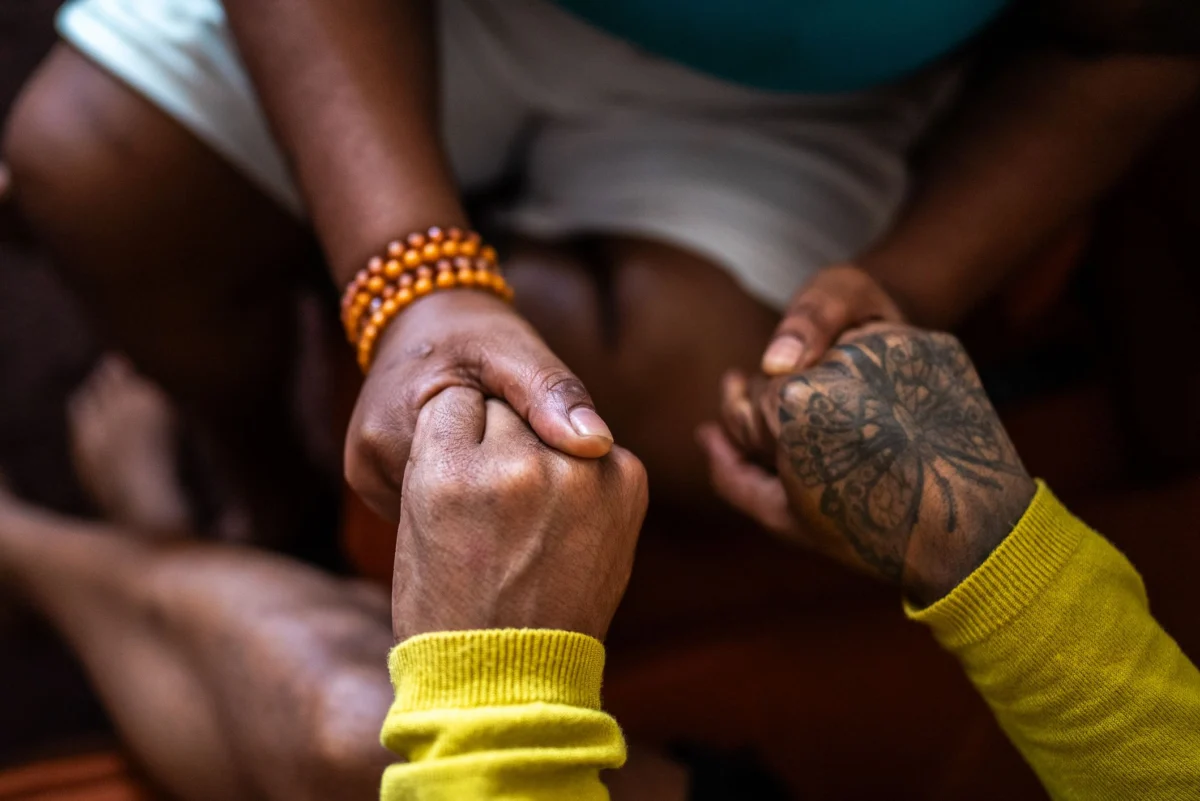
For decades, the discourse surrounding breast health in the Black community has been anchored by grim statistics. Data from the National Breast Cancer Foundation and other leading health organizations paint a challenging portrait: Black women are diagnosed at a younger median age (60) compared to white women (62), and they face a 38% higher likelihood of mortality. Perhaps most alarmingly, they exhibit the lowest survival rates across every stage of the disease and are disproportionately affected by triple-negative breast cancer (TNBC)—a particularly aggressive and difficult-to-treat form of the illness.
However, statistics are merely a snapshot of a moment; they do not account for the human spirit. Beyond the clinical notes and survival percentages are the 3 a.m. phone calls, the collective rituals of support, and the profound, transformative journeys of women who refuse to be reduced to a data point. This is a look at the lived reality of thirteen women who have navigated the labyrinth of breast cancer, moving from the trauma of diagnosis to the hard-won clarity of survivorship.

The Chronology of Diagnosis and Advocacy
The path to diagnosis is rarely linear for Black women. For many, the journey begins with a moment of intuition—a feeling that something is amiss, often despite medical pushback.
- Self-Advocacy as a Lifeline: Monique Bass, 53, discovered a lump during a self-exam at 47. Despite multiple benign biopsies over three years, her internal conviction led her to demand a lumpectomy, which revealed stage 1 invasive ductal carcinoma. Similarly, Marylande Regis, 38, was initially dismissed by an on-call provider who attributed her symptoms to a "clogged milk duct" due to her age. Her insistence on follow-up care proved vital; she was diagnosed with aggressive stage 2B, BRCA1-positive cancer.
- The Weight of Systems: For Annita White, 51, and Taylor Johnson, 30, the barrier was often systemic. White, a PhD student and administrator, delayed her mammogram due to the pressures of professional life, only to face a diagnosis that forced her to confront her own vulnerability. Johnson, despite being told she was "too young" for a mammogram, pushed for a biopsy that uncovered stage 2 triple-negative breast cancer.
These stories illustrate a recurring theme: the necessity of "medical self-advocacy." When systemic biases or age-based clinical assumptions create hurdles, these women transformed their fear into a strategic defense of their own lives.

Supporting Data: The Disparities in Care
The medical community acknowledges that systemic inequities contribute significantly to these outcomes. TNBC, which affects roughly one in five Black women with breast cancer, remains a focal point for researchers. The lack of targeted therapies for this specific subtype necessitates earlier detection and more aggressive screening protocols.
Current health equity initiatives are focused on:
.jpg)
- Closing the Screening Gap: Addressing the delay in diagnostic follow-ups for Black women.
- Cultural Competency: Ensuring that healthcare providers are equipped to listen to patient concerns rather than dismissing them based on statistical probability or age.
- Access to Clinical Trials: Increasing the representation of Black women in research to ensure treatments are optimized for diverse genetic profiles.
The Pillars of Survival: Community and Faith
For the women profiled, the journey through treatment was rarely a solitary one. It was a mosaic of support, faith, and radical self-care.
Faith as an Anchor
For many, spirituality served as the bedrock of their resilience. Monique Bass noted that while she does not identify as deeply religious, her faith allowed her to surrender the need for control. Annita White found that her faith "met her exactly where she was," carrying her through the loss of her hair and the physical toll of chemotherapy. Annette Colden, 63, viewed her diagnosis as a partnership, famously telling her spiritual guide, "If you will be my pilot on this journey, I’ll be your copilot."

Redefining Strength
A profound shift observed in these survivors is the transition from "forced strength" to "authentic softness." Jessica Ncube, 41, a clinical social worker, noted that as a Black woman, resilience is often "ingrained" to a fault. "Strength today is softness," she reflects. "It is allowing myself to receive, to rest, and to not have all the answers."
For others, strength manifested as radical life changes. Ricki Fairley, 69, famously "quit her life" upon diagnosis—divorcing, moving, and pivoting her career to become a powerhouse advocate for breast cancer awareness through the Black Breast Cancer Alliance. Her transition from patient to advocate highlights the catalytic power of a cancer diagnosis to strip away the non-essential aspects of life.

Official Responses and Medical Implications
Health organizations and oncology groups are increasingly moving toward a "patient-centered" approach. The American Cancer Society and similar bodies now emphasize the importance of "shared decision-making," where the patient’s intuition—like the "inner feeling" described by Annette Colden—is treated as a valid clinical indicator.
The implication for the future of breast health is clear: Listening is a clinical tool. When a patient insists something is wrong, the data suggests that further investigation, even against initial protocol, is the safest course of action. This is particularly vital for Black women, whose concerns are statistically more likely to be marginalized.

Building a Blueprint for Future Generations
The legacy of these women is not just their survival, but the infrastructure of care they have built for those who follow.
- Nonprofit Initiatives: Monique Bass founded What’s Behind the Bra? to provide comfort care packages and a supportive podcast network.
- Mentorship: Annette Colden and Annita White utilize their experiences to mentor newly diagnosed women, ensuring that no one has to navigate the 3 a.m. anxieties alone.
- Advocacy: Ricki Fairley’s work with the Black Breast Cancer Alliance continues to challenge the systemic mortality rates that have plagued the community for decades.
Conclusion: From Statistics to Storytellers
The narrative of Black women and breast cancer is undergoing a necessary pivot. While the data remains a sobering reminder of the work that still needs to be done, it is the individual stories of these thirteen women that provide the real roadmap for progress.

They teach us that while cancer may be a physical assailant, it is also an opportunity for profound personal reconstruction. By embracing community, demanding better from the medical establishment, and rejecting the trope of the "superwoman" in favor of genuine self-compassion, these women are rewriting the future. They are not merely survivors of a disease; they are architects of a new, more supportive health culture.
As Ameiko Newman poignantly summarizes: "Cancer doesn’t define you. You define you." For these women, that definition includes power, vulnerability, community, and an unyielding commitment to ensuring that the next generation of Black women does not just survive, but thrives.
 Asro
Asro
 Suro Senen
 Azzam Bilal Chamdy
