

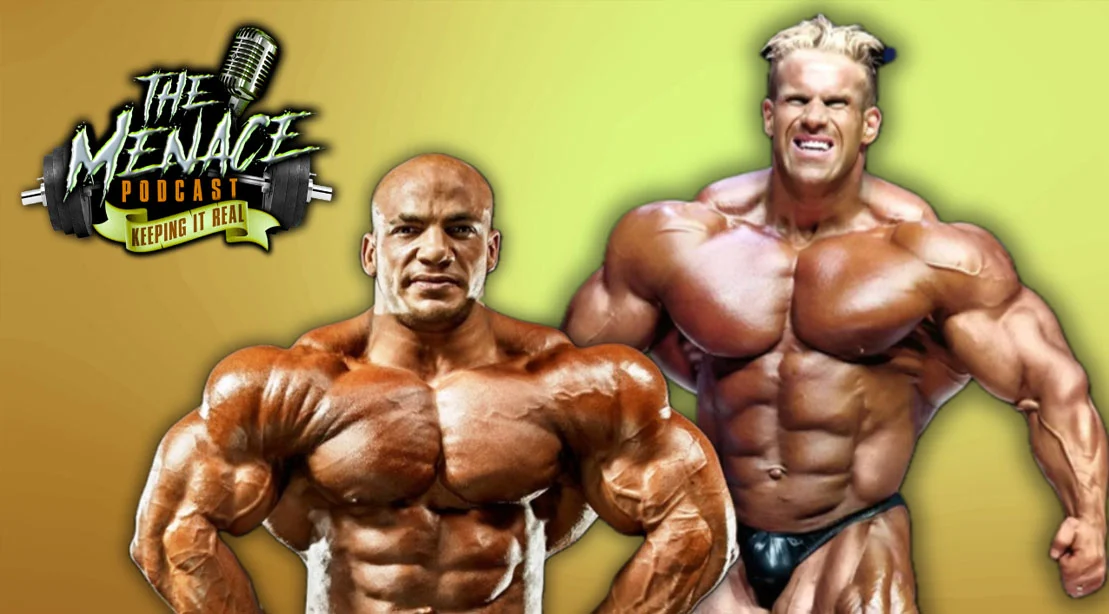
In the high-stakes world of professional bodybuilding, comparisons between eras are inevitable. However, few debates spark as much fervor as the hypothetical matchup between two of the sport’s most imposing figures: the four-time Mr. Olympia Jay Cutler and the two-time champion Mamdouh "Big Ramy" Elssbiay. On Episode 295 of The Menace Podcast, host Dennis James, alongside veteran panelists Milos Sarcev and Jose Raymond, revisited this rivalry, dissecting the aesthetic and structural differences between two men who redefined the parameters of human muscularity.
The Main Facts: Two Eras, Two Philosophies
The conversation centers on a clash of bodybuilding philosophies. Jay Cutler, known as "The Quad Stomper," represented the pinnacle of the 2000s, characterized by extreme density, consistent conditioning, and a meticulous approach to symmetry that allowed him to dethrone the legendary Ronnie Coleman.
Big Ramy, by contrast, represents the modern era of "mass monsters." An Egyptian powerhouse who stormed onto the scene by winning the 2012 IFBB Amateur Mr. Olympia, Ramy brought a level of sheer, freakish scale that forced judges to reconsider the limits of muscle mass. While both men shared the stage at the 2013 Mr. Olympia—Cutler’s final outing—they occupied different chapters of the sport’s history. The debate is not merely about who was "better," but about what the sport values: the seasoned, refined precision of a veteran or the structural, otherworldly width of a modern giant.
Chronology: From the 2013 Olympia to Modern Retrospectives
To understand the debate, one must look at the timeline of their professional overlap.
- 2012: Mamdouh "Big Ramy" Elssbiay wins the Amateur Mr. Olympia, sending shockwaves through the bodybuilding world with his unprecedented proportions.
- 2013: The pivotal year. Jay Cutler, already a four-time Mr. Olympia, returned to the stage for one last run at the Sandow. In this contest, Cutler placed sixth, while an up-and-coming Ramy secured eighth place.
- 2020-2021: Big Ramy ascends to the throne, winning back-to-back Mr. Olympia titles, cementing his status as one of the most dominant forces in the sport’s history.
- Present Day: The panel on The Menace Podcast analyzes the 2013 event, suggesting that the judging landscape at the time may have favored legacy over current form.
The 2013 contest remains a point of contention for many analysts. It was a transition point where the old guard met the future. While the judges favored the established excellence of Cutler, modern critics argue that the visual impact of Ramy’s physique should have warranted a higher placement, regardless of his status as a newcomer.
Supporting Data: Dissecting the Physics of the Physique
When comparing athletes of this magnitude, the conversation inevitably drifts toward the metrics of "width, waist, and flare."
Jay Cutler’s success was built on a foundation of structural balance. His quads were legendary for their sweep and separation, and his back width was instrumental in creating the iconic V-taper. However, as Dennis James noted during the podcast, there is a distinct difference between "bodybuilding perfection" and "shock value."
Big Ramy’s measurements in his prime were, by all accounts, anomalous. His quadriceps possessed a flare that seemed to defy anatomical norms, and his shoulder-to-waist ratio created a silhouette that made even elite competitors look small by comparison. Milos Sarcev and Jose Raymond highlighted that while Cutler’s conditioning was almost always "on the money," Ramy’s sheer frame size—often described as "cartoonish" due to its exaggerated proportions—pushed the boundaries of what the human eye expects to see on stage.
The Breakdown of the 2013 Verdict
Jose Raymond provided a candid assessment of the 2013 Olympia results, suggesting that Cutler was "gifted" his sixth-place spot. Raymond argued that at that specific moment in time, Ramy was "significantly bigger and in better shape." This perspective aligns with the frustration felt by many fans who believe that historical prestige sometimes shields veteran bodybuilders from the objective reality of their declining conditioning.
Official Responses and Expert Analysis
The most compelling aspect of The Menace Podcast discussion was the consensus—or lack thereof—among the experts. Dennis James, who has been both a mentor and an observer of the sport for decades, offered a definitive stance: if you look at them in their absolute primes, Ramy takes the crown for sheer "wow factor."
"Those two were the widest bodybuilders I’ve ever seen," James remarked. "But the most impressive one, was Ramy, in my eyes. Just because the width, then the waist, and then the f***ing flare in the quads."
This statement serves as a modern validation of Ramy’s physique. James emphasized that while Cutler was a master of the stage, Ramy possessed a "cartoon-like" quality. In the context of bodybuilding, where the goal is to present a physique that transcends reality, Ramy’s ability to create a "larger-than-life" image remains his greatest asset.
Implications for the Future of Bodybuilding
The debate between Cutler and Ramy raises broader questions about how the sport of bodybuilding will evolve. If the trend continues toward "mass at all costs," the sport risks losing the classic lines that defined the Golden Era. However, if judges prioritize conditioning and symmetry exclusively, the "monsters" like Ramy might be unfairly penalized.
The implication here is that the sport is currently in a state of flux. The panel’s discussion suggests that we are moving away from the era where a single look is favored. Instead, there is a growing appreciation for the "freak factor." Athletes who can combine the density of a Jay Cutler with the surreal, wide-frame aesthetics of a Big Ramy are the future of the IFBB Pro League.
Furthermore, the podcast highlights the role of "legacy judging." By admitting that Cutler might have been favored in 2013 due to his status as a four-time champion, the panelists are calling for a more objective, "what have you done for me lately" approach to judging. This shift could lead to more volatile results at future Olympias, where the previous year’s winner is no longer guaranteed a top-three finish if their conditioning wavers by even a fraction.
Conclusion: The Legacy of the Giants
Jay Cutler will always be remembered as the man who defeated the greatest bodybuilder of all time, Ronnie Coleman. His career is a testament to consistency, intelligence, and the ability to adapt. Big Ramy, conversely, will be remembered as the man who pushed the structural limits of the sport further than almost any other human.
While a hypothetical "prime vs. prime" matchup will remain in the realm of speculation, the dialogue on The Menace Podcast serves as a crucial exercise in appreciating the evolution of the sport. Whether one prefers the dense, granite-like hardness of a Cutler or the immense, cartoonish sweep of a Ramy, both men have left an indelible mark on the history of bodybuilding.
As fans continue to analyze the footage, the lesson remains clear: bodybuilding is a subjective art form masquerading as a sport. It is a pursuit of the ideal, and as our understanding of training, nutrition, and pharmacology evolves, so too does our definition of what is "best." Jay Cutler and Big Ramy are not just names in a record book; they are the benchmarks by which all future titans will be measured.
For those interested in the full, unedited analysis, the latest episode of The Menace Podcast is available on the Muscle & Fitness YouTube channel. The episode covers not only this historical debate but also provides expert commentary on the current trajectory of the professional bodybuilding circuit.
 Lina Hope
 rifanmuazin
 Laily UPN
