

This essay is part of Going Out, a series of stories celebrating LGBTQIA+ travel.
For the uninitiated traveler, Seoul is a city of high-contrast dualities. It is a metropolis of hyper-modern skyscrapers brushing against the tiled eaves of ancient Joseon-era palaces, and a place where digital-first convenience clashes with deeply rooted traditional social structures. This duality is nowhere more apparent than in the city’s queer nightlife, a landscape defined by two distinct poles: the flashy, neon-drenched internationalism of Itaewon and the gritty, intimate, and profoundly local character of the Jongno district.
A Chance Encounter in Jongno
One fateful night in 2012, I stepped into Friends, a stalwart gay bar in Seoul’s Jongno neighborhood. At the time, my attitude was decidedly parochial. Tourists, in my estimation, belonged in the clubby, cosmopolitan sprawl of Itaewon. We locals preferred the chill, unpretentious, and slightly worn-around-the-edges bars of Jongno, where the only intruders might be a perplexed Japanese couple looking for a quiet drink.
When I heard an English voice cut through the air, my immediate reaction was a dismissive eye-roll. But upon sitting at the bar and engaging the "offending" stranger, I found myself thoroughly captivated. Reader, he and I celebrate our tenth wedding anniversary this July.

My story is but a small window into a larger reality. If one seeks to truly understand the lived experience of queer life in South Korea’s capital—the exhilaration of connection and the quiet despair of social isolation—I highly recommend reading Love in the Big City by Sang Young Park, which I had the honor of translating from Korean into English. During a book tour in Bristol, England, an audience member asked us for the secret to a long, successful queer relationship. Against all conventional wisdom, I replied, "Don’t marry a Korean man." Sang Young agreed instantly; we are, by our own admission, a uniquely neurotic and entitled bunch. But if you insist on rubbing elbows with gay Seoulites when you visit our fair city, you must venture beyond the tourist-friendly bubble of Itaewon and descend into the heart of the city: Jongno 3-ga.
Chronology of a Neighborhood: From Pocha Street to Urban Evolution
Jongno has served as a cornerstone of gay nightlife for decades. Its proximity to historic landmarks like Gyeongbokgung and Changgyeonggung creates a surreal juxtaposition: walking through the cradle of Korean history only to find, tucked into the surrounding alleys, some of the oldest queer spaces in the country. Friends, for example, has been a fixture since 2004.
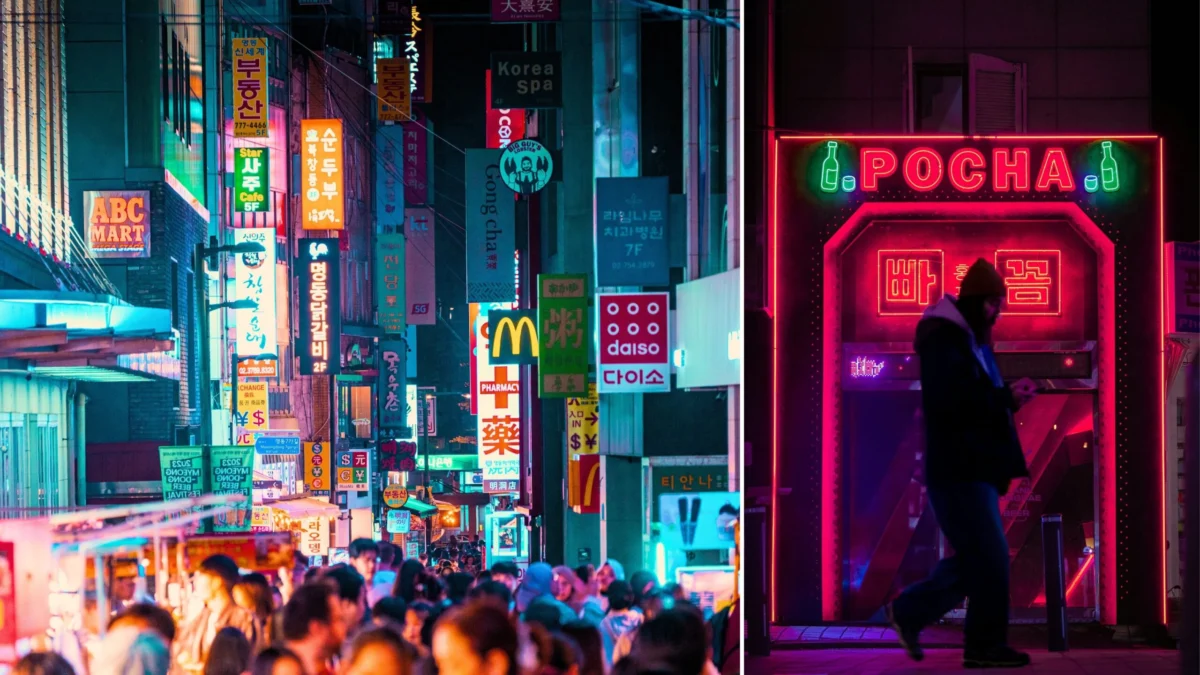
In the 2000s and early 2010s, before the ubiquity of dating apps fundamentally altered human interaction, the southern edge of the Ikseondong Hanok Village—specifically Donhwamunro 11-gil—was a site of communal alchemy. It was lined with pocha (tent-covered food carts). Since the post-Korean War era, these mobile eateries have been urban mainstays, but in this specific pocket of Jongno, they became something else entirely.
The entire neighborhood functioned as a giant, open-air, queer block party. Under the plastic tarps, the air was thick with the scent of grilled seafood and the hum of conversation, fueled by cheap soju and the playful, sharp-witted banter of the "aunties" who ran the stalls. It was a space where the marginalized found a sense of belonging in the most public of settings.

The Digital Shift and the Changing Clientele
The current state of Jongno is a reflection of broader societal shifts. While the pochas still line the streets, their clientele has shifted significantly. The once-overwhelmingly queer atmosphere has diluted, with straight and cisgender patrons now filling the seats.
Many attribute this shift to the closures necessitated by the Covid-19 pandemic, but the reality is more nuanced. Even before 2020, the rise of dating apps began to erode the physical "third spaces" that defined queer life. In South Korea, where being "out" can still be a complex social hurdle, apps provided a means to be discreet—or what we call eundoon (secluded) gay. As digital platforms replaced the physical bar stool, the necessity of the "neighborhood hang" diminished.
This, however, does not mean the spirit of Jongno is dead. It is simply more elusive. For those interested in the history of this subculture, the 2010 documentary Miracle on Jongno Street remains the definitive primer, capturing the lives of four gay men who navigated the city before the gentrification of Ikseondong. Today, one might still find clusters of regulars at bars near My Hunk, which currently holds the title of the neighborhood’s "gay bar du jour." In my younger years, we congregated at pubs like Hwee, the now-defunct Owoo, or, bizarrely, the Insadong branch of the international chain Coffee Bean and Tea Leaf.
Understanding the "Discreet" Geography
Jongno’s gay bars are, by design, tucked away. They are often located on second-floor levels, literally looking down on the heterosexual masses below. Finding them requires a bit of detective work and a keen eye for signage.

In the 2010s, the South Korean government launched a campaign to phase out the massive, often chaotic rectangular signs that cluttered Seoul’s buildings, replacing them with standardized, backlit Korean lettering. However, many of the small, discreet signs belonging to Jongno’s gay bars were permitted to remain, effectively serving as an architectural "dog whistle." If you see a tiny, outdated, rectangular sign in an alleyway, you are likely standing at the threshold of a hidden world.
When scouting for a place to drink, look for names that are short, sharp, and English—My Hunk, Dive, Point. Avoid relying on AI-generated lists; in this neighborhood, the digital landscape is often outdated. These bars are frequently tiny, seating only five or six people at a time. They resemble the Japanese Midnight Diner model: a space where the proprietor knows your history, your job, and your dating failures. It is a level of intimacy that is increasingly rare in the modern city.
Implications of Gentrification and Exclusivity
The transformation of Ikseondong is a cautionary tale of urban development. Once a labyrinthine, quiet neighborhood where residents frequently posted signs pleading for "quiet" from the rowdy bar-hopping crowds, it has been transformed into a polished, commercialized "hot spot." It is now a maze of Italian bistros, craft beer joints, and automated photo booths.
The danger of this gentrification is not just the loss of character, but the encroachment of the "straight" mainstream into the few safe havens remaining. The overflow of tourists and casual drinkers from Ikseondong has spilled over into Jongno, which complicates the protective, insular nature of these queer spaces.

Friends remains my personal favorite because it maintains a rare inclusivity. However, this is not a universal standard. Many Jongno bars are intentionally exclusive. One must remember that for the local community, these spaces are not merely "bars"—they are bastions against a pervasive, heteronormative society. To bring non-queer people into these environments is often viewed as a breach of social contract. The information about these spots is semi-permeable for a reason: they are built for safety, not for tourism.
Itaewon: The Counterpoint
If Jongno is the insular, local heart of Seoul’s queer life, Itaewon is its open, international lung. Historically associated with foreigners and outsiders, Itaewon functions on a philosophy of radical acceptance.
"Homo Hill," the famous alleyway of drag bars and dance clubs, continues to thrive, even as neighboring areas—like the now-demolished Hooker Hill—are paved over for corporate development. For the international traveler, Itaewon is arguably the more accessible experience. Venues like Rabbit Hole host touring international acts and provide a high-energy environment where everyone is welcome.
Conclusion
Ultimately, the traveler must decide what they are looking for. If you want a night of high-octane performance and a space where your presence is expected and celebrated, Itaewon is your destination. But if you are looking for the "neurotic Korean husbands"—the ones who, like me, find their identity in the dimly lit, second-floor bars of a disappearing neighborhood—you must head to Jongno. Just remember: keep your voice down, respect the locals, and know that you are a guest in a space that has spent decades fighting to remain exactly as it is.
 Asro
Asro
 Siti Muinah
