

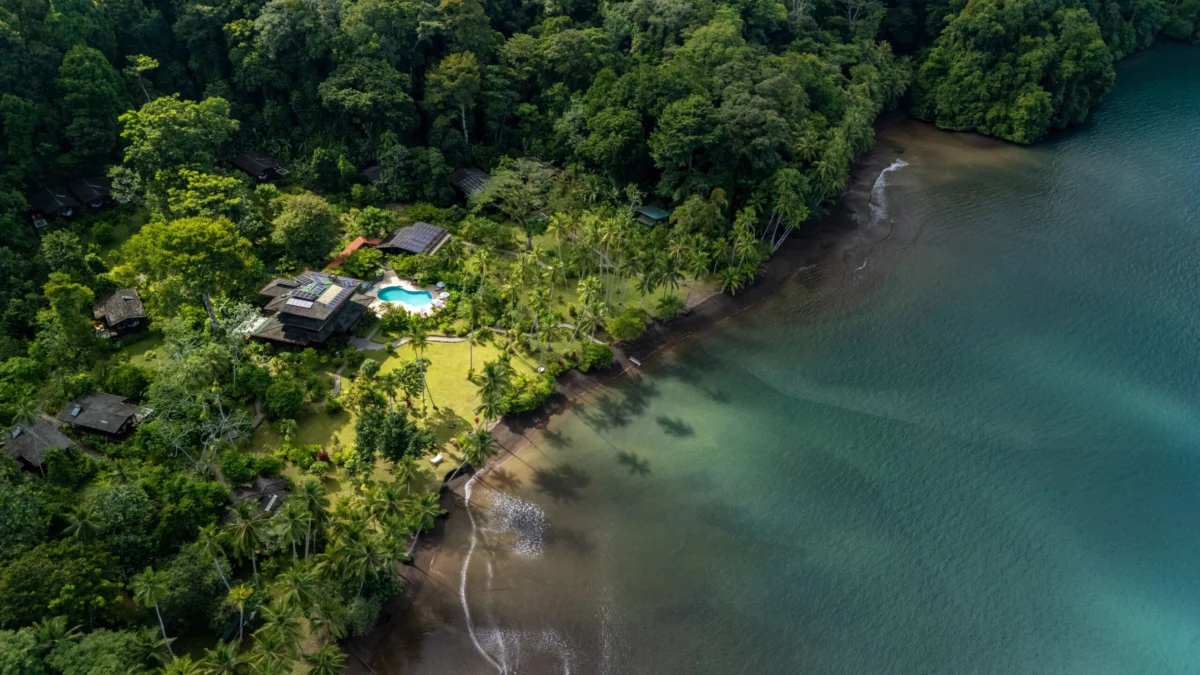
The sun hangs low over the Osa Peninsula, casting the jungle in a liquid, chartreuse glow. As the boat slices through the choppy, dark emerald waters of the Golfo Dulce, the horizon is a seamless blend of dense rainforest canopy and sea. This is not the Costa Rica of crowded souvenir shops or paved tourist circuits; this is a place of profound, quiet isolation. Arriving at Playa Cativo Lodge—a 1,000-acre private nature reserve—feels less like checking into a hotel and more like crossing a threshold into a protected, prehistoric world.
The Geography of Silence: Understanding the "Sweet Gulf"
Golfo Dulce, or the "Sweet Gulf," earned its poetic name from the convergence of mountain-fed rivers that spill into its depths, tempering the salinity of the sea. It is one of only four tropical fjords in the world, a unique geographical phenomenon where steep, forested mountains plunge directly into deep, nutrient-rich waters.
While the fjords of Scandinavia are defined by their stark, snowy ridges, the Golfo Dulce is a masterclass in biodiversity. It acts as a vital aquatic corridor, bridging the gap between Piedras Blancas National Park on the mainland and the world-renowned Corcovado National Park on the Osa Peninsula. Together, these protected zones encompass over 148,000 hectares of primary tropical rainforest—a massive, living lung that breathes life into the region’s fragile ecosystem.

A Chronology of Conservation and Connection
The story of Playa Cativo is as layered as the jungle that surrounds it. The land was long known as the "Rainbow Lodge," a haven for a free-spirited cohort of hippies and adventurous travelers in the 1970s. Local legend persists that some of these early settlers were so enamored with the secluded cove that they intentionally scuttled their own ship, effectively stranding themselves in paradise.
In 2008, the property was acquired by Virginia-based hotelier Mark Betts. At this point, the landscape was already shifting. Following the establishment of Piedras Blancas National Park in the 1990s, the Costa Rican government moved to halt all new commercial development in the area to preserve the integrity of the rainforest. Properties like Playa Cativo were granted a rare grandfather clause, allowing them to continue operations under strict environmental oversight. Today, the lodge stands as a testament to the fact that high-end luxury hospitality can exist in harmony with aggressive conservation efforts.
Supporting Data: The Science of the Sanctuary
The significance of the Golfo Dulce extends far beyond its aesthetic appeal. It is a critical nursery for marine life. The inlet is one of the few places on Earth where Northern and Southern Hemisphere humpback whales overlap to birth and nurse their calves. This extraordinary biological event has earned the Gulf a designation as a Whale Heritage Site—the first in Latin America and one of only eight worldwide.

The ecological management at Playa Cativo reflects this sensitivity:
- Energy Independence: The lodge operates on 100% clean energy, utilizing a combination of private hydropower and extensive solar arrays.
- Sustainable Gastronomy: 35% of all ingredients served at the restaurant are harvested from an on-site organic farm.
- Marine Preservation: The property adheres to strict marine zoning laws, ensuring that boat traffic and human activity do not disturb the resident pods of dolphins and sea turtles that inhabit the bay year-round.
Official Perspectives: The Local Custodians
The soul of the lodge is found in its staff, many of whom are local residents who have pursued specialized studies in eco-tourism. Laura Vega, a local concierge, explains the mission with a sense of pride. "This place is a nursery for the ocean," she notes. "From the hammerhead sharks and turtles to the dolphins, everything depends on the health of these waters. Our job is to facilitate a connection between the guest and the environment without leaving a scar on the land."
This perspective is echoed by naturalist guide Cindy Guzman. During an excursion, Guzman’s sharp eyes spotted a rare, venomous yellow sea snake—a creature so elusive that even career biologists struggle to find them. "We are very lucky," she says. "To be in a place where you can witness such rare, wild beauty while maintaining a footprint that keeps that beauty alive—that is the goal of our work here."

The Experience: Immersive Luxury
The architecture of Playa Cativo is intentionally porous. Eschewing the traditional "fortress" style of luxury resorts, the main lodge is a three-story, open-air structure that hangs over the sea like a giant, elevated porch. There is no air conditioning in the public spaces; instead, guests are invited to embrace the ocean breeze and the symphony of jungle birds.
The 16 guest casitas are tucked into the foliage, offering total privacy. The "luxury" here is defined by what is absent: the sound of traffic, the buzz of notifications, and the artificiality of a mass-market vacation. Instead, guests are met with the rhythmic lapping of waves against the pebble beach and the occasional sighting of a puma or a troop of capuchin monkeys.
Implications for Future Travel
The success of the Golfo Dulce region suggests a shift in the global travel paradigm. As travelers become increasingly weary of "manufactured" destinations, places like Playa Cativo—where access is limited and sustainability is not just a marketing term but a operational requirement—are gaining traction.

However, this rise in popularity brings a challenge: how to scale luxury without compromising the very environment that makes the destination desirable? The model employed here—working within the strict bounds of government-protected parkland—provides a blueprint. By limiting the number of guests and focusing on immersive, naturalist-led programming, the region manages to provide a world-class experience while ensuring that the jungle remains a "place where you can still get lost."
Practical Guidance: Exploring the South Pacific
For those looking to extend their stay along the South Pacific coast, the region offers a diverse array of experiences:
- Surfing: While the Golfo Dulce is calm, it is a short boat ride to Matapalo (beginner-friendly) and Pavones (home to one of the longest left-breaking waves in the world).
- Regional Transit: Domestic travel is streamlined via Sansa Airlines. Travelers can fly from San José (SJO) to Golfito for the Golfo Dulce region, or to Quepos (XQP) for access to Uvita and Dominical.
- Cultural Integration: The philosophy of Pura Vida—simple living, gratitude, and a focus on community—is not just a greeting here; it is the rhythm of daily life.
As the weekend draws to a close, the temptation to "sink the boat" and remain in the jungle is palpable. There is a profound sense of clarity that comes from being suspended in a place where material possessions lose their luster against the backdrop of an ancient, thriving forest.

The future of travel lies in these quiet corners of the world. By choosing destinations that prioritize the health of the planet over the convenience of the traveler, we don’t just see the world; we contribute to its preservation. In the Golfo Dulce, the jungle continues to grow, the whales continue to return, and the "Sweet Gulf" remains a sanctuary for those brave enough to seek the path less traveled.
 Asro
Asro
 Siti Muinah
