

In the remote classrooms of Ghor, Nuristan, and Paktika, the sound of a bell ringing marks the beginning of a lesson. For many of the children sitting in these classrooms, it also marks their only guaranteed source of nutrition for the day: a fortified biscuit provided by the United Nations World Food Programme (WFP).
However, the journey these biscuits take to reach these children is a harrowing, 15,000-kilometer odyssey. In a landscape defined by geopolitical instability, climate-driven natural disasters, and the volatile closure of international trade routes, the simple act of feeding a child has become a feat of logistical engineering that defies conventional supply chain management.
The Humanitarian Imperative: A Nation on the Brink
Afghanistan stands at a precarious crossroads. The country is grappling with the cumulative effects of decades of conflict, compounded by a recent string of environmental catastrophes, including severe flooding and earthquakes that have decimated local agricultural output. Humanitarian funding, which once served as a lifeline for millions, is currently in decline, forcing aid organizations to stretch dwindling resources further than ever before.
For the WFP, the mandate is clear: "Hunger doesn’t wait for routes to reopen." With hundreds of thousands of children at risk of acute malnutrition, the agency operates under the constant pressure of a ticking clock. The stakes are not merely economic or political; they are biological. Without the caloric and nutrient-dense support provided by these school meals, the long-term cognitive and physical development of an entire generation of Afghan youth is at stake.
Chronology of a Crisis: Mapping the 15,000-Kilometer Journey
The logistical struggle began with a generous $3.5 million contribution from the Government of Indonesia, intended to provide 397 metric tons of fortified biscuits for approximately 172,000 Afghan students. The journey originated at the Indonesian port of Surabaya, but the simplicity of the plan ended the moment the cargo arrived in the region.
The Karachi Bottleneck
Initially, the WFP planned to offload the cargo at the Pakistani port of Karachi, intending to move the supplies via truck across the border into Afghanistan—a route spanning roughly 7,000 kilometers. However, as regional tensions flared between Islamabad and Kabul, the border crossings were abruptly shuttered, leaving the vital shipment stranded in a logistical limbo.
The Persian Gulf Pivot
With the primary land route closed, WFP logisticians executed a pivot. The cargo was redirected to Jebel Ali in Dubai, with the intention of shipping it across the Persian Gulf to Iran, followed by a secondary land transit. This plan, however, was quickly derailed by the broader geopolitical instability engulfing the Middle East. As tensions rose, the Strait of Hormuz became effectively impassable for humanitarian shipping by March, forcing the WFP to abandon its secondary strategy.
The Caucasus Corridor: A Last-Ditch Effort
Back at the operations center, WFP planners were forced to return to the drawing board. They identified a final, desperate, and arduous alternative: an entirely new land corridor stretching across the Caucasus. This route, while adding 8,000 kilometers to the journey and significantly increasing costs, was the only viable path left.
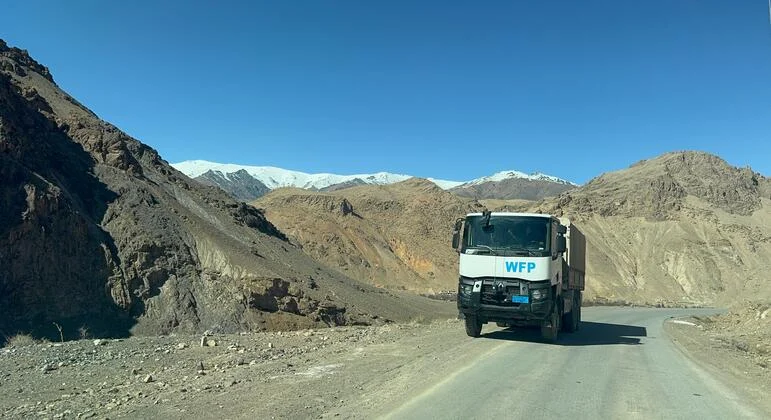
A 21-truck convoy departed Dubai, traversing the desert highways of Saudi Arabia and Jordan, moving north through Syria, Türkiye, and Georgia. Upon reaching Baku, Azerbaijan, the trucks were loaded onto a ferry to cross the Caspian Sea into Turkmenistan, eventually reaching the remote Torghundi border crossing. From there, the cargo finally made its way into the heart of Afghanistan.
Supporting Data: The Cost of Complexity
The scale of this operation highlights the immense hurdles humanitarian agencies face in a fragmented global landscape. The logistics behind this specific delivery involved:
- Distance: An initial 7,000 km route evolved into a 15,000 km journey.
- Border Crossings: The convoy navigated seven distinct international borders, each requiring separate customs clearances, security protocols, and bureaucratic oversight.
- Logistical Obstacles: At the Alat port in Baku, drivers faced a 30-kilometer-long queue of trucks, a testament to the immense traffic congestion currently plaguing regional transit routes.
- Operational Resilience: The transit required 11-hour driving days for weeks on end, with drivers living out of their truck cabins, surviving on basic rations of soup, bread, and tea to ensure the cargo remained secure.
Official Responses and Frontline Perspectives
Corinne Fleischer, the Director of WFP Supply Chain and Delivery, has emphasized that the agency’s ability to navigate these obstacles is a testament to the resilience of their personnel. "Hunger doesn’t wait for routes to reopen," she stated, noting that the agency’s mission is to overcome obstacles that would stop most commercial entities in their tracks.
On the ground in Kabul, the arrival of the trucks was met with palpable relief. Abdul Ahad Monib, a WFP Supply Chain and Delivery officer, was responsible for tracking every leg of the journey.
"We followed every step of the journey closely—every delay, every border crossing, every change of plan," Monib said. "There was a feeling of relief when we saw the trucks arrive. No one sees the thousands of kilometers, the delays, or the rerouting behind each packet. But that’s exactly the point—whatever the obstacles, WFP delivers."
Hüseyin Sarraç Ulus, one of the Turkish truck drivers who navigated the grueling 3,000-kilometer stretch from Dubai to the Caspian Sea, reflected on the emotional weight of the mission. "It was not always comfortable, but we are used to it," he recalled. "Knowing the cargo was helping children made me proud to be part of the journey."
Implications for Future Humanitarian Aid
The successful delivery of these biscuits is not merely a logistical triumph; it is a case study in the increasing difficulty of delivering aid in a multipolar, unstable world. The implications of this operation are profound:
- The High Cost of Geopolitics: When borders are used as tools of political leverage, the ultimate victims are often the most vulnerable populations. The extra 8,000 kilometers added to this shipment represent not just a financial cost, but a loss of time that the hungry cannot afford.
- The Necessity of Adaptive Supply Chains: Traditional humanitarian supply chains are built on stability. As global conflict zones multiply, agencies like the WFP must develop "modular" supply chains capable of shifting routes in real-time, requiring advanced satellite tracking and real-time intelligence on regional border conditions.
- The Fragility of the "Last Mile": Even when international transit succeeds, the final leg of the journey into regions like Ghor and Nuristan remains subject to local insecurity and infrastructure decay. This underscores the need for continued investment in local warehouse capacity and regional partnerships.
As the biscuits finally reached the children of Afghanistan, the journey serves as a stark reminder of the global interconnectedness of food security. For the WFP, the mission is now to learn from the challenges of the Caucasus Corridor to prepare for the next crisis. For the children, the arrival of the biscuits means a chance to focus on their lessons rather than the gnawing pain of an empty stomach. In a world where the paths to peace are often blocked, the path to survival, however long and winding, must remain open.
 Lina Hope
 Asro
Asro
 Layla Zulfa
