

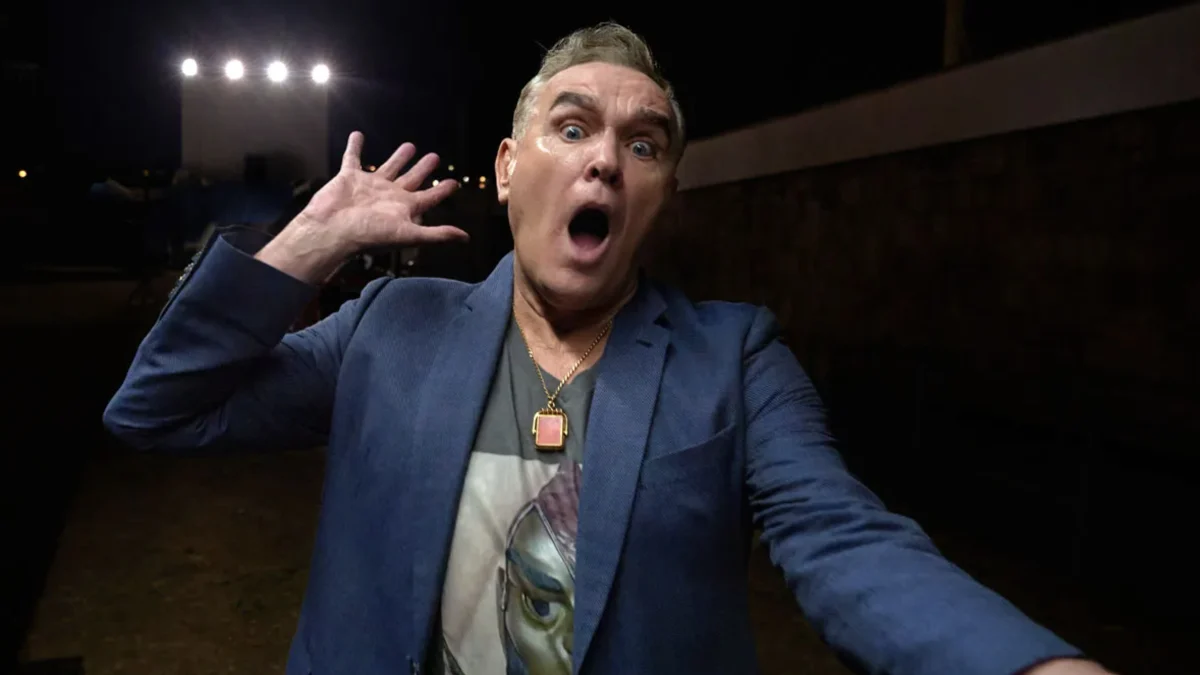
In the hyper-connected era of social media, the line between fan appreciation and intellectual property protection has become increasingly blurred. This week, that boundary was tested when a popular Morrissey-themed Instagram account, @MozPosting, found itself in the crosshairs of the legendary singer’s legal representatives. The incident, which centered on a satirical post mimicking the aesthetic of Morrissey’s official website, serves as a poignant case study on the friction between artist control, internet culture, and the legacy of one of music’s most enigmatic figures.
The Incident: A Satire Misinterpreted
The controversy began with a post from the Instagram account @MozPosting—a page dedicated to sharing memes and lighthearted content centered on the former Smiths frontman. The post in question was a meticulously crafted parody, designed to replicate the visual language and tone of a formal announcement from Morrissey Central, the singer’s official online portal.
The satirical document, titled "The Malefactors," purported to list the singer’s various perceived enemies. The humor, which was intended to be hyperbolic and absurd, drew from the common trope that Morrissey maintains a sprawling, ever-expanding list of personal grievances. The list was a chaotic blend of pop culture figures and historical entities: it included Edward Cullen from Twilight, the Skyrim video game character Ulfric Stormcloak, the cartoon sailor Popeye, and legitimate public figures like Meryl Streep, 50 Cent, and Gordon Ramsay.
The punchline, however, was clearly aimed at a more specific target: the list featured the name of former Smiths guitarist Johnny Marr three times, playing on the well-documented, decades-long acrimony between the two.
Shortly after the post gained traction, the account holder reported that they had received a formal request from Morrissey’s camp to remove the content. The cited reasons were "copyright infringement and impersonation." Despite the account holder’s plea that the post was clearly protected by the principles of satire and parody, they ultimately complied to avoid further escalation.
A Chronology of the Conflict
To understand why this specific meme triggered such a stern reaction, one must look at the timeline of the events leading up to the takedown.
- Mid-June 2026: Morrissey’s official team publishes a statement on Morrissey Central titled "What Happened Next," expressing deep frustration regarding the proliferation of online impersonators. The post explicitly identified nine accounts they claimed were operating with political agendas, some of which they alleged were linked to parties "unsupportive" of the singer.
- The Allegation: Within that same statement, the team dropped a bombshell, claiming that one of the identified impersonators had ties to a former band member of The Smiths. This signaled a heightened state of alert within the Morrissey camp.
- The Takedown: Merely days after this official proclamation of war against impersonators, the @MozPosting account was contacted regarding their "Malefactors" post.
- The Capitulation: Faced with the threat of legal action, the creator of @MozPosting pulled the content. In a series of follow-up stories, the creator expressed genuine dismay, stating, "I created this page out of appreciation… it was never intended to cause harm."
The Legal and Cultural Implications
The incident highlights a growing trend among legacy artists: the rigorous policing of their digital likeness. In an age where "shitposting" and meme culture can reach millions of people, artists often view unauthorized mimicry as a dilution of their brand or a security risk.
However, legal experts often point to the "Fair Use" doctrine in copyright law, which provides protections for parody and satire. The argument for @MozPosting is that the inclusion of figures like Popeye and Edward Cullen clearly signals to any reasonable reader that the list is a work of fiction and not a genuine press release.
Yet, the distinction between "parody" and "impersonation" is often where the legal battles are won or lost. By adopting the aesthetic of Morrissey Central so closely, the account potentially crossed the line into creating consumer confusion—the primary metric used in trademark and impersonation disputes. For the artist, the fear is not necessarily the joke itself, but the potential for malicious actors to use that same format to disseminate false information that could damage their professional reputation.
Official Responses and the "Impersonator" Narrative
Morrissey has long maintained a complicated relationship with the media and the internet. His team’s recent crackdown on impersonators suggests a strategic pivot toward controlling the narrative. By labeling these accounts as having "political agendas," the Morrissey camp is framing the issue as a matter of integrity rather than a mere sensitivity to jokes.
In their statement, the team noted: "We have been monitoring a series of accounts that seek to mimic the official voice of Morrissey to push narratives that are entirely inconsistent with his actual views." While @MozPosting claims their intent was pure comedy, the Morrissey camp’s recent paranoia regarding "impersonators with agendas" likely left little room for nuanced interpretation by their legal team.
The Fan Perspective: A Disheartened Community
The reaction from the fanbase has been mixed. While many supporters of the singer agree that he has the right to protect his brand from bad-faith impersonation, others feel the takedown of a clearly humorous meme is an overreach.
The creator of @MozPosting expressed a sentiment shared by many in the digital fan community: "I’m a huge fan of the man’s music, and this whole situation has been incredibly disheartening." This sentiment underscores a common tension in modern fandom: the feeling that the artist is increasingly disconnected from, or even hostile toward, the very subcultures that celebrate their work.
Moving Forward: The 2026 Tour and Beyond
Despite the digital drama, the show must go on. Morrissey is currently preparing for a busy second half of 2026. With the release of his Deluxe Notre-Dame EP on June 19th and a massive international tour spanning Europe and the United States, the singer remains as active as ever.
His latest studio album, Make-Up Is a Lie, has seen generally positive reception, and demand for tickets remains high, as evidenced by his extensive residency at the Wynn in Las Vegas and his upcoming appearances at major festivals.
A Snapshot of the Upcoming Tour:
- European Leg: Beginning in Lillestrøm, Norway, on June 27th, the tour will weave through Sweden, Germany, Poland, Hungary, Slovenia, Italy, Spain, and Portugal, showcasing the enduring reach of his European fanbase.
- US Residency and Dates: The North American portion of the tour begins with a high-profile engagement in Las Vegas in August, followed by a cross-country trek that includes major venues in New York, Washington D.C., and Texas, culminating in a year-end performance in Brussels.
Conclusion: The Price of Being an Icon
The "Malefactors" incident is a microcosm of the modern celebrity experience. For an artist like Morrissey—who has spent a career crafting a persona defined by wit, melancholy, and a sharp tongue—the irony of being unable to handle a bit of digital satire is not lost on his critics.
However, as long as the internet continues to provide a platform for impersonators, the legal machinery protecting the artist’s brand will likely continue to grind. Whether this leads to a safer online environment for artists or simply alienates the most creative and dedicated segments of their fanbase remains to be seen. For now, the "Malefactors" list has been deleted, but the digital discourse it ignited is likely to linger as long as the music itself.
Fans looking to engage with the artist’s work in the coming months will have plenty of opportunities, both on the stage and in the record stores. Whether the digital policing of memes will dampen that engagement is a question that only time—and perhaps the next batch of Morrissey Central updates—will answer.
 Asro
Asro
 Lina Irawan
 rifanmuazin
