

In a sweeping display of artistic solidarity, a formidable coalition of Hollywood’s most influential voices is preparing to take the stage at New York City’s historic Town Hall. On Sunday, June 14—coinciding with Flag Day—the "Rise Up, Sing Out: A Concert for the First Amendment" will serve as both a high-profile cultural event and a defiant statement against the perceived erosion of free expression in modern America.
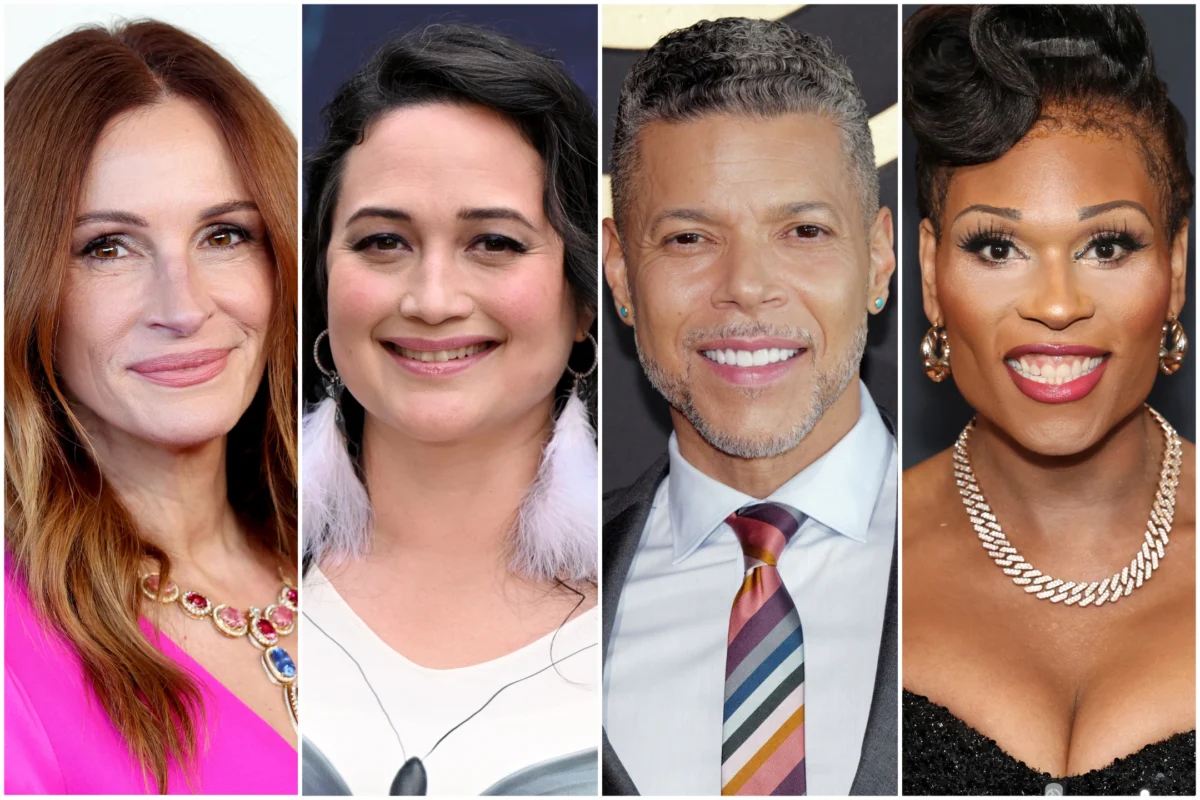
Spearheaded by Academy Award winner and activist Jane Fonda, the concert serves as the inaugural marquee event for the relaunched Committee for the First Amendment (CFA). With the recent addition of screen legend Julia Roberts, Oscar nominee Lily Gladstone, activist and actor Wilson Cruz, and the iconic performer Peppermint to the bill, the event has cemented its status as one of the most significant gatherings of talent for a cause in recent memory.
The Vanguard of Expression: Who Is Taking the Stage?
The announcement of these new headliners adds significant weight to an already star-studded lineup. Joining Fonda, who will lead the proceedings, is a diverse array of artists spanning generations and genres. The roster currently features musical luminaries such as Bette Midler, Patti Smith, and Rufus Wainwright, alongside television host Joy Reid and the resonant sounds of the Broadway Inspirational Voices.
The production team has also confirmed an expanded list of participants, including Jenn Colella, Alex Joseph Grayson, Kayla Davion, and the Reverend Adriene Thorne. Musical accompaniment will be bolstered by the Singing Resistance and the Rude Mechanical Orchestra, underscoring the event’s thematic focus on "protest music" as a historical vehicle for societal change.
This assembly of talent is not merely for entertainment; it is an orchestrated response to what the organizers define as a critical moment for democracy. By integrating Broadway heavyweights with cinematic icons, the event aims to bridge the gap between pop culture and political advocacy, utilizing the stage as a platform for the fundamental right to speak without fear of government reprisal.
A Legacy Reborn: The Chronology of the Committee
To understand the weight of the "Rise Up, Sing Out" concert, one must look back to the mid-20th century. The original Committee for the First Amendment was formed in 1947 during the height of the McCarthy-era "Red Scare." At that time, the House Un-American Activities Committee (HUAC) was aggressively targeting Hollywood professionals suspected of communist sympathies.
The original CFA, which counted Jane Fonda’s father, Henry Fonda, among its foundational members, was established to defend the civil liberties of those blacklisted by the industry and the government. It was a period defined by suspicion, loyalty oaths, and the silencing of dissent—a historical parallel that Jane Fonda clearly intends to draw upon today.
In October of last year, Fonda breathed new life into the organization, announcing the relaunch with a staggering show of support from over 550 A-list industry figures. This list, which functions as a "who’s who" of modern Hollywood, includes luminaries such as Barbra Streisand, Viola Davis, Spike Lee, Pedro Pascal, Natalie Portman, and Billie Eilish. The coalition’s goal is to serve as a watchdog against government repression, industry complicity, and the quiet intimidation that organizers argue is increasingly stifling creative freedom.
The Philosophy of Protest: Official Responses and Statements
Jane Fonda’s vision for the concert is anchored in the belief that music acts as a non-violent, yet potent, mechanism for social mobilization. In a statement released ahead of the concert, the veteran actress and activist articulated the urgency of the moment.
"We can’t sit idly by while our rights are at stake," Fonda stated. "History shows us that when democracy is threatened, song becomes one of our most powerful weapons. Right now, we are at a critical crossroads. It’s time for us to rise up, raise our voices and stand up against a government that refuses to put its people first. We are fighting back the best way we know how to: with our community and in solidarity."
The tone of the concert is explicitly confrontational toward institutional overreach. By invoking the memory of her father and the era of the Hollywood Ten, Fonda is framing the current climate not just as a matter of partisan policy, but as a constitutional crisis. The committee’s mission statement emphasizes the protection of "storytellers" and "cultural leaders," suggesting that the threat is not limited to politics, but extends to the very fabric of American creative life.
Structural Integrity: Behind the Production
The scale of the production matches the gravity of its mission. The event is being directed by the acclaimed Schele Williams, with music direction provided by Mary Mitchell Campbell. The script, which is expected to blend historical narrative with contemporary urgency, is written by Bess Kalb.
The logistical backbone of the event is equally professional, featuring lighting design by Jamie Roderick, sound design by Cody Spencer, and projection design by the collaborative team of Daniel Brodie and Olivia Sebesky. The production is being steered by a high-caliber team including Bruce Cohen and the production company rigor + ruckus (Robb Nanus, Heather Shields, and Rachel Sussman).
The choice of Town Hall—a venue with its own rich history of social activism—adds a layer of historical continuity to the evening. By opening the doors at 6:45 p.m. ET for a 7:30 p.m. start, the organizers are ensuring that the message reaches a prime-time audience, both in the theater and through the free global livestream.
The Economic and Political Implications
Beyond the spectacle, the concert carries significant financial and symbolic weight. All proceeds from the event are earmarked for the Committee for the First Amendment, providing the group with the necessary resources to engage in legal advocacy, public awareness campaigns, and support for artists facing professional retaliation.
The implications of this movement are multifaceted:
- Industry Accountability: By highlighting "industry complicity," the committee is signaling that the threat to free speech is not solely external. They are challenging media conglomerates and studios to stand by their creators even when content becomes controversial or politically inconvenient.
- Cultural Mobilization: The sheer volume of high-profile names attached to the committee acts as a shield. It is far more difficult for political interests to target or "blacklist" individuals when they are protected by a unified front of hundreds of the industry’s most bankable stars.
- The Digital Battlefield: The decision to make the event available for free via livestream recognizes that the fight for the First Amendment is now a digital one. By removing the barrier to entry, the committee is attempting to democratize access to the message, ensuring it reaches younger, digitally native audiences who may not be familiar with the history of the 1940s McCarthy hearings.
- Flag Day Symbolism: The timing of the event on Flag Day is a deliberate reclaiming of national identity. By holding the concert on a day typically associated with patriotic displays, the organizers are asserting that dissent is, in itself, a patriotic act. They are challenging the notion that questioning the government is anti-American, instead positing that the defense of free speech is the highest form of loyalty to the U.S. Constitution.
Looking Ahead: The Future of the CFA
As the date for "Rise Up, Sing Out" approaches, the cultural world is watching closely. The event serves as a stress test for the newly relaunched Committee for the First Amendment. If successful, the concert could become the blueprint for a new wave of celebrity-driven political advocacy—one that is highly organized, historically grounded, and technologically integrated.
However, the committee faces significant headwinds. In an era of intense political polarization, any organization that claims to defend "free speech" is often subjected to intense scrutiny regarding whose speech it chooses to defend. The CFA will likely need to navigate complex waters as it seeks to maintain its coalition of 550+ artists, each with their own unique political views and public personas.
Nevertheless, the lineup—ranging from Julia Roberts’ mainstream Hollywood appeal to Patti Smith’s punk-poet ethos—suggests a coalition that is broad-based and deeply committed. On June 14, Town Hall will not just be a venue for music; it will be a forum for a vital, ongoing debate about what it means to be free in a democracy that is constantly testing the limits of its own founding documents.
For Jane Fonda, this is a continuation of a life’s work. For the new generation of stars joining her, it is an entry into a lineage of artists who have realized that when the spotlight is turned on them, they have the power to illuminate the darkest corners of the political landscape. As the curtain rises on Flag Day, the message will be clear: the era of sitting idly by is officially over.
 Nana
Nana
 Ali Ikhwan
 Iffa Jayyana
