

For years, the evolution of digital communication has followed a predictable, albeit incremental, trajectory. We moved from plain text to emoticons, then to vibrant GIFs, and eventually to the highly stylized world of reaction stickers. Yet, these tools often struggle to capture the nuance, spontaneity, and "presence" of real-world human interaction. Enter Pixi, a new messaging-native application that aims to leapfrog current standards by integrating sophisticated, on-device artificial intelligence with augmented reality (AR) to turn static chats into living, breathing, and reactive experiences.
Launched this week on the Apple App Store, Pixi is positioning itself not just as a new app, but as the next fundamental evolution in how we send and receive digital messages. By allowing users to deploy AI-powered AR characters that physically "occupy" the recipient’s environment through their iPhone camera, Pixi is attempting to transform the cold, two-dimensional nature of text messaging into a three-dimensional, interactive theater.
The Core Concept: Digital Presence in Your Living Room
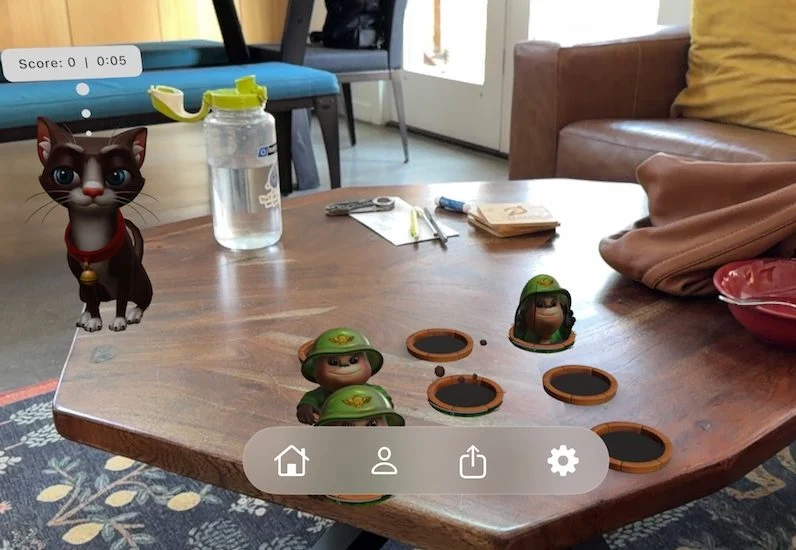
At its heart, Pixi is a messaging-native platform that functions within the existing iMessage ecosystem. When a user sends a "Pixi"—the term the company uses for its AR characters—the recipient doesn’t just receive a media file; they receive an intelligent agent. Once activated via the recipient’s camera, this character exists in the user’s physical space.
Unlike standard AR filters, which are often static overlays that move in tandem with a face, Pixi characters possess a level of situational awareness. They can identify and react to real-world objects. A virtual cat sent by a friend won’t just sit there; if a physical dog wanders into the frame, the cat may react accordingly. If a user moves, the character might track them, chase them, or play a game of tic-tac-toe or whack-a-mole directly on their coffee table.
This is made possible by sophisticated on-device AI processing. By keeping visual and audio analysis local to the hardware, Pixi addresses the growing consumer anxiety surrounding data privacy—an essential hurdle for any app that requires access to a user’s camera and physical surroundings.
A Legacy of Animation Meets Modern Tech
The vision behind Pixi is driven by founder Mark Drummond, whose professional pedigree is rooted in the intersection of high-end storytelling and technical innovation. As an alumnus of both DreamWorks Animation and Apple, Drummond brings a unique perspective to the project: he understands both the "soul" of an animated character and the technical limitations of mobile hardware.
Drummond’s motivation for building Pixi stems from a psychological observation about modern digital loneliness. "The consumer problem we’re solving is thinking of a friend when they’re not present," Drummond explained in an interview. He describes the current landscape of e-cards and digital gifts as "your dad’s or your granddad’s media"—static, impersonal, and outdated.
Drummond argues that we need a "digitally native" way to share affection, or what he terms "creative gifting." By using the powerful AR capabilities embedded in modern iPhones, Pixi turns a mundane "Happy Birthday" text into a shared, playful experience, effectively closing the emotional distance between two people who are physically separated.
Chronology of Development and Launch
The journey to Pixi’s launch has been one of rigorous R&D, focused on balancing the heavy processing requirements of real-time AI with the fluidity required for a messaging app.
- The Conceptual Phase: Drummond and his team spent months analyzing the limitations of current AR tools. While companies like Snap have led the market with AR lenses for years, Pixi identified a gap: the lack of "character agency." Most AR is passive; Pixi wanted to make it active.
- The Prototyping Phase: The team focused on character responsiveness. During demonstrations, the AI showcased an ability to interpret facial expressions. For example, a character performing a stand-up comedy routine on a desk was able to "sense" when the user smiled, concluding the act based on that emotional cue.
- The Launch Week: On Wednesday, the app made its official debut on the Apple App Store. It launched with a curated set of initial characters, including a robot, a cat, and an animated envelope.
- Future Expansion: The roadmap is already set. Beyond the initial character set, Pixi plans to roll out more complex IP, including an "Alice in Wonderland" character designed to demonstrate how characters can interact with objects in an "Alice-consistent" way.
Supporting Data and Technical Requirements
Pixi is not an app for every smartphone user—at least, not yet. Currently, it is optimized for iPhone models 11 and newer. This hardware gate is necessary because the app requires a Neural Engine capable of performing the complex, real-time spatial mapping and AI inference required to keep the characters behaving naturally.

The app utilizes the following technical pillars:
- On-Device Inference: By avoiding cloud-based processing for visual and audio data, Pixi ensures that the user’s camera stream never leaves their device. This is a critical selling point for a generation of users wary of "surveillance capitalism."
- Spatial Awareness: The app’s engine allows characters to "understand" geometry. When a virtual character is placed on a table, it respects the table’s boundaries, demonstrating a level of spatial awareness that was largely reserved for high-end gaming consoles until recently.
- Generative Integration: In the coming months, Pixi plans to open its generative AI capabilities to the public, allowing users to "prompt" their own characters into existence. A user could theoretically type, "Create a blue blob that growls when I get close," and the app will generate that entity.
Implications for Brands and Creators
Perhaps the most significant long-term implication of Pixi is its potential as a marketplace. Drummond envisions a future where studios, brands, and independent creators can list their own AR characters.
Imagine a movie premiere where a character from the film visits the fan’s home to invite them to the show, or a food company that allows users to interact with a mascot that reacts to their kitchen environment. By encouraging brands to offer these characters for free initially, Pixi is positioning its users as "brand ambassadors." If a user finds a character entertaining, they are naturally inclined to share it with friends, providing brands with a form of viral, organic reach that traditional advertising simply cannot replicate.
"We’re going to encourage people to do it for free, because then people become your own brand ambassadors," Drummond noted. "You’re putting them in charge of using your characters to tell their own stories."
The Challenges Ahead
Despite the promise, Pixi faces several significant hurdles. The first is the "app fatigue" factor. Getting users to download a standalone app just to enhance their iMessage experience is a classic friction point. While Pixi has minimized this by allowing recipients to view messages without needing the full app installed, the creation of these messages still requires the platform.
Second is the barrier of platform exclusivity. By launching only on iOS, Pixi misses a massive global audience of Android users. While the company has confirmed plans for Android and cross-platform support (including WhatsApp and Instagram), the current limitation restricts the "viral loop" necessary for mass adoption.
Finally, there is the challenge of content moderation. If users are eventually allowed to generate their own characters using generative AI, how will the company ensure those characters aren’t used for harassment or offensive purposes? Managing a community-driven AI space is notoriously difficult, and Pixi will need to implement robust safety guardrails as it scales.
Conclusion: Is This the End of the GIF?
Pixi represents a bold, if ambitious, bet on the future of social interaction. It acknowledges that while we are more connected than ever, our digital tools have become stagnant. By injecting "presence"—the sense that something is actually there with us—into our messages, Pixi is attempting to bridge the gap between digital communication and physical reality.
Whether Pixi becomes a mainstay of our daily digital lives or remains a niche curiosity will depend on its ability to scale its character library, maintain its high performance standards, and successfully navigate the complexities of user-generated content. For now, however, it serves as a fascinating look at where messaging is headed: away from the flat, static images of the past and toward a future where our digital conversations have a life of their own.
 Asep Darmawan
 Siti Muinah
 Ali Ikhwan
