

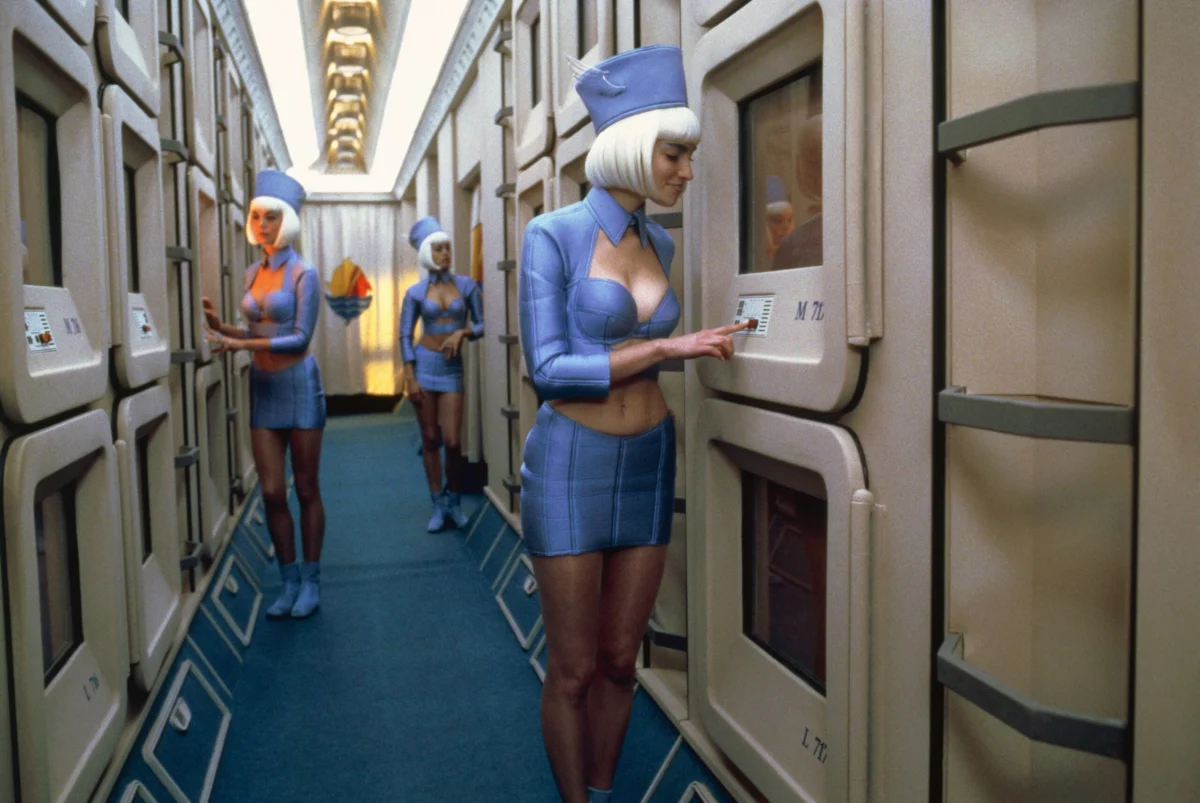
Nearly 30 years after its theatrical debut, Luc Besson’s The Fifth Element (1997) stands as a vibrant anomaly in the landscape of science fiction. In an era where modern space epics often lean into desaturated color palettes, grim realism, or franchise-mandated homogeneity, The Fifth Element remains a kaleidoscopic, camp-infused, and unapologetically strange masterpiece. It is a film that feels less like a product of a Hollywood assembly line and more like a fever dream that miraculously made it to the silver screen.
As the film enjoys a renewed spotlight via its availability on platforms like Pluto TV, it is worth examining why this bizarre, maximalist spectacle has not only survived the test of time but arguably improved with age.
The Near-Death Experience of a Sci-Fi Icon
The history of The Fifth Element is almost as chaotic as its narrative. During post-production, a disastrous incident nearly consigned the film to the annals of lost media. According to associate producer John Amicarella, the precious negatives—the literal soul of the production—were in transit from London to Los Angeles. During the transfer process at Los Angeles International Airport, a shipment spilled onto the tarmac.
In a scene that would be humorous if the stakes weren’t so high, a forklift operator unknowingly drove over the canisters. When Amicarella arrived on the scene, he was presented with trash cans filled with mangled, ruined celluloid. The loss of that footage would have meant the permanent deletion of the film’s most iconic sequence: the aria performed by the Diva Plavalaguna, the blue-skinned alien opera singer. The fact that the production team managed to salvage, restore, and edit that footage into what is now one of the most celebrated scenes in sci-fi history is a testament to the sheer tenacity of the 1997 crew.
A Chronology of Chaos: From Besson’s Notebook to the Big Screen
The genesis of The Fifth Element predates its 1997 release by decades. Luc Besson began sketching the universe that would become the film when he was just 16 years old. He imagined a 23rd-century New York City that was vertical, crowded, and bursting with life. By the time he secured the budget—at the time, the most expensive European film ever made—he had spent years refining the visual language of his future.
- 1970s: A teenage Luc Besson begins writing the world-building elements of the story as an escape from his own reality.
- 1991: Besson begins pre-production, scouting locations and developing the aesthetic.
- 1996: Principal photography begins. The production is marked by an ambitious commitment to practical effects and high-concept set design.
- May 1997: The Fifth Element premieres at the Cannes Film Festival. The critical reception is polarized, with many critics baffled by its tonal shifts between slapstick comedy and high-stakes drama.
- 1997-Present: The film evolves from a cult curiosity into a defining touchstone of 90s cinema, influencing everything from fashion-forward costume design to modern action choreography.
Supporting Data: The Anatomy of a Blockbuster
The Fifth Element is defined by a "more is more" philosophy that stands in stark contrast to the minimalist sci-fi trends of the 2020s. Its production budget was approximately $90 million, a staggering sum for the mid-90s, but it yielded an aesthetic that remains visually arresting.
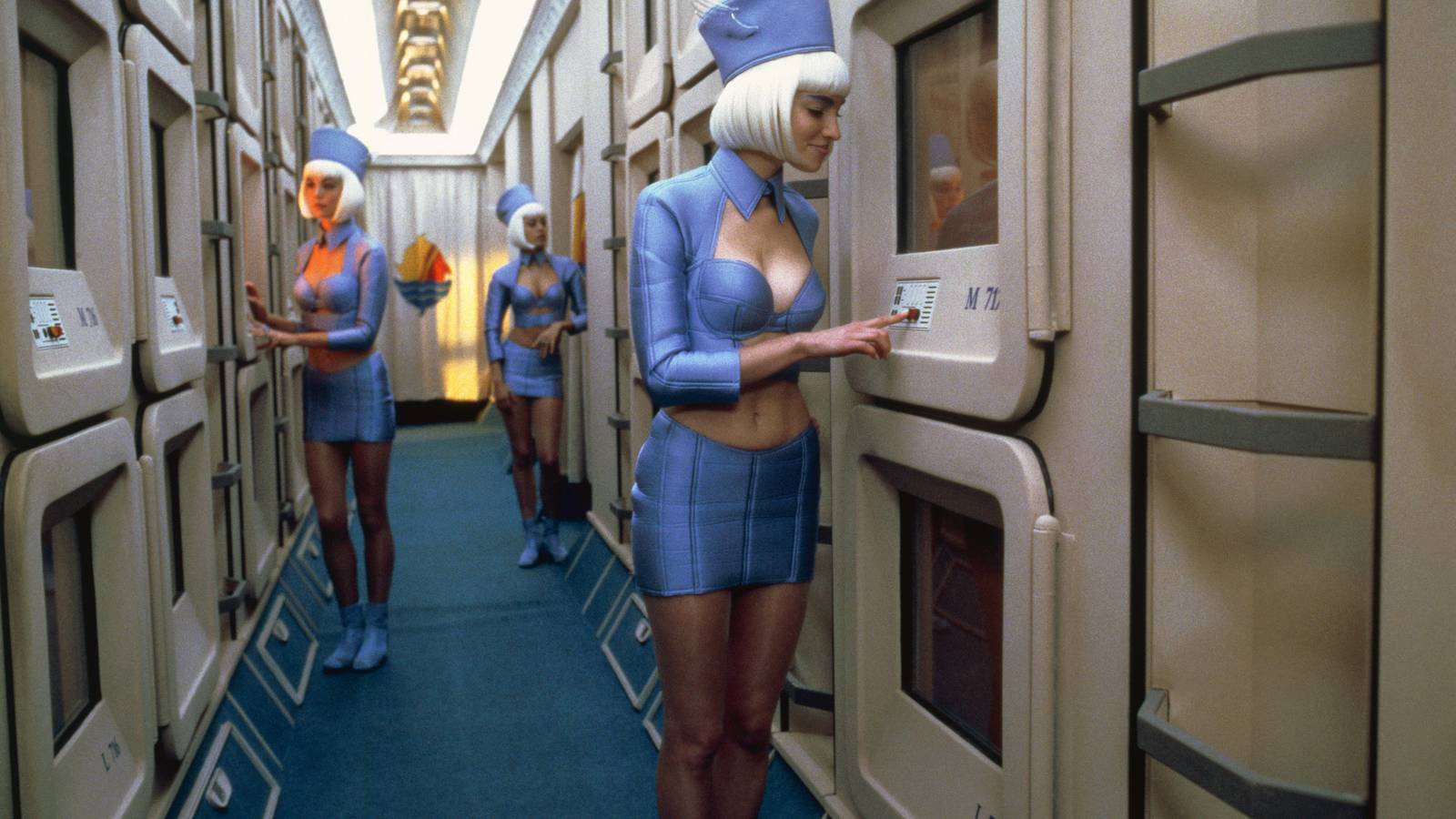
The Jean-Paul Gaultier Effect
Perhaps the most significant differentiator for the film was the recruitment of French fashion designer Jean-Paul Gaultier. Tasked with creating over 1,000 costumes, Gaultier moved away from the utilitarian, militaristic aesthetic of Star Wars or Aliens. Instead, he opted for a blend of high-fashion couture and satirical kitsch. From the "burger assistant" uniforms—which use the McDonald’s golden arches as a provocative design element—to the iconic bandage-wrap outfit worn by Milla Jovovich, the costumes tell a story of a future that is hyper-commercialized yet deeply obsessed with individual expression.
The Color Palette
While contemporary blockbusters like Dune or Blade Runner 2049 utilize a "dust and shadow" color theory to ground their worlds, The Fifth Element utilizes a palette that feels like a collision of Salvador Dalí paintings and heavy metal album art. The vibrant, saturated oranges, deep teals, and harsh neon pinks create a world that feels alive, messy, and fundamentally human.
The Performances: A Study in Controlled Intensity
The film’s success rests on a delicate balancing act between grounded performances and pure, unadulterated camp.
Bruce Willis, cast as the cynical, world-weary Korben Dallas, provides the necessary anchor. He is the "everyman" who allows the audience to navigate the madness. Conversely, Gary Oldman’s portrayal of the villainous industrialist Zorg is a masterclass in calculated eccentricity. With his bizarre hair, plastic-covered skull, and erratic accent, Oldman transforms Zorg from a generic corporate villain into a terrifying, unpredictable force of nature.
Perhaps most legendary is Chris Tucker’s performance as Ruby Rhod. Originally written with Prince in mind, the role was reimagined for Tucker, who delivered a high-octane, leopard-print-clad performance that shattered the mold of the typical "comic relief" sidekick. Tucker’s ability to maintain a frantic, screeching pace while navigating complex set pieces remains one of the most fearless acting feats in the genre.
Implications: The Legacy of a "Risky" Blockbuster
The most enduring implication of The Fifth Element is the question of whether such a project could be greenlit today. In a cinematic landscape dominated by established intellectual property, shared universes, and algorithmic testing, the prospect of a studio head authorizing a film featuring an opera-singing blue alien, a leopard-print radio host, and a protagonist who drives a flying cab in a neon-drenched metropolis seems slim.

A Lesson in Earnestness
Despite the cynicism of its characters, the film concludes with a surprisingly earnest message. The "Fifth Element" is not a weapon of mass destruction, but love itself. While critics at the time sometimes dismissed this as "corny," it is precisely this emotional core that has allowed the film to endure. It treats the apocalypse not as an excuse for grim, gray warfare, but as a backdrop for the triumph of human connection.
The Shift in Sci-Fi Aesthetics
The Fifth Element proved that science fiction does not need to be "serious" to be significant. By blending the high-concept world-building of space opera with the chaotic energy of a French comic book, Besson created a template for "fun" sci-fi that prioritizes visual flair and character idiosyncrasy over technical realism.
Conclusion: Why You Should Watch It Now
If you have never seen The Fifth Element, or if it has been a decade since your last viewing, the film offers a refreshing alternative to the modern blockbuster. It serves as a reminder of a time when directors were given the keys to the kingdom to create something truly singular, even if that meant risking a complete disaster on the tarmac of an airport.
It is loud, it is weird, it is exceptionally stylish, and it is entirely unique. In a world where movies are increasingly designed to be consumed and forgotten, The Fifth Element remains an indelible, shimmering, and defiant piece of pop culture. It is not just a movie; it is a testament to the idea that sometimes, the best way to save the world is to stop taking the end of it so seriously.
 Basiran
 Nana Muazin
 Layla Zulfa
