

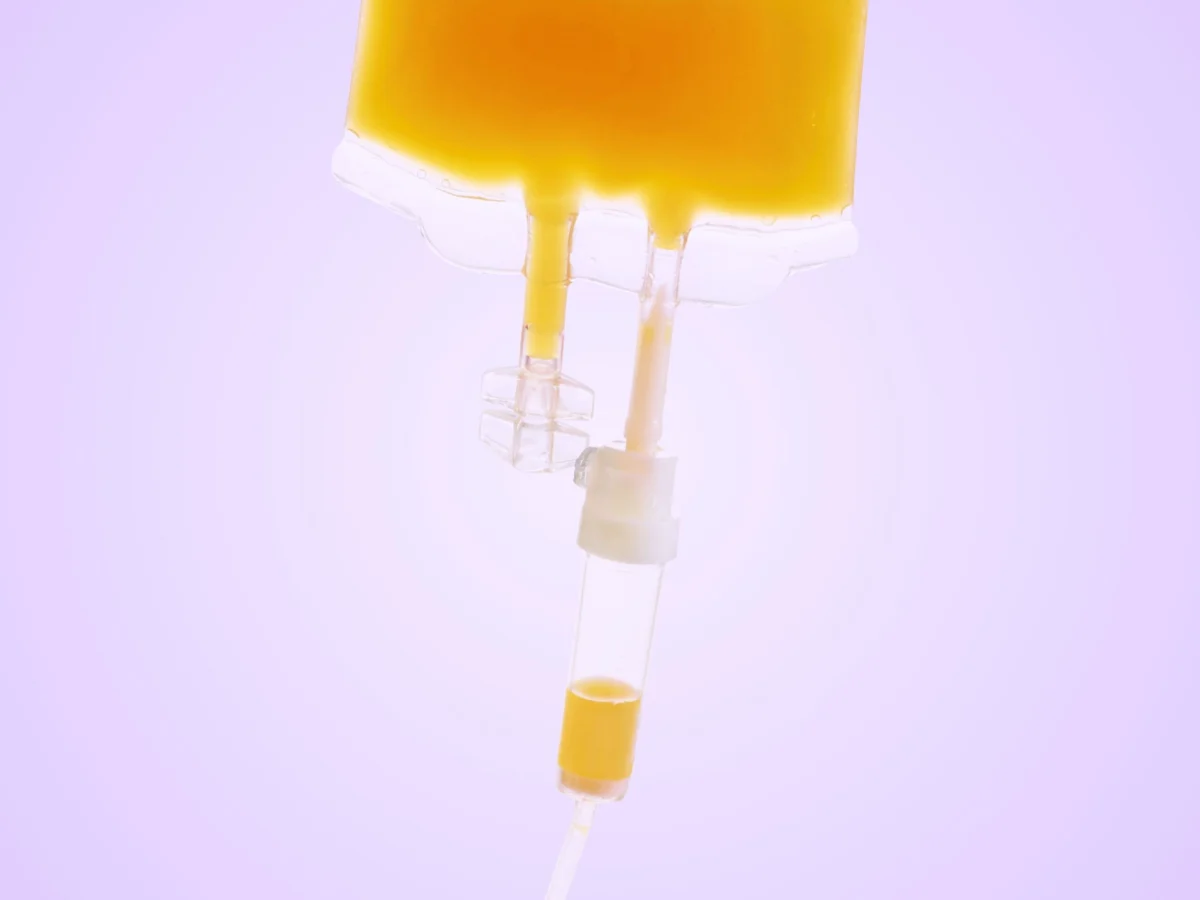
For as long as human civilization has existed, the pursuit of the "fountain of youth" has captivated our collective imagination. From the mythical tales of ancient explorers to the modern-day obsession with Silicon Valley biohacking, the desire to reverse the biological clock remains a powerful human ambition. Today, that ambition has converged on a cutting-edge, albeit controversial, medical procedure: therapeutic plasma exchange.
Recent headlines have been set ablaze by a 2025 study published in the journal Aging Cell, which suggests that filtering and replacing the liquid portion of human blood could shave approximately two and a half years off a person’s biological age. While the findings have sparked widespread interest, medical experts are urging caution, advising the public to look past the sensationalism and understand the nuanced, complex, and potentially temporary nature of these anti-aging claims.
The Biological Significance of Plasma
To understand why researchers are targeting blood, we must first understand what plasma actually is. Beyond being the fluid medium that carries red and white blood cells, plasma is a complex, information-rich "highway" for the body. It consists primarily of water, but it is also saturated with proteins, metabolites, hormones, and inflammatory signaling molecules.
"It’s a transport system like DHL, a vehicle to bring things from your brain to your muscles, from kidneys to lungs, and so on," explains Dr. Andrea Maier, a geriatrician and board member of the Academy for Health and Lifespan Research. "It is fluid with a massive amount of information."
Because plasma acts as a systemic messenger, it serves as a "wide-angle lens" for the body’s internal health. By monitoring the fluctuations of thousands of proteins within the plasma, scientists can approximate a person’s "biological age"—a metric that, unlike chronological age, measures the physiological wear and tear on an organism. As Dr. Keenan Walker, a senior investigator at the National Institute on Aging, notes, there is no single, definitive measure of biological age. However, the correlation is clear: those whose biological age outpaces their chronological age face significantly higher risks of chronic disease, organ failure, and premature mortality.
A Chronology of Discovery: From Mice to Men
The journey toward blood-based longevity interventions did not begin in a modern anti-aging clinic, but rather in the labs of experimental biologists over a decade ago.
The Parabiosis Era
Approximately 15 years ago, researchers began investigating "parabiosis"—a surgical technique that links the circulatory systems of two different organisms. By stitching together the circulatory systems of an elderly mouse and a juvenile mouse, scientists observed something remarkable: the older mice began to exhibit signs of biological rejuvenation. They showed increased resilience to tissue stress and improved organ function, seemingly "recharged" by the circulating plasma of their younger counterparts.
Clinical Translation
These findings prompted a wave of curiosity regarding whether similar interventions could be applied to humans. Initially, this research was focused on treating severe clinical conditions, such as autoimmune disorders, specific neurological conditions, and blood cancers. Therapeutic plasma exchange, in this context, was used to "wash" the blood of inflammatory markers or harmful antibodies.
"Everything really came out of that fundamental question: Is there something in our circulation we could get rid of or infuse into it to enable us to live longer?" says Dr. Maier. While the hypothesis was sound, the translation from mice to human clinical practice has proven to be a complex, unfinished puzzle.
Analyzing the Aging Cell Study
The 2025 study in Aging Cell represents the latest attempt to quantify these effects. The researchers enrolled 42 participants, subjecting them to a plasma exchange process where their original plasma was removed and replaced with a mixture of purified albumin (a key blood protein) and saline. Some participants also received an infusion of IVIG, a type of immune therapy.
The "2.5 Years Younger" Phenomenon
At the midpoint of the study, the data appeared groundbreaking. Molecular-level lab tests indicated that participants had effectively reversed their biological age by an average of 2.5 years. However, this is where the nuance of scientific reporting becomes critical.
Dr. Maier highlights a crucial limitation: the 2.5-year reversal was observed at the midpoint of the trial, not at the end. By the time the study concluded, the observed rejuvenation effects had largely dissipated. This suggests that the body, in its attempt to maintain homeostasis, resisted the intervention. When the plasma was swapped, the body initially reacted with a shift in biomarkers, but as it adapted to the massive change, the biological markers reverted to their baseline levels. The "fountain of youth" effect, in this instance, proved to be transient rather than transformative.
The Role of Participant Health
Another vital variable, according to Dr. Walker, is the health status of the study participants themselves. The data indicated that individuals who entered the study with poorer health markers saw a more profound response to the intervention.
"Those who were less healthy saw a stronger intervention effect," says Dr. Walker. "So, I think it will be important to find out for whom this works." This observation shifts the conversation from a universal anti-aging "cure" to a potentially targeted medical therapy for those suffering from specific, age-related physiological declines.
Implications for Future Longevity Medicine
Both Dr. Maier and Dr. Walker emphasize that while the concept is scientifically grounded, the current methodology is far from ready for the public.
A Call for Precision
The consensus among experts is that the "generalized" approach of clearing out all plasma is a blunt instrument. It is akin to using a sledgehammer when a scalpel is required. Future advancements in longevity science will likely focus on:
- Personalized Filtering: Instead of removing all plasma, identifying and removing specific, harmful proteins that accumulate with age (a process sometimes called "plasmapheresis").
- Longitudinal Data: Moving beyond small, short-term trials to large-scale studies that track health outcomes over years, not months.
- Safety and Ethics: Recognizing that plasma exchange is a significant medical procedure that places substantial stress on the body.
The "Phase 1" Reality
"I would call this a phase 1 study," Dr. Maier states. "We’ve basically learned that we can safely do it, and now we have to see it in much bigger studies and look at the long-term effect."
The medical community is clear: do not rush to local plasma clinics. While the idea is not "crazy" and is supported by a wealth of preliminary evidence, it is not a panacea. The current procedure is rough on the human system, and the short-term benefits do not currently justify the invasive nature of the treatment for healthy individuals looking to simply "reverse" their age.
Conclusion: Innovation vs. Implementation
The 2025 Aging Cell study is a significant milestone, acting as a "first tiny step" in a much larger field of research. It proves that we can manipulate the biological environment of the blood, but it also demonstrates that the body is an incredibly resilient, self-regulating machine that tends to return to its set point.
For those interested in longevity, the future remains bright. The focus of the scientific community is shifting toward more precise, personalized interventions that work with the body’s natural chemistry rather than attempting to forcibly reset it through wholesale plasma replacement.
As Dr. Maier aptly concludes, "I love innovation, and I love this study, but I think the future will give us something else." For now, the fountain of youth remains a goal on the horizon—not a treatment available at a local clinic. The best approach remains the tried-and-true pillars of health: nutrition, exercise, and medical care guided by evidence rather than headlines.
 Asro
Asro
 Suro Senen
 Azzam Bilal Chamdy
