

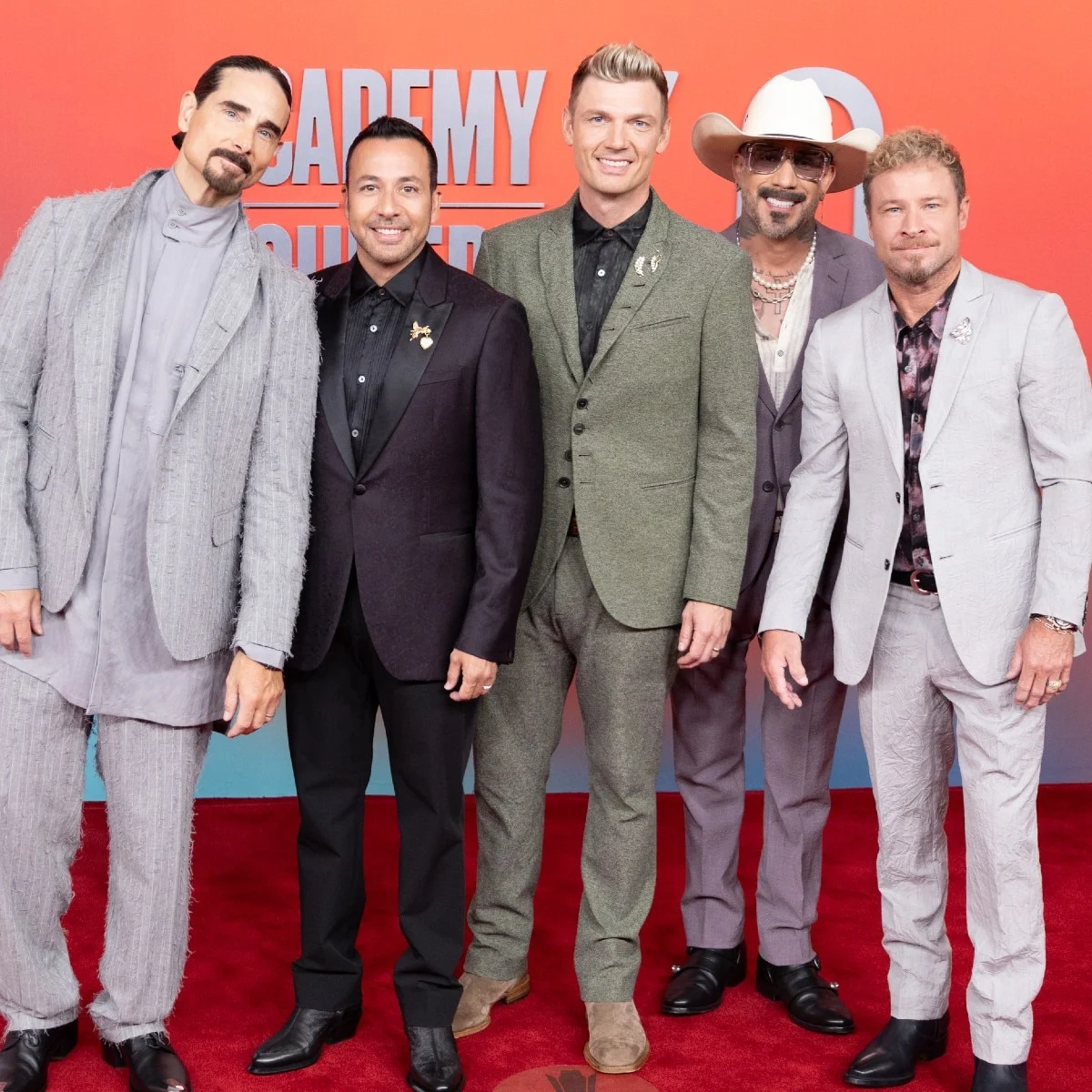
For three decades, the Backstreet Boys have stood as one of the most commercially successful and enduring pop groups in music history. While many of their late-1990s and early-2000s contemporaries burned out, succumbed to internal friction, or disbanded to pursue solo careers, the quintet—consisting of Nick Carter, AJ McLean, Brian Littrell, Howie Dorough, and Kevin Richardson—has continued to record new music, embark on massive stadium tours, and maintain a highly loyal global fan base.
At a recent media appearance at "The One Party" hosted by Uber in New York City, the group shared insights into the mechanics of their longevity. Rather than citing vocal training, marketing strategies, or choreographic precision, the band members pointed to a shared, deeply personal anchor: fatherhood and the stabilization of their domestic lives.
According to the members, transitioning from global teen idols to dedicated family men has not only reframed their individual priorities but has also provided the operational framework necessary to keep the group cohesive, grounded, and active for over thirty years.
Chronology: From Teen Idols to Mature Family Men
To understand the significance of this transition, one must examine the timeline of the Backstreet Boys’ evolution from their inception to the present day.
[1993] Group forms in Orlando, Florida
  │
[1996] Debut international album released, launching global stardom
  │
[1999] Release of 'Millennium' solidifies their status as pop royalty
  │
[2006] Kevin Richardson departs to focus on family and personal projects
  │
[2011] Landmark "NKOTBSB" joint tour with New Kids on the Block
  │
[2012] Richardson permanently rejoins; the group commits to a family-first operational model
  │
[2019] 'DNA' album debuts at No. 1 on the Billboard 200, followed by a massive world tour
  │
[Present] Members celebrate 30+ years together, balancing global touring with fatherhood- 1993–1998: The Ascent: Formed in Orlando, Florida, in 1993, the group spent their early years building a massive European and Asian following before conquering the North American market. Their self-titled U.S. debut in 1997 and the subsequent release of Backstreet’s Back propelled them into a grueling schedule of near-constant touring, media appearances, and recording sessions.
- 1999–2005: Peak Era and Exhaustion: The release of Millennium in 1999 and Black & Blue in 2000 marked the zenith of "boy band" mania. However, the relentless pace took a toll. The early 2000s saw the group enter a brief hiatus as members grappled with the physical and psychological demands of sudden, overwhelming fame.
- 2006–2012: Restructuring and Kevin’s Departure: In 2006, Kevin Richardson amicably departed the group to focus on his family and other creative endeavors. The remaining four members continued as a quartet, releasing albums like Unbreakable and This Is Us. During this period, the members began marrying and starting families, initiating a gradual shift in their collective priorities.
- 2012–Present: The Reunion and the Family-First Era: Richardson returned to the lineup permanently in 2012. This reunion marked a new era of maturity. When the group launched their highly successful Las Vegas residency (Larger Than Life) and their 2019 album DNA—which debuted at No. 1 on the Billboard 200—they did so with a strict operational model designed around their roles as husbands and fathers.
Supporting Data: Family Dynamics and Collective Demographics
The transition from a bachelor-led pop group to a collective of family men is supported by a distinct demographic shift within the band. Today, the five members share a total of ten children, ranging in age from young children to young adults.
| Band Member | Spouse | Children (Ages) |
|---|---|---|
| Kevin Richardson | Kristin Richardson | Mason (19), Maxwell (12) |
| Brian Littrell | Leighanne Wallace | Baylee (23) |
| Howie Dorough | Leigh Dorough | James (17), Holden (13) |
| AJ McLean | Rochelle McLean (Estranged) | Elliott (13), Lyric (9) |
| Nick Carter | Lauren Kitt Carter | Odin (10), Saoirse (6), Pearl (5) |
This shared experience of fatherhood has altered the logistics of the group’s professional endeavors. Rather than undertaking grueling, unbroken months of international travel, tour itineraries are now routinely structured around school calendars, holidays, and family milestones.
Furthermore, the band frequently coordinates "family buses" and dedicated backstage spaces during tours, allowing their wives and children to accompany them on the road, thereby mitigating the strain of long-distance separation.
Official Responses: In Their Own Words
Speaking to reporters in New York City, the band members expressed how fatherhood has cultivated a sense of selflessness that directly benefits their professional partnership.
AJ McLean emphasized that the shared experience of raising children has fostered mutual empathy among the bandmates:
"It’s something that we all share. We all now know about balance. Obviously, family comes first. We try to balance our work and our personal lives. We all spend quality time together when we’re on the road with our families."
Kevin Richardson, who has been married to his wife Kristin since 2000, underscored the stabilizing effect of having a solid support system at home, crediting their wives as the unsung heroes of the group’s longevity:
"Having kids has changed all of our lives for the better… Hard work, communication, teamwork, sacrificing for each other, supporting one another, good support structure at home. We got five great women that have supported everything we’ve done. Our families, good management, great fans, good music, hard work, heart and soul."
For Nick Carter, the youngest member of the group, fatherhood has completely reframed his motivation for performing:
"We do everything for our children, now."
Howie Dorough noted that the demands of parenting have made each member more collaborative and less ego-driven:
"Becoming fathers has made us all more selfless as we navigate life… Father’s Day is gonna be an awesome day. I can’t speak on behalf of the rest of the guys, but I’m just gonna be with my girls. They’re gonna cook me dinner, so we’ll see how that goes. But it’s gonna be nice to be home."
Brian Littrell also spoke proudly of his son, Baylee, who is carving out his own path in the country music industry and has previously appeared on Broadway:
"My son is in the music business, as well. He’s following in Daddy’s footsteps, so we’ll see. As fathers, that’s all we do is support our kids no matter what they do. It doesn’t matter; we love them anyway."
Implications: The Evolution of the Pop Group Business Model
The Backstreet Boys’ survival offers valuable insights into the changing business model of pop music groups. Historically, the "boy band" or "girl group" archetype was viewed by record labels as a highly lucrative but inherently short-lived commodity. Groups were expected to exploit their youth and appeal to a specific teenage demographic before disbanding due to age, shifting cultural trends, or internal conflict.
However, the modern landscape has proven that pop groups can transition into legacy acts with remarkable sustainability. The Backstreet Boys’ strategic shift toward prioritizing family stability provides a blueprint for other long-running musical acts.
Comparative Analysis: Longevity and Split Dynamics in Pop Groups
To contextualize the Backstreet Boys’ achievement, it is helpful to look at how other prominent pop, R&B, and rock groups have navigated the pressures of fame, aging, and personal evolution over the decades:
- The Maturation of Legacy Acts (NKOTB & Boyz II Men):
New Kids on the Block (NKOTB), who dominated the late 1980s, disbanded in 1994 but successfully reunited in 2008. Their landmark joint tour with the Backstreet Boys in 2011 (NKOTBSB) proved that there is a massive, highly profitable market for nostalgic pop tours. Similarly, R&B icons Boyz II Men have continued to perform as a trio for over 30 years, leaning on a catalog of timeless vocal ballads and maintaining a steady touring schedule that accommodates their mature lifestyles. - The Solo Career Divergence (‘NSYNC & One Direction):
The primary threat to group longevity has historically been the breakout success of a single member. ‘NSYNC, the chief rivals of the Backstreet Boys in the late ’90s, went on a permanent hiatus in 2002 after Justin Timberlake launched a highly successful solo career. A similar dynamic occurred with One Direction in the mid-2010s; following the departure of Zayn Malik, the remaining members embarked on a hiatus in 2016, with Harry Styles, Niall Horan, and others establishing distinct, high-profile solo identities in music, fashion, and film. - The High-Impact, High-Pressure Paradigm (K-Pop & Modern Groups):
Modern global powerhouses like BTS and BLACKPINK operate under intense pressure, balancing global dominance with individual pursuits. BTS has managed to maintain group unity even while navigating mandatory South Korean military service and solo projects, largely due to a highly structured management framework and a deeply loyal fan base. Meanwhile, girl groups like Little Mix have openly discussed the intense pressures of balancing international pop stardom with the physical and emotional realities of young motherhood, highlighting a growing industry awareness of maternal support for female artists. - Tragedy, Hiatuses, and Rebirth (TLC & The Wanted):
External circumstances and personal tragedies have also shaped group trajectories. TLC, one of the most successful girl groups of all time, had to redefine their path forward after the tragic death of Lisa "Left Eye" Lopes in 2002, choosing to preserve their legacy as a duo. Similarly, British-Irish boy band The Wanted reunited in 2021 after a seven-year hiatus, only to be struck by tragedy when founding member Tom Parker passed away from brain cancer in 2022.
Conclusion: The New Paradigm of Pop Sustainability
The Backstreet Boys’ enduring career demonstrates that the ultimate key to longevity in the music industry is not the avoidance of change, but rather a healthy adaptation to it. By shifting their collective identity from young, hyper-accessible pop stars to mature, family-oriented professionals, the group has successfully protected their mental health, preserved their personal relationships, and kept their creative partnership intact.
As the music industry continues to evolve, the Backstreet Boys stand as a primary example of how mutual respect, open communication, and a healthy work-life balance can turn a fleeting pop phenomenon into a lifelong career.
 Sagoh
Sagoh
 Siti Muinah
 Nana
Nana
