

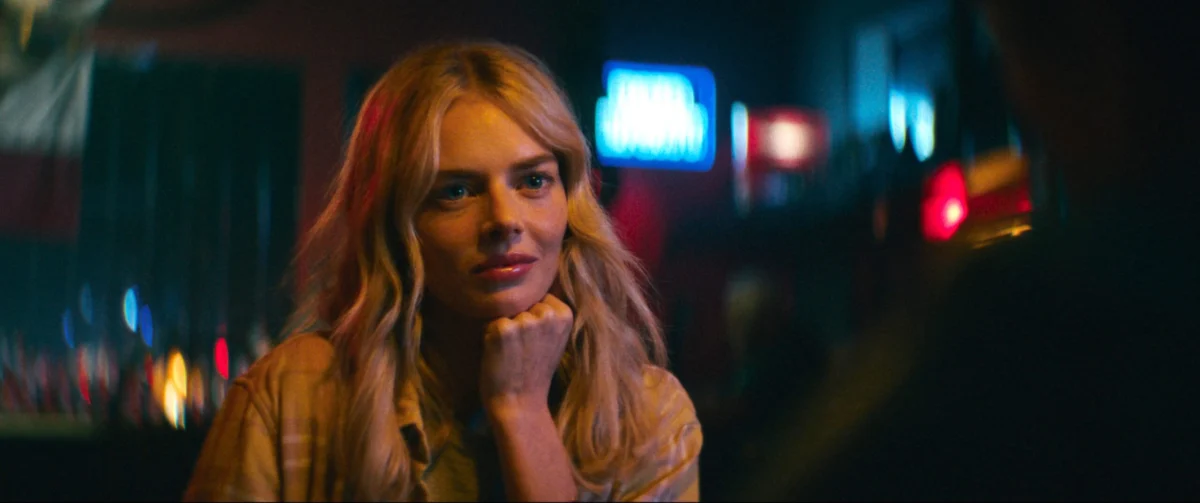
In the landscape of contemporary independent cinema, few tropes are as well-worn as the criminal duo on the run. Yet, director Adam Carter Rehmeier’s latest feature, Carolina Caroline, manages to subvert the Bonnie & Clyde archetype by grounding its high-stakes criminality in a profound, intimate exploration of generational trauma. At the film’s narrative pivot point lies a “mother and child reunion” so devastatingly realized that it threatens to overshadow the high-octane heist sequences that surround it.
Featuring powerhouse performances from Samara Weaving and Kyra Sedgwick, the film’s central encounter is not merely a plot device; it is a masterclass in tension, character study, and the raw, unvarnished reality of abandonment.
The Anatomy of an Abandonment: Setting the Stage
The narrative follows Caroline Daniels (Weaving), a woman caught in the orbit of her partner in crime, Oliver (Kyle Gallner). As the couple navigates a life of small-town desperation and illicit thrills, Caroline is haunted by a singular, gnawing question: Is criminality an inherited trait?
Midway through the film, the duo’s journey leads them to a sun-bleached, one-stoplight town in the South—a place where time seems to have stopped, and where Caroline’s mother, Deborah (Sedgwick), has been hiding in plain sight. In a sequence that echoes the iconic, singular-scene masterclasses of cinema history—reminiscent of Beatrice Straight in Network or Alec Baldwin’s legendary turn in Glengarry Glen Ross—the film shifts from a crime thriller into a psychological chamber drama.
The scene takes place in a rundown tavern, a space defined by stale air and regret. When Caroline approaches her mother, the audience is primed for a cinematic trope: the tearful, redemptive reconciliation. Instead, Rehmeier, working from a script by William Thomas Dean IV, delivers something far more jagged and uncomfortable.

A Chronological Collision: The Making of the Scene
In an exclusive roundtable moderated by Gold Derby, stars Samara Weaving and Kyra Sedgwick pulled back the curtain on how this pivotal interaction was constructed. The production’s commitment to chronological filming was, according to the actors, the primary catalyst for the scene’s visceral impact.
“Adam [Carter Rehmeier] shot the whole movie in chronological order,” Weaving explained. “Kyra and I didn’t meet until the day we filmed that scene. For weeks, I had been living in Caroline’s skin, playing out the yearning, the curiosity, and the fantasy of who this woman was. When Kyra walked onto that set, she didn’t just arrive as an actress; she arrived as Deborah. There was no ‘acting’ required on my part. I simply sat there and reacted to the woman who had effectively broken my character’s life.”
For Sedgwick, the challenge was twofold: portraying a woman who has spent years drowning her guilt in alcohol, and maintaining the suspense of whether a reconciliation was even possible.
“I worked on the emotional arc of that scene extensively,” Sedgwick noted. “It’s essentially a one-act play dropped into the middle of a road movie. We didn’t rehearse the movement because we wanted that raw, unpolished energy. I was actually terrified that they would start with Samara’s coverage, but they started with mine. It allowed me to set the temperature of the room.”
Characterization Through Costume and Intent
The discussion also highlighted the meticulous work of the film’s creative team in building the visual language of the scene. Sedgwick revealed that her interpretation of Deborah was heavily influenced by a specific wardrobe choice: a leopard-print tank top.

“When I put on that top, something clicked,” Sedgwick recalled. “I saw Deborah as a viper. She’s dangerous, she’s unpredictable, and she’s deeply wounded. The costume helped me find the physicality of a woman who has been backed into a corner by her own life choices.”
Conversely, Weaving’s costume was designed to emphasize Caroline’s vulnerability. “We put her in an almost childish outfit,” Weaving said. “It emphasizes how Caroline is still, in many ways, that little girl waiting for her mother. When she enters that bar, she’s looking for answers, but she’s also looking for validation. The moment she realizes that validation isn’t coming, you see her heart being shot in real-time.”
The "Viper" vs. The "Child": A Shift in Power
The genius of the scene lies in its pivot. Initially, there is a glimmer of warmth—a moment where the audience might believe the two women will bridge the gap. Then, the tone shifts, and the dialogue cuts to the bone.
“That was the most important beat,” Sedgwick said. “Deborah is all smiles and charm until she isn’t. When she says, ‘That’s one too many questions, bitch,’ it’s the turning point. It’s a complete dismissal of the person she left behind.”
The two actors discussed the rarity of such portrayals in modern film. “People hate the idea of a mother leaving her children,” Sedgwick observed. “It’s a societal taboo that we see much more often with fathers in cinema. When a woman does it, the audience finds it unforgivable. I wanted to play that coldness—the realization that for Deborah, forgetting her daughter was a survival mechanism.”

Implications: The Legacy of the Encounter
The aftermath of the scene serves as the catalyst for the film’s climax. Following the disastrous encounter, Caroline returns to the getaway car, her perspective on her own identity permanently altered.
Weaving highlighted a powerful, unscripted moment that followed the bar scene. “We shot that sequence in the car immediately after,” she said. “The script called for me to push Oliver away, but I felt this overwhelming need for comfort. I grabbed his hand, and he grabbed mine back. It wasn’t in the blocking, but it was the only way to express the isolation Caroline feels after realizing she’s looking into a mirror when she looks at her mother.”
This moment of connection between the two leads underscores the film’s primary thesis: that while we may inherit the wounds of our parents, we are not necessarily bound to repeat their cycles.
Critical Reception and Industry Impact
The scene has already begun to generate significant buzz among critics, with many citing it as the defining moment of the film. By stripping away the glamour of the Bonnie & Clyde sub-genre, Rehmeier has created a film that forces the audience to confront the cost of abandonment.
For audiences, the scene serves as a stark reminder of the power of live-action performance when actors are given the space to exist within a scene’s silence. The collaboration between Weaving and Sedgwick, fostered by the decision to film chronologically, creates a palpable sense of shared history—or, more accurately, the void where that history should have been.

As Carolina Caroline makes its way into theaters, the industry is taking note of the film’s ability to balance high-stakes thrills with intimate human drama. It is a testament to the fact that, even in a movie about bank robberies and fast cars, the most dangerous weapon is often a mother’s indifference.
In the final analysis, the encounter between Caroline and Deborah stands as a haunting, beautifully rendered piece of filmmaking—a testament to the resilience of the human spirit in the face of the most profound, and most personal, of betrayals. Whether the audience leaves the theater thinking about the heist or the mother-daughter dynamic, the impact is undeniable: Carolina Caroline is a film that lingers long after the credits roll.
 Ammar Sabilarrohman
 Siti Muinah
 Iffa Jayyana
