

By Industry Correspondent
June 20, 2026
In a move that signals a seismic shift in the hierarchy of the artificial intelligence landscape, Dr. John Jumper—the celebrated co-creator of the transformative AlphaFold system and a Nobel Prize laureate—has officially announced his departure from Google DeepMind. After a prolific nine-year tenure that redefined the boundaries of computational biology, Jumper is set to join Anthropic, the AI safety-focused powerhouse that has increasingly positioned itself as the primary rival to both OpenAI and Google.
The announcement, delivered via a heartfelt post on X (formerly Twitter) on Friday morning, marks the end of an era for DeepMind. Jumper’s exit is not an isolated incident but part of a broader, high-stakes talent shuffle among the world’s most elite AI researchers as the industry pivots toward the next generation of foundational models and commercial integration.
Main Facts: A Titan Changes Allegiance
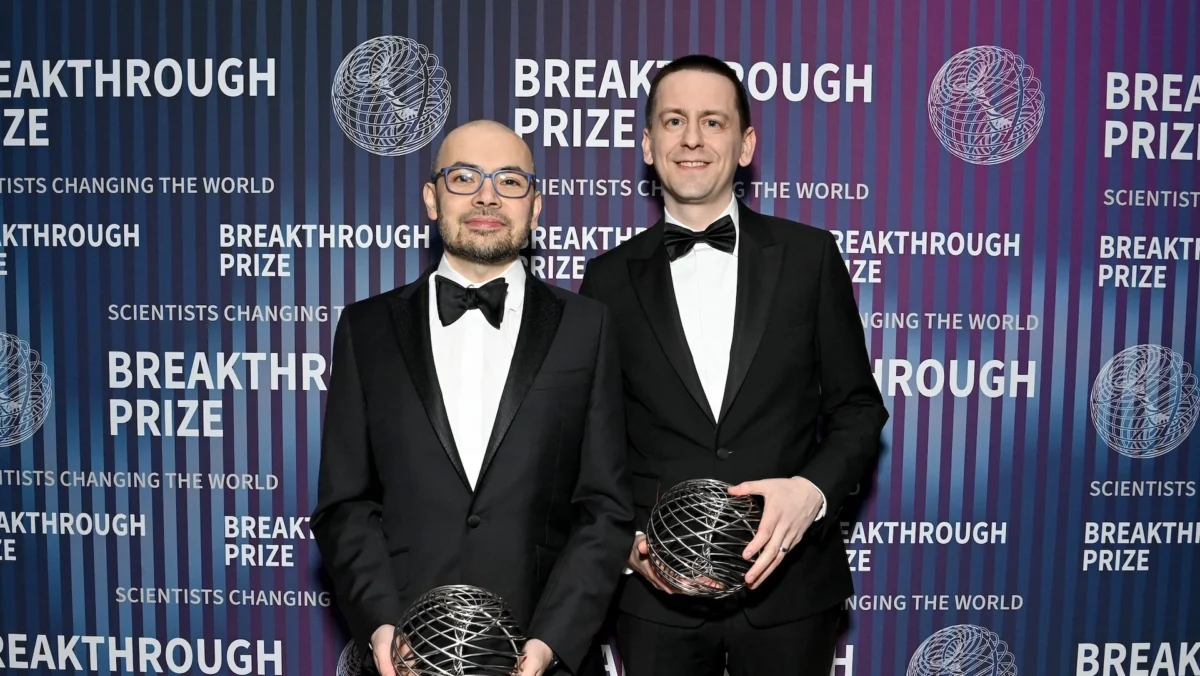
The departure of Dr. Jumper is arguably the most significant executive move in the AI sector this year. Having served as a central pillar at Google DeepMind, Jumper was instrumental in the development of AlphaFold, an AI-driven breakthrough that solved the 50-year-old "protein folding problem." This achievement earned him and his colleague, CEO Demis Hassabis, the Nobel Prize in Chemistry in 2024.
Jumper’s transition to Anthropic—a company founded by former OpenAI executives with a heavy emphasis on "constitutional AI" and safety—suggests a strategic alignment between the scientist’s research goals and Anthropic’s long-term technical roadmap. While the specific nature of his new role remains undisclosed, insiders suggest he will play a pivotal part in steering the company’s future research initiatives, potentially bridging the gap between biological discovery and general-purpose artificial intelligence.
A Chronology of Influence: From Academic Promise to Global Impact
To understand the weight of this departure, one must look at the trajectory of Jumper’s career at Google DeepMind.
- 2017: A young John Jumper joins Google DeepMind, quickly identifying the potential of neural networks to solve complex biological structures.
- 2020: The AlphaFold 2 system shocks the scientific community by achieving near-atomic accuracy in predicting protein structures, effectively automating years of lab work in minutes.
- 2021–2023: Under Jumper’s leadership, the AlphaFold team scales the technology, releasing the structures of nearly all known proteins to the public, a move hailed as one of the greatest contributions to biology in the 21st century.
- October 2024: Jumper and Demis Hassabis are awarded the Nobel Prize in Chemistry, solidifying their status as global scientific icons.
- June 2026: Jumper announces his resignation, ending his nine-year tenure to pursue a new chapter at Anthropic.
Reflecting on his time at Google, Jumper expressed deep gratitude for the environment fostered by Demis Hassabis. "Demis took a real chance letting me lead the AlphaFold team just six months after finishing my PhD," Jumper wrote. "The entire GDM team taught me so much about how to do great science."
Supporting Data: The Talent Wars and the "Brain Drain"
Jumper’s departure follows a string of high-profile executive and researcher movements that suggest the AI industry is currently undergoing a "great migration."
Earlier this week, it was confirmed that Noam Shazeer, the co-founder of Character AI and a foundational figure in the development of the "Transformer" architecture (which powers almost all modern LLMs), is leaving his current post to return to OpenAI. This rapid turnover—often referred to by industry analysts as the "AI Talent War"—highlights the intense competition among Google, OpenAI, and Anthropic.
The Business Context
While the scientific community focuses on Jumper’s contributions to protein folding, his recent work at Google reportedly involved the development of advanced coding tools. Sources at Bloomberg have indicated that Google has faced significant hurdles in monetizing these enterprise-facing tools. The friction between internal R&D successes and the difficulty of commercial execution is a common narrative in the current AI market, leading many top-tier researchers to seek environments where their technical output can be deployed more rapidly or under different governance structures.

Official Responses and Internal Sentiment
The atmosphere at Google DeepMind is one of professional respect mixed with undeniable loss. Demis Hassabis, who has long championed a culture of open-ended, blue-sky research, has yet to issue a formal press release regarding the departure. However, the sentiment within the community is clear: Jumper’s exit is seen as a loss for Google’s internal culture.
In his farewell, Jumper maintained a diplomatic stance: "GDM is a special place, and I’ll still be excited to hear about what amazing things they discover next."
Anthropic, for its part, has remained tight-lipped about the specific internal team Jumper will join. However, the company’s recent rhetoric regarding "scaling laws" and "AI alignment" suggests that they are prioritizing the integration of high-level scientific expertise to ensure their next-generation models—such as the hypothetical successors to the Claude series—are not only more powerful but more reliably accurate in complex, scientific domains.
Implications: What This Means for the Future of AI
The movement of a Nobel laureate like John Jumper from a dominant incumbent (Google) to a "challenger" (Anthropic) has several profound implications for the industry.
1. The Decentralization of AI Expertise
For years, Google DeepMind acted as the "Bell Labs" of the AI era, gathering the brightest minds under one roof. Jumper’s move suggests that this concentration of talent is breaking up. As Anthropic, OpenAI, and others mature, they are successfully poaching the very people who built the infrastructure of the current AI revolution, effectively leveling the playing field.
2. Biological AI as the Next Frontier
While chatbots have dominated the public conversation, the real "value" in the next decade of AI may lie in the physical sciences—drug discovery, material science, and personalized medicine. By bringing Jumper into the fold, Anthropic is signaling that it intends to be a leader not just in language generation, but in applying AI to the fundamental laws of nature.
3. The Challenge of Corporate Monetization
Jumper’s reported involvement in coding tools highlights a growing problem for Big Tech: the gap between "cool science" and "corporate profit." Google has struggled to turn its technical lead into a dominant enterprise software business. Researchers who feel their work is being stifled by bureaucracy or lack of product-market fit are increasingly looking to companies with more agile structures or more focused missions.
4. Regulatory and Safety Considerations
Anthropic’s focus on safety and constitutional AI makes it a unique destination for someone like Jumper, who has navigated the ethical implications of powerful, dual-use technologies like AlphaFold. His transition may indicate that he believes Anthropic’s approach to safety is better aligned with the future of high-impact AI research.
Conclusion
As the dust settles on this week’s announcements, the industry is left to grapple with a new reality. The era of the "uncontested leader" is over. With the departure of titans like John Jumper and Noam Shazeer, the map of the AI landscape is being redrawn in real-time.
For Dr. Jumper, the move to Anthropic represents a bold bet on the future of synthetic intelligence. For Google DeepMind, it serves as a stark reminder that even the most prestigious institutions must fight to retain the talent that made them great. As we look toward the remainder of 2026, one thing is certain: the competition for the minds that will build our future has never been more intense.
 Asep Darmawan
 Siti Muinah
 Ali Ikhwan
