

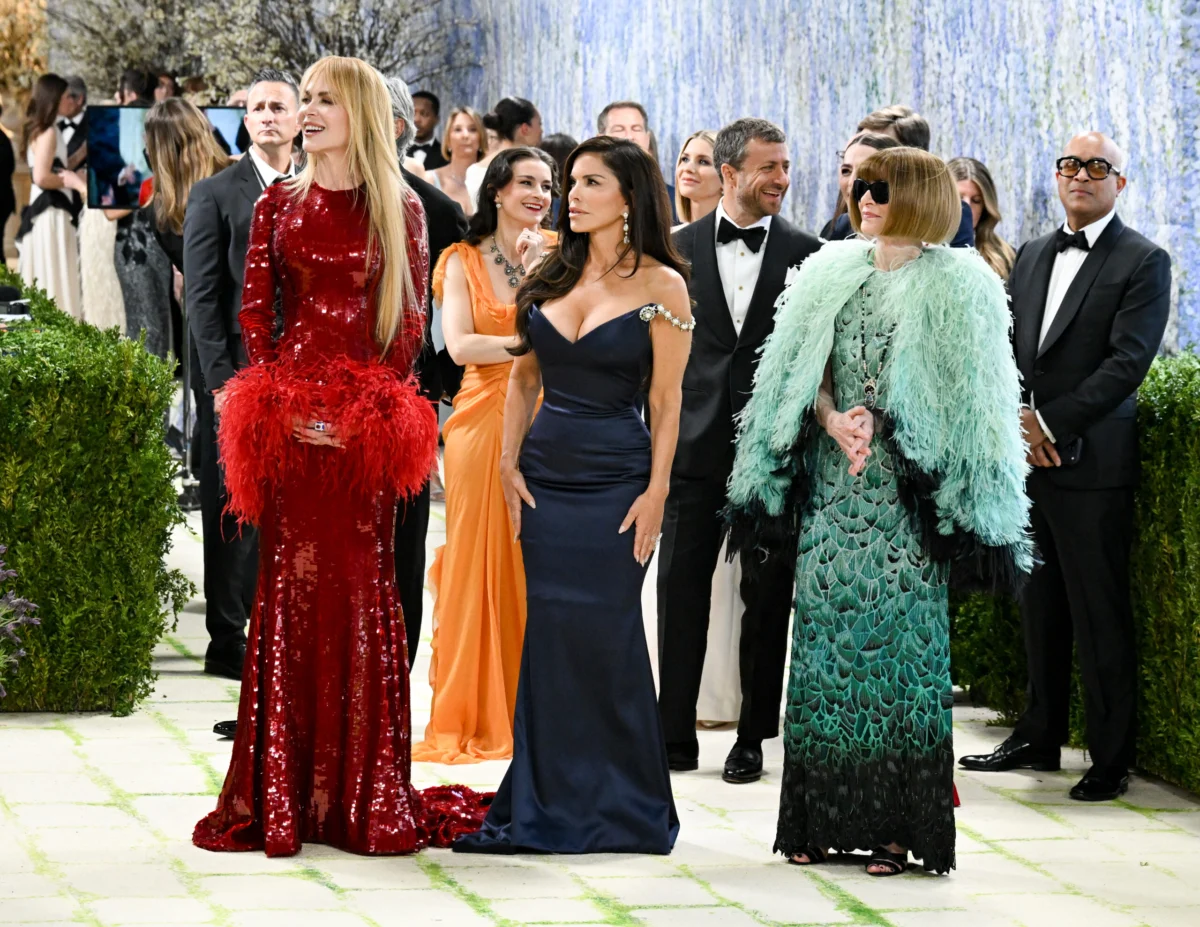
For decades, the first Monday in May has functioned as the unofficial inauguration of the global fashion calendar. The Metropolitan Museum of Art’s annual Met Gala—a fundraiser for the Costume Institute—has long been regarded as the "Oscars of Fashion," a night defined by unparalleled exclusivity, avant-garde sartorial risks, and the preservation of high art. However, since the post-pandemic resurgence in 2021, the gala’s prestigious crown has begun to slip, revealing a structural shift that prioritizes commerce over couture.
The transition from a sanctum of fashion history to a platform for populist content creation has been steady, but the 2026 iteration marks a definitive turning point: the era of the corporate takeover.
The Financialization of the Red Carpet: The Bezos Effect
The most glaring manifestation of this shift is the unprecedented involvement of Jeff Bezos and Lauren Sánchez Bezos. In February, the Metropolitan Museum of Art announced the couple as the honorary chairs for the evening—a role typically reserved for industry icons, designers, or figures deeply embedded in the cultural zeitgeist.
Reports later confirmed that the couple had contributed "at least" $10 million to sponsor the gala. This gargantuan injection of capital effectively bought them a seat at the helm of the most exclusive night in the world. On the Met’s official portal, the exhibition and gala are described as being "made possible" by the couple, a phrasing that underscores the extent to which the museum—and, by extension, the Costume Institute—has become reliant on the patronage of big-tech wealth.
This has sparked intense debate among critics, fashion historians, and activists. The irony is palpable: Amazon, the company that propelled Bezos to the center of global commerce, has been a primary architect of the modern fast-fashion ecosystem. By flooding the market with low-cost, mass-produced, and often ethically dubious apparel, Amazon has arguably contributed to the decline of the very artistry the Met Gala claims to celebrate. For the institution to accept such a massive sum from a figurehead of an industry that treats clothing as a disposable commodity is, to many, a fundamental betrayal of the Costume Institute’s mission to preserve the integrity of craftsmanship.
Furthermore, persistent rumors—mirrored by the satirical plot of The Devil Wears Prada 2—suggest that the Bezos-Sánchez camp has ambitions to acquire Condé Nast, the publishing titan behind Vogue. The willingness of Anna Wintour, the Costume Institute, and Condé Nast leadership to court such figures suggests a desperate pivot toward financial sustainability at the cost of the event’s intellectual and cultural independence.
A Chronology of the Decline: From Exclusivity to Influencer Fodder
The erosion of the gala’s prestige did not happen overnight. The 2021 and 2022 editions served as the first major indicators of a cultural pivot. In a bid to maximize digital engagement, the guest list was expanded to include a cohort of TikTok stars and internet influencers.
- 2021–2022: The gala became "TikTok fodder." The focus shifted from artistic expression to viral potential. While the move generated record-breaking social media impressions, it diluted the event’s aura of untouchable glamour.
- 2023–2025: The "Influencer era" reached a saturation point. As the novelty of social media stars waned, a new, more formidable presence emerged: the billionaire philanthropist-host.
- 2026 (The Current Moment): The gala has shifted from influencer-driven content to corporate-mogul sponsorship, where the red carpet serves as a showroom for the wealthy rather than an exploration of the thematic exhibit.
Supporting Data: The Cost of the "Costume Art" Exhibition
This year’s theme, "Fashion is Art," invited attendees to engage with the concept of the dressed body as an embodied art form. The accompanying exhibit, Costume Art, was designed to explore the centrality of the human form—from the naked and classical to the pregnant and aging body—throughout art history.
However, the red carpet display rarely reflected the intellectual depth of the exhibition. The fashion was, by and large, a disappointment. A primary rule of the Met Gala is that if a garment is appropriate for a standard awards show, it is insufficient for the Met. Yet, this year, many guests appeared to have ignored the brief entirely.

The lack of creativity was underscored by the repetitive nature of the looks. Despite the infinite scope of art history, the "Fashion is Art" theme was met with a lazy reliance on tropes:
- The "Madame X" Effect: No fewer than three major celebrities—Lauren Sánchez Bezos (Schiaparelli), Claire Foy (Erdem), and Julianne Moore (Bottega Veneta)—arrived in iterations of John Singer Sargent’s Portrait of Madame X.
- The Statue Parade: At least 15 attendees, including the Jenner sisters, Heidi Klum, and Doja Cat, arrived as literal interpretations of sculptures.
The homogeneity of these choices suggests a "Google search" level of research, where celebrities opted for the most immediate, recognizable images of art rather than engaging with the complex relationship between dress and the body.
The Exception to the Rule: Artistry Amidst the Mundane
While the majority of the carpet felt like a poorly constructed collage, a few attendees demonstrated the research and vision required for the event.
Bad Bunny arrived in a transformative "old man" look, challenging the vanity typically associated with the gala. Madonna utilized a Saint Laurent piece inspired by Lenora Carrington’s The Temptation of St. Anthony, while Beyoncé collaborated with Olivier Rousteing to reimagine Caroline Durieux’s The Visitor. These three looks stood out not merely for their aesthetic beauty, but because they felt like thoughtful, studied contributions to the evening’s theme. They stood in stark contrast to the sea of derivative statues and recycled portraits that defined the rest of the night.
Official Responses and Financial Implications
Financially, the Metropolitan Museum of Art is in a stronger position than ever. The Costume Institute reported a record-breaking $42 million in fundraising for this year’s event—an $11 million increase over the previous year.
Museum officials have framed this as a triumph. "The funds raised this evening will ensure that the Costume Institute continues to preserve, interpret, and exhibit the most important collection of fashion in the world," a museum spokesperson stated. By this metric, the event is a resounding success.
However, the implications for the future of the Met Gala are troubling. By setting a precedent where a $10 million check can effectively buy a seat at the highest level of influence, the museum risks transforming a cultural institution into a high-end corporate event space.
Conclusion: The Soul of the Gala at Stake
The Met Gala is currently caught between two worlds. On one side, it is a vital, record-breaking fundraiser that keeps the history of fashion alive for future generations. On the other, it is becoming a hollowed-out spectacle where wealth is prioritized over the very artisans and designers whose work fills the museum’s halls.
If the gala continues down this path—one where corporate moguls, not creative visionaries, dictate the tone—it will lose the one thing that money cannot buy: its legitimacy. To reclaim its stature, the Met must find a way to balance its necessary financial growth with a commitment to the creative, intellectual, and ethical standards that once made it the most anticipated night in the world. Until then, the Met Gala remains a shimmering, expensive, and increasingly hollow reflection of the culture that feeds it.
 Nana
Nana
 Ali Ikhwan
 Iffa Jayyana
