

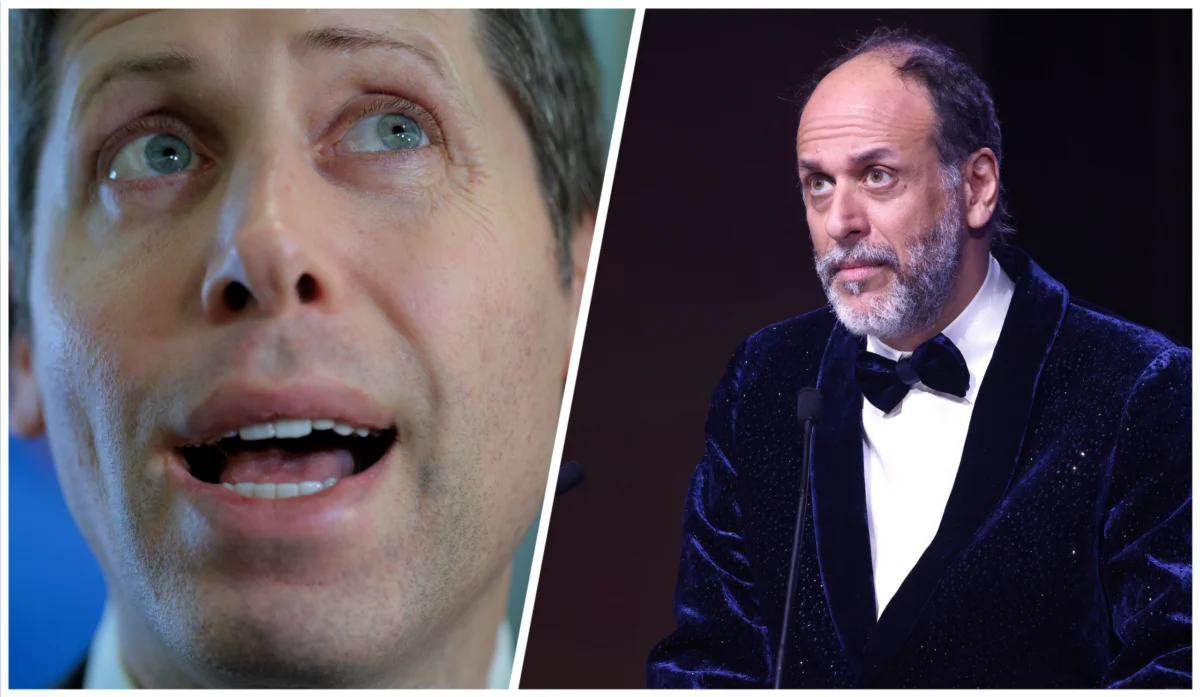
The news that Amazon MGM Studios has abruptly discarded Artificial—the highly anticipated, nearly completed feature film directed by acclaimed auteur Luca Guadagnino—has sent shockwaves through the entertainment industry. While the move caught many by surprise, industry analysts suggest it is the logical, albeit chilling, conclusion of a modern corporate landscape where tech giants hold the keys to the kingdom of content. The film, which centers on the meteoric rise and controversial tenure of OpenAI CEO Sam Altman, reportedly depicts the tech mogul as a "pathological liar," a characterization that appears to have proven too combustible for Amazon’s bottom line.
The Collision of Capital and Creativity
The core of the controversy lies in a fundamental conflict of interest. In February 2026, Amazon was a primary participant in a massive funding round that injected $110 billion into the AI sector—a significant portion of which was funneled directly into OpenAI. From a purely fiduciary perspective, Amazon’s decision to cut ties with a $40-million production that actively vilifies one of its most critical business partners is a textbook exercise in risk mitigation.
Starring Andrew Garfield in the lead role, Artificial was poised to be a prestige project for the studio. However, the synergy required to maintain Amazon’s multifaceted business empire—which spans cloud computing, retail, logistics, and now, strategic AI partnerships—demands an environment where creative output does not jeopardize external revenue streams. When the subject of a film is a key architect of the very technology fueling the studio’s parent company’s growth, the "backbone" traditionally associated with Hollywood studios begins to dissolve.
A Chronology of the Fallout
The path to this impasse was not immediate. The development of Artificial was initially heralded as a daring venture into the contemporary zeitgeist. Guadagnino, known for his uncompromising vision in films like Call Me by Your Name and Challengers, was tapped specifically for his ability to dissect complex, often unlikable human characters.
- Pre-Production: The project moved through development with high expectations, casting Andrew Garfield to anchor the intense character study.
- The Funding Shift: As Amazon solidified its financial ties to OpenAI in early 2026, the internal perception of the film began to shift from "prestige asset" to "corporate liability."
- The Internal Conflict: Reports suggest that as the script’s portrayal of Altman sharpened, executives at Amazon MGM Studios faced increasing pressure to reconcile the film’s narrative with the company’s broader strategic investments.
- The "Dumping": By the time the film reached a near-complete state, the studio chose to effectively wash its hands of the project, leaving it in a state of limbo rather than committing to a theatrical release or streaming rollout.
- The Search for a Savior: As of mid-2026, the film is actively seeking a new home. After high-profile entities including Netflix, A24, Focus Features, and Warner Bros.’ "Clockwork" label passed on the project, the focus has shifted to independent distributors like Mubi and Neon.
The Shrinking Space for Dissenting Art
The abandonment of Artificial is not an isolated incident; it is a symptom of a systemic "chilling effect" currently gripping Hollywood. The industry is witnessing a two-pronged assault on creative freedom: the consolidation of power among a handful of massive conglomerates and the increasing influence of tech-sector capital on creative decision-making.

When a single company manages everything from the cloud infrastructure that powers AI to the streaming services that host cultural commentary, the "needle to thread" becomes impossibly thin. Art that challenges the status quo, critiques power structures, or explores the moral failings of contemporary tech icons is increasingly seen as a threat to the ecosystem.
The "Governmental Risk" Precedent
This trend is exacerbated when corporations have significant dealings with federal entities, particularly when those entities are perceived as volatile. We have seen a pattern of "distribution anxiety" in recent years that highlights this cowardice:
- The Apprentice: The biopic of Donald Trump, starring Sebastian Stan, faced immense hurdles before reaching the public. Despite a strong showing at the Cannes Film Festival, it languished for months, as distributors feared the political backlash and legal repercussions of releasing a film that presented an unflattering portrait of a political figure. It took the intervention of Briarcliff Entertainment and a viral grassroots social media campaign to bring the film to theaters.
- Ask E. Jean: The acclaimed documentary, which chronicled the legal battle of the woman who successfully sued the former president for sexual assault and defamation, remained in distribution purgatory for months before finally being picked up by the independent distributor Abramorama.
- No Other Land: Perhaps most egregious is the case of the documentary No Other Land, which secured the Academy Award for Best Documentary Feature last year. Despite its critical triumph and cultural importance, it never found a U.S. distributor, effectively silencing its message for the mass domestic audience.
Official Responses and Industry Implications
While Amazon MGM Studios has remained tight-lipped regarding the specifics of the Artificial "dumping," their silence speaks volumes. The industry standard response—citing "shifting portfolio priorities" or "strategic realignments"—has become a euphemism for censoring content that might irritate stakeholders.
The implications for the future of filmmaking are grim. If a director of Luca Guadagnino’s stature, working with a star of Andrew Garfield’s caliber, cannot secure the backing of a major studio for a project that critiques a powerful individual, then the future of the "socially conscious" film is in peril. We are entering an era where the primary function of a studio is not to facilitate art, but to protect the brand—and by extension, the share price.
The Financialization of Culture
The current economic model of the entertainment industry treats films not as cultural artifacts, but as line items in a broader corporate ledger. When the risk-to-reward ratio of a film is calculated, the "reward" is no longer just box office performance; it is the potential damage to political capital, government relations, and tech partnerships.

The entry of companies like Amazon into the film space has brought vast resources, but it has also imported a corporate culture that is inherently hostile to the friction of art. Art is, by definition, meant to provoke, to question, and to unsettle. When a corporation becomes too big to be unsettled, it becomes unable to produce meaningful art.
Conclusion: A Call for Independent Resilience
As Mubi and Neon evaluate the possibility of picking up Artificial, the film serves as a litmus test for the industry. If they choose to distribute the film, it will be a rare victory for artistic integrity in a desert of corporate compliance. However, the very fact that such a film requires a "rescue" mission underscores a worrying reality: the pipelines of global culture are being narrowed by those who view dissent as a defect.
The decline of the major studio as a bastion of creative courage is not just a loss for cinephiles; it is a loss for the democratic discourse. When the stories we tell are vetted by the very powers they should be questioning, the mirror that art is meant to hold up to society becomes warped. The case of Artificial is a stark reminder that in the age of the conglomerate, the most dangerous thing a film can be is honest. Unless there is a concerted push to support independent distributors and preserve the autonomy of creators, we risk a future where our screens are populated only by content that has been scrubbed clean of all uncomfortable truths.
 Ammar Sabilarrohman
 Siti Muinah
 Iffa Jayyana
