

The international humanitarian landscape is currently navigating a period of unprecedented volatility. From the Vatican to the war-torn streets of Gaza and the fragile recovery zones of southern Lebanon, the global community faces a compounding set of crises defined by food insecurity, systemic aid obstructions, and the agonizingly slow process of post-conflict stabilization.
Main Facts: A Convergence of Emergencies
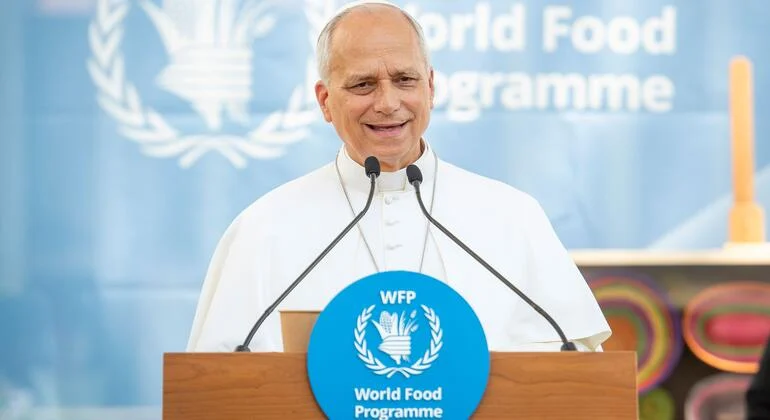
At the heart of the current global discourse is a stark warning from Pope Leo, who has formally elevated food security to the status of a primary pillar of global geopolitical stability. His recent engagement with the World Food Programme (WFP) underscored a grim reality: 266 million people across 47 nations faced acute food insecurity last year, a number driven primarily by the deliberate use of conflict as a tool of geopolitical leverage.
Simultaneously, the situation in Gaza remains a critical point of failure for international humanitarian standards. Despite ongoing diplomatic efforts, civilians are trapped in a cycle of airstrikes and naval fire, with the Kerem Shalom crossing serving as a bottleneck that restricts the flow of essential life-saving goods.
In Lebanon, a tentative shift is occurring as displaced families begin the arduous process of returning to the south. However, this return is not a homecoming of triumph; it is a movement back into regions defined by obliterated infrastructure, lack of basic utilities, and the persistent, haunting uncertainty of whether the current lull in violence will hold.
Chronology: The Escalating Humanitarian Burden
Early 2024 – Present: The Hunger Crisis
The global hunger epidemic has worsened as resource allocation has shifted. Throughout the last twelve months, the WFP has documented a growing imbalance where financial and logistical investments in armaments have vastly outpaced investments in agricultural stability and human nutrition. Pope Leo’s visit to the WFP headquarters served as a symbolic and practical intervention, emphasizing that the "feeding" of conflict has become a systemic global pathology.
March 2 – June 19, 2024: The Lebanese Conflict Trajectory
The conflict in Lebanon reached a devastating peak following the escalation of hostilities on March 2. Since that date, the death toll has climbed to over 4,100, with more than 12,100 individuals suffering debilitating injuries. June 19 marked a particularly dark day, with the Ministry of Public Health reporting 83 deaths and 141 injuries in a single 24-hour window. Only in the most recent days has a significant reduction in violence allowed for the tentative return of civilian populations.
Recent Days: The Gaza Bottleneck
In the Gaza Strip, the humanitarian situation has remained locked in a state of crisis. Throughout the past weekend and into Monday morning, UN aid teams scrambled to process shipments—including blankets, medical kits, and education supplies—but these efforts were consistently undermined by a lack of fuel and the ongoing closure of multiple border crossings.
Supporting Data: The Statistics of Suffering
The scale of the current crisis is best understood through the granular data provided by international monitoring bodies:
- Food Insecurity: 266 million individuals are currently in acute need of food assistance across 47 countries. This figure represents a systemic failure of global supply chains and a direct result of armed conflict.
- The Price of Conflict: The WFP’s memorial wall, which the Pope recently honored, stands as a testament to the cost of aid work; 171 staff members have lost their lives in the pursuit of feeding the world’s most vulnerable.
- Lebanese Casualty Totals: The escalation since March 2 has resulted in a staggering 4,100 fatalities. The demographic impact of 12,100 injuries suggests a long-term burden on the Lebanese healthcare system, which is already struggling with destroyed infrastructure.
- Operational Strains in Gaza: Humanitarian operations are currently hampered not only by violence but by "operational failures," including a lack of lubricant oils for generators and a critical shortage of spare parts, which has forced agencies to prioritize life-saving services at the expense of general social support.
Official Responses and Diplomatic Stances
The Vatican’s Moral Imperative
Pope Leo’s message was unambiguous: "Conflicts are ‘fed’ more readily than people are nourished." By framing food security as a matter of global security, the Pontiff is attempting to shift the narrative away from purely altruistic charity toward a pragmatic realization that hungry populations are inherently unstable populations. His virtual meeting with field staff served as a morale-boosting exercise, validating the work of those operating in climate-shocked and war-torn regions.
UN Coordination and the "Humanitarian Access" Plea
UN Spokesperson Stéphane Dujarric has been the voice of the international community’s frustration. Regarding Gaza, he has repeatedly called for the opening of additional border crossings, noting that the singular reliance on Kerem Shalom is operationally insufficient. Regarding the West Bank, the UN has issued a firm reminder that the use of lethal force by law enforcement must be a "last resort," specifically referencing the recent deaths of a boy and a man in Hebron.
Regarding Lebanon, the UN’s stance is one of cautious support. While the agency acknowledges the return of families, it emphasizes that this return must be "voluntary, safe, and dignified." The UN is currently monitoring the situation to ensure that the infrastructure, however damaged, can support the returnees.
Implications: A World at a Crossroad
The Geopolitics of Hunger
The implication of the Pope’s warning is clear: until the international community prioritizes the "nourishment of people" over the "nourishment of conflict," the cycle of instability will continue to rotate. If food is treated as a weapon of war—or as a secondary concern to military spending—the global community can expect further migration, increased radicalization, and a breakdown of the international order.
The Fragility of Return
In Lebanon, the return of displaced families is a litmus test for the region’s stability. If infrastructure is not rehabilitated and basic services (water, electricity, healthcare) remain inaccessible, the return may be short-lived. The current trend—where families move closer to their homes to "wait and see"—indicates a profound lack of trust in the longevity of the current ceasefire. The international community faces a narrow window to provide the necessary aid to turn these "wait and see" movements into permanent, sustainable re-settlements.
Operational Impotence in Gaza
The situation in Gaza serves as an indictment of current humanitarian aid protocols. When humanitarian organizations are forced to suspend "less critical activities"—such as education and mental health support—in order to focus solely on survival rations, the future of an entire generation is jeopardized. The lack of fuel and spare parts for generators is not just a logistical problem; it is a policy failure that effectively throttles the ability of the international community to sustain human life in the territory.
Conclusion: A Call for Renewed Priority
As we look toward the remainder of the year, the interconnected nature of these crises becomes undeniable. Whether it is the conflict-driven hunger in global breadbaskets, the systematic strangulation of aid in Gaza, or the precarious recovery in Lebanon, the common thread is a deficit of political will.
The Pope’s assertion that food security is a matter of global security is the lens through which all future policy must be viewed. Without a fundamental shift in how resources are allocated—prioritizing the human over the tactical—the humanitarian community will continue to be a reactive force, constantly attempting to patch the wounds of a world that refuses to stop "feeding" the conflicts that cause them. The path forward requires not only more aid, but a more courageous diplomatic approach that treats civilian survival as the prerequisite for any lasting peace.
 Lina Hope
 Asro
Asro
 Layla Zulfa
