

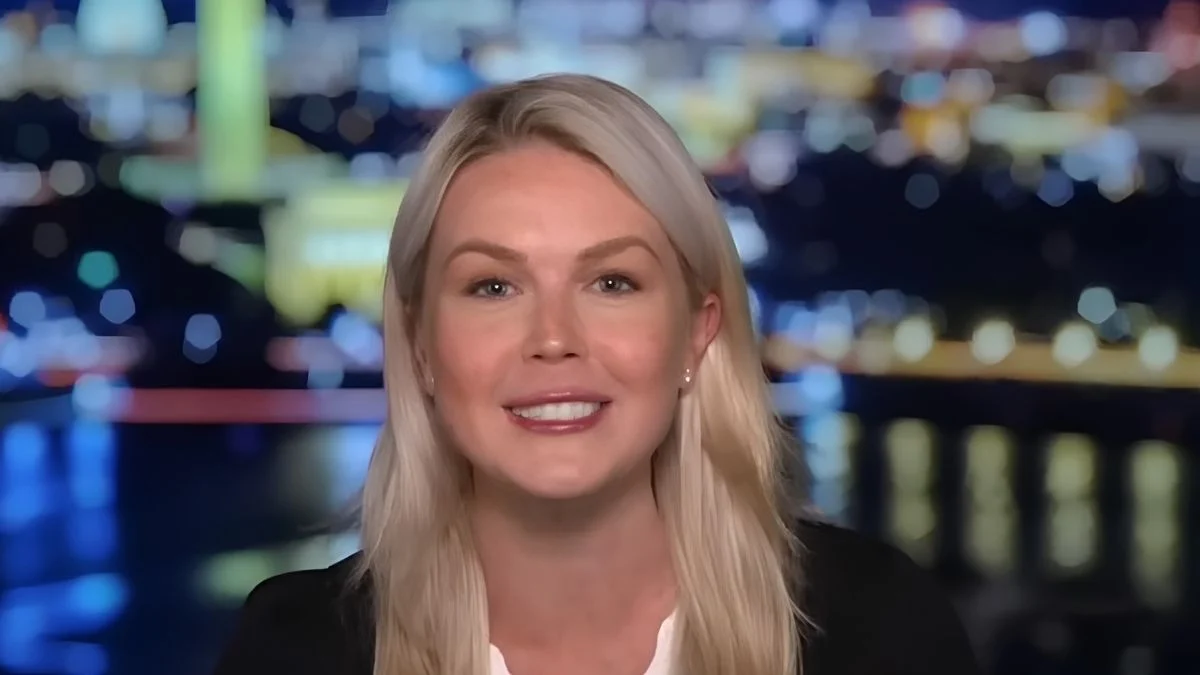
In a striking interruption to her maternity leave, White House Press Secretary Karoline Leavitt has re-emerged into the public eye to spearhead the administration’s response to a wave of vandalism targeting the Lincoln Memorial Reflecting Pool. The high-profile incident, which has involved both physical damage to the structure and a heated political war of words, has become a flashpoint in the broader national conversation regarding the preservation of Washington, D.C.’s historic landmarks.
As the administration moves to hold perpetrators accountable and repair the damage, the incident has highlighted deep-seated ideological divides regarding law and order, public property, and the responsibility of elected officials to protect the nation’s heritage.
The Scope of the Damage: A Chronology of Destruction
The tension surrounding the Lincoln Memorial Reflecting Pool began to escalate in mid-June 2026, when reports surfaced of systematic attacks on the newly renovated monument. The site, which had recently undergone a comprehensive restoration project under President Donald Trump’s administration, was targeted by individuals wielding tools intended to cause significant structural and aesthetic damage.
The Timeline of the Incident
- Initial Discovery: Maintenance crews and National Park Service (NPS) officials first noted irregularities in the pool’s basin, including deep lacerations in the lining and the introduction of unauthorized chemicals.
- The Escalation: Over the course of 72 hours, reports of localized vandalism increased in frequency. Surveillance footage and eyewitness accounts led to the identification of several suspects.
- The Intervention: President Trump addressed the nation from the Oval Office, condemning the act as a "violent" assault on American history. He described physical evidence of 290-to-300-foot-long incisions in the pool’s surface, likely inflicted by box-cutters or industrial knives.
- Law Enforcement Action: By the end of the week, authorities confirmed that six individuals had been arrested in connection with the destruction. The arrests were met with immediate praise from the White House, which signaled a "zero-tolerance" policy for those damaging federal property.
Official Responses: The White House Takes a Stand
White House Press Secretary Karoline Leavitt, despite being on maternity leave, returned to the media circuit to act as the primary voice for the administration on this issue. Her reentry into the political discourse was not merely a statement of policy but a direct counter-offensive against critics who downplayed the severity of the situation.
Confronting the "Imaginary Problem" Narrative
The political heat intensified when Minnesota Governor Tim Walz characterized the reports of widespread vandalism as an "imaginary problem." Leavitt took immediate umbrage with this assessment during a high-stakes interview on Fox News.
"The vandalism is very real, despite what Tim Walz wants to say," Leavitt stated firmly. "I spoke with the National Park Service just before joining the show. They now have 17 police reports that have been filed in just a matter of a few days. To call this an ‘imaginary problem’ is to disregard the work of our law enforcement and the reality of the damage done to a national treasure."
Leavitt’s insistence on the reality of the threat served to bolster the President’s own narrative. By citing the 17 police reports, she sought to shift the conversation from an abstract debate about partisan optics to a concrete discussion regarding public safety and federal enforcement.
Implications for Law Enforcement and Federal Property
The vandalism of the Lincoln Memorial Reflecting Pool has broader implications for the security of the National Mall. As one of the most visited sites in the United States, the area serves as a symbol of American stability. The ability of agitators to cause significant damage to the reflecting pool has prompted a review of security protocols for federal monuments.
The Trump Administration’s Vow
President Trump has been clear in his directive to the Department of Justice and the National Park Service: the law will be enforced to the fullest extent. In his recent remarks, the President emphasized that the damage was not merely a protest, but a deliberate act of destruction.
"We are not going to tolerate the destruction of our history," the President noted during his address. "These individuals didn’t just walk by; they brought tools, they brought chemicals, and they committed a violent act against a monument that belongs to every American."
Leavitt echoed this sentiment, ensuring the public that the administration’s focus is twofold: holding the perpetrators accountable through the judicial system and restoring the reflecting pool to its pristine, post-renovation state. "President Trump is not going to stop with this effort," Leavitt added. "We’re going to fix the pool, and we’re going to continue to make it beautiful, despite this despicable vandalism."
The Partisan Divide: Ideology in the Nation’s Capital
The vandalism has inevitably become filtered through the lens of the current political environment. Leavitt and other administration allies have pointed to the suspects as being ideologically aligned with Democratic Party factions, accusing the political left of fostering an environment where the destruction of historical symbols is considered acceptable.
This rhetoric has turned the reflecting pool into a microcosm of the larger "Culture War." While the administration views the act as a criminal enterprise that requires swift justice, opposition voices—like Governor Walz—have questioned the intensity of the administration’s focus, suggesting that the government is inflating the incident to serve a political agenda.
Why the Rhetoric Matters
The debate over the reflecting pool highlights a fundamental disagreement regarding the role of government. For the administration, the maintenance of the monument is a matter of national honor. For their detractors, the administration’s aggressive stance is viewed as a "manufactured crisis" designed to distract from other policy failures.
However, the empirical data provided by the National Park Service—specifically the high volume of police reports—suggests that the issue is, at the very least, a significant drain on municipal and federal resources. The physical restoration alone is expected to cost thousands of dollars, a burden that ultimately falls on the taxpayer.
Future Policy and Monitoring
In the wake of these events, the Department of the Interior is reportedly considering a series of upgrades to the security infrastructure surrounding the Lincoln Memorial and the Reflecting Pool. Potential measures include:
- Enhanced Surveillance: The installation of high-definition, AI-integrated security cameras to monitor for suspicious behavior in real-time.
- Increased Patrols: A permanent increase in the presence of U.S. Park Police officers during night and early morning hours.
- Physical Barriers: While the administration has been hesitant to block the public’s access to these monuments, there is a growing discussion regarding "smart" barriers that could prevent the introduction of chemicals or tools into the water basin.
Conclusion: A Resilient Symbol
The return of Karoline Leavitt to the public sphere, albeit briefly, underscores the gravity with which the current administration views the defense of federal monuments. Whether one views the vandalism as an act of political protest or a criminal degradation of public space, the incident has undeniably altered the landscape of D.C. security.
As the legal proceedings against the six arrested individuals move forward, the administration continues to emphasize that the Lincoln Memorial Reflecting Pool will remain a symbol of American resilience. By refusing to let the vandalism go unanswered, the White House has signaled that it will prioritize the protection of national landmarks as a cornerstone of its domestic policy.
As the repairs begin, the American public will be watching to see how the government balances the need for security with the tradition of open access to the nation’s most sacred sites. For now, the focus remains on the restoration of the pool and the legal accountability of those who sought to mar its legacy.
 Neng Nana
 Azzam Bilal Chamdy
 Nana
Nana
