

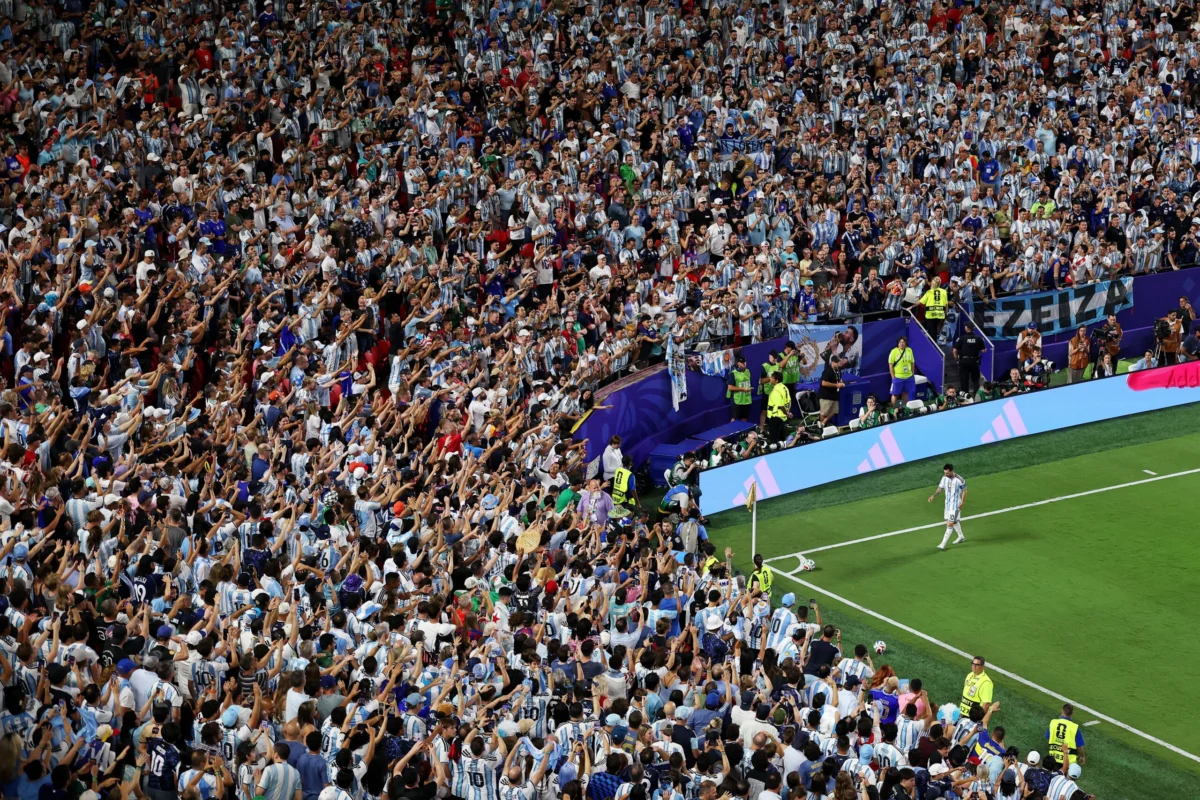
The atmosphere in Kansas City this week is not that of a typical American Midwestern city. It is electric, discordant, and undeniably global. Amidst the low-slung architecture and the steady hum of interstate traffic, a different rhythm has taken hold: the frantic, melodic pulse of fútbol.
In the heart of Mill Creek Park, the air is thick with the scent of choripán—a quintessential Argentine sausage sandwich—wafting from charcoal grills. Around me, a sea of sky-blue-and-white jerseys swells, oscillating to the beat of drums, cowbells, and the rhythmic, guttural roar of "Olè, Olè, Olè." It is 3 p.m. on a Monday, yet the intensity matches that of a championship final. This is the banderazo, a traditional pre-game ritual where fans gather to display their national colors, chant until their lungs burn, and psych themselves up for the spectacle to come. Tomorrow, the local tension will culminate as Argentina faces Algeria in a pivotal opening match of the 2026 FIFA World Cup.

The Global Migration: A Cultural Collision in the US
The 2026 World Cup has effectively acted as a grand cultural engine, pulling thousands of international visitors into the orbit of host cities across the United States, Canada, and Mexico. For the casual observer, the influx of travelers might seem serendipitous, but it is a highly choreographed migration.
In Dallas, Japanese tourists have become local celebrities, braving massive plates of sauce-drenched ribs with sun-disc flags painted on their cheeks. In Queens, New York, the rhythmic, thunderous "Viking row" of Norwegian fans has become a fixture on the escalators of local subway stations. Scottish supporters have turned Boston’s historic pubs into bastions of tartan and song, while in Mexico City, Korean fans are literally crowdsurfing through the streets.

For Kansas City, the arrival of the World Cup was an opportunity to prove its pedigree. Long before the first whistle, the city branded itself the "Soccer Capital of America," backing the claim with a $700 million investment in sports infrastructure. This included the construction of the first U.S. stadium specifically designed for the National Women’s Soccer League (NWSL). The commitment has paid off; the city has become a hub for international teams, with Argentina basing its players at the waterfront Origin Hotel and Algeria establishing a secondary camp in the nearby college town of Lawrence, Kansas.
A Chronology of the Fan Experience
The journey to the match at Arrowhead Stadium—the legendary home of the Kansas City Chiefs—began long before the players took the field.

48 Hours Before Kickoff: The Arrival
The city was a treasure hunt for the soccer-obsessed. Fans were easy to spot: small clusters of green and white or blue and white, darting between the Crossroads neighborhood and the Power & Light District. At Café Corazon, founder Dulcinea Herrera hosted a banderazo that felt less like a restaurant event and more like a block party, with streets closed off and live music echoing against the brick buildings.
24 Hours Before Kickoff: The Institutional Embrace
The community buy-in has been extraordinary. In Olathe, Kansas, the Kanza Mediterranean market became an unofficial clubhouse for the Algerian delegation. Local residents in Lawrence, Kansas, took the spirit of hospitality to an extreme, with one local earthwork artist carving a massive Algerian flag into a field of grass and mulch. Even sports bars like the Red Lion Tavern pivoted, setting up booze-free "family zones" stocked with Algerian sodas to ensure all visiting fans felt at home.

Match Day: The Descent on Arrowhead
By Tuesday, the city’s usual flow had been completely rerouted. Traffic on the highways surrounding the stadium stood at a standstill, replaced by a river of fans trekking on foot. Inside the stadium, the atmosphere was a cacophony of sound. Argentina supporters brought a level of intensity that felt inherited from the streets of Buenos Aires, while Algerian fans, clad in forest green, utilized the stadium’s architecture, waving their arms like conductors to lead the crowd in the chant, "1, 2, 3, Viva Algerie!"
The Economic and Emotional Investment
The cost of entry for this tournament is not insignificant. With average ticket prices hovering near $2,000 according to industry data from SeatPick, the fans in the stands are those who have made a serious financial and emotional commitment to their team.

I spoke with a woman who had spent $900 on tickets for herself and her father. Her father, a lifelong Peru fan whose team has rarely graced the World Cup stage, had fully converted to the Argentine cause, fueled by a deep-seated admiration for Lionel Messi. This is the reality of the modern World Cup: fans traveling thousands of miles, spending their savings, and adopting new teams simply to remain part of the conversation.
Official Responses and Stadium Impact
FIFA officials have touted the "Fan Fest" zones as the heartbeat of the tournament. These free-entry hubs provide the necessary infrastructure for those who lack tickets, ensuring that the atmosphere is inclusive.

However, the real test of the infrastructure came at Arrowhead Stadium itself. The stadium is famously one of the loudest in the world, having set a decibel record of 142.2 during a 2014 NFL game. During the Argentina-Algeria match, the roar was different—a continuous, melodic wave of sound rather than the punctuated bursts of an American football crowd. As the match progressed, with Argentina securing a 3-1 victory—highlighted by a stunning hat trick from Lionel Messi—the sound level seemed to push the boundaries of what the structure could contain.
Implications: The Legacy of the 2026 Games
What does the success of this event mean for Kansas City and the United States? The primary implication is the solidification of soccer as a truly mainstream, high-participation sport in the Midwest.

The logistical hurdles—the movement of 64,000 fans, the integration of different cultural traditions, and the management of international teams—have set a new standard for American host cities. The "Soccer Capital" label, which once seemed like a marketing gamble, now feels like a deserved title.
Moreover, the human element—the "contact high" of being surrounded by thousands of people united in a single moment—is the intangible product that the World Cup sells. When the match ended and the sea of blue and green began to untangle, dispersing back into the highways and airports, there was a palpable sense of transformation. The city had been part of a global tapestry, if only for 48 hours.

Practical Advice for Future Attendees
For those planning to attend future matches, the lessons from the Kansas City experience are clear:
- Identify and Engage: The jersey is your calling card. Wearing your team’s colors in the days leading up to the match is the most efficient way to find community.
- Leverage Digital Tools: Social media is the primary nervous system of the fan experience. Follow local fan accounts and look for gatherings at restaurants that serve as "pillars" of the diaspora community.
- Respect the Logistics: Official FIFA Fan Fests are essential for a free, high-energy experience. However, always check specific stadium regulations regarding flags, banners, and instruments, as these vary by venue.
- Understand the Schedule: While kickoff is the main event, the true "World Cup experience" begins at least 30 minutes prior during the national anthems and official ceremonies. Arrive early to witness the buildup.
The 2026 World Cup has proven that in the right environment, sports can transcend geography. Kansas City may have been an unexpected host to some, but to the thousands who spent their days chanting, drinking, and cheering in its parks, it was the only place on earth. As the crowds leave, the silence returning to the streets feels slightly heavier, a testament to the brief, beautiful, and chaotic energy that only the World Cup can conjure.
 Sagoh
Sagoh
 Asro
Asro
