

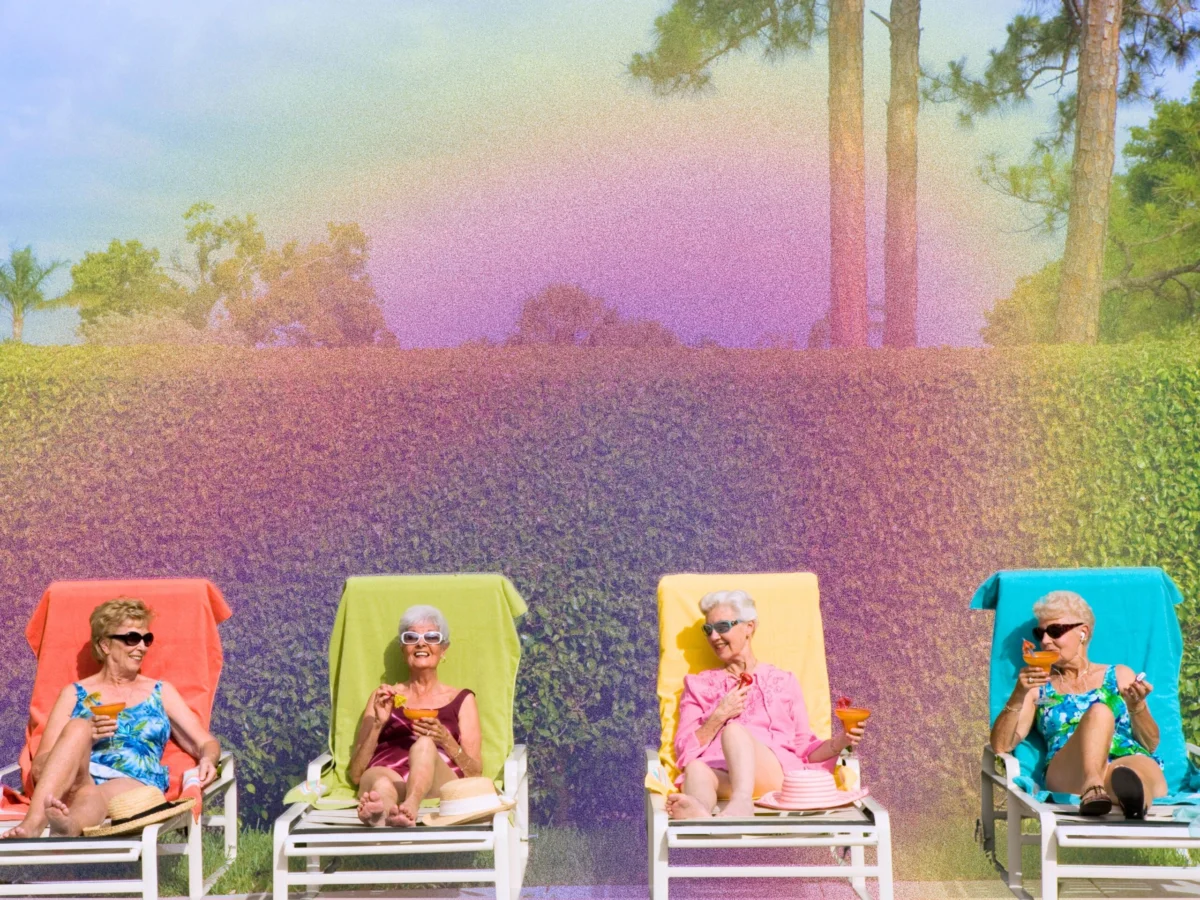
For generations, the cultural narrative surrounding women has been anchored to a singular, non-negotiable objective: the pursuit of a partner. From childhood, many women are fed a steady diet of cautionary tales and societal pressures—the "ticking clock," the fear of the "old maid," and the persistent myth that a life without a spouse is a life inherently lacking. Yet, a quiet, seismic shift is currently reshaping the demographic landscape. More women than ever are choosing to bypass the altar, not as a temporary measure, but as a permanent, deeply satisfying lifestyle choice.
The Myth of the "Incomplete" Woman: A Historical Perspective
For much of modern history, women who remained single were relegated to the margins of society. Labels like "spinster," "cat lady," or "cautionary tale" were deployed to pathologize their independence. Marriage was not merely a romantic aspiration; it was the primary vehicle for financial stability, social standing, and emotional validation.
In the late 20th century, even psychologists often approached singlehood through a lens of deficiency. Joan, now 79, recalls the panic that gripped her in her 30s. "Back then," she notes, "a woman who didn’t want a husband was assumed to have something wrong with her." When she sought professional guidance to address her lack of interest in marriage, her therapist resisted the urge to push traditional norms. Instead, the therapist asked a radical question: What kind of husband would you want?
Joan’s response—that she would want someone "who is never home"—was framed as a joke at the time, but it masked a profound, accidental realization: she simply did not desire the presence of a partner in her daily existence. That session, occurring around 1980, sparked a decades-long commitment to a life lived on her own terms, proving that independence was not a byproduct of failure, but a deliberate, fulfilling achievement.
The Evolution of Singlehood: From Stigma to Strategy
The stigma surrounding the single woman is softening, replaced by a growing recognition that life without a husband is not a "fallback" option, but a high-functioning, intentional reality. This shift is substantiated by data, cultural trends, and a palpable shift in the collective consciousness.
Current statistics reveal a significant trend: according to the Pew Research Center, 42% of U.S. adults were unpartnered in 2023, a sharp increase from 29% in 1990. Furthermore, among non-dating individuals under 50, roughly half express no interest in pursuing a relationship. This is not necessarily an "anti-love" stance, but rather a reflection of higher standards and a decreased reliance on marriage for survival.
The modern dating landscape, characterized by "app fatigue," has further accelerated this trend. A recent Forbes Health survey found that 78% of users on platforms like Tinder, Hinge, and Bumble feel burnt out. This fatigue is paired with a documented decrease in sexual activity among young adults, with sexual inactivity up by approximately 50% for women over the past decade. The cultural appetite has shifted toward narratives that celebrate platonic intimacy, independence, and the concept of "chosen family," as evidenced by the success of films like Barbie and Wicked.
Theoretical Frameworks: The "Single at Heart" Paradigm
Sociologist and author Dr. Bella DePaulo, PhD, has been instrumental in formalizing the study of this lifestyle. Through her book, Single at Heart, Dr. DePaulo argues that for many, singlehood is not a circumstance of "ending up alone," but an orientation toward a life of solitude and autonomy.
"I still smile when I think about the men I dated when I was a very young adult," Dr. DePaulo says. "But I remember even more fondly how I felt when each of those relationships ended: finally free."
The psychological benefit, she posits, lies in the ability to structure one’s life without the constant, reflexive consideration of a partner’s needs, moods, or expectations. For those who choose to live alone, their energy, time, and intellectual focus are entirely their own. This is a level of freedom that, according to Dr. DePaulo, is inherently incompatible with the compromises necessitated by cohabitation or marriage.
The "Additive" Approach to Relationships
The economic and social barriers that once forced women into marriage have largely eroded. With increased access to education, career advancement, and financial independence, the necessity of a partner as a provider has vanished. Sociologist Dr. Kris Marsh, author of The Love Jones Cohort: Single and Living Alone in the Black Middle Class, notes that contemporary women are now looking for something "additive."
"I’ve heard over and over, ‘I’m already in a very good place on my own. So you can’t be a distraction. You can’t disrupt my peace,’" Dr. Marsh explains.
This sentiment is echoed by women like Alice Foster, 80, who followed the traditional script—marriage, children, and domesticity—only to find it unfulfilling. Following her divorce in 1988, she discovered that the "loss" she had been warned about was actually a gain. "It was fine, but I felt like it was never really about me," Foster says. "It wasn’t my life." Through nursing, education, and the cultivation of a robust social circle, she constructed an existence that allowed for personal agency. Today, she views her singleness as a source of vitality, not loneliness.
Supporting Data and Psychological Well-being
Critics often question the validity of this happiness, asking: Are these women actually content? Research suggests that, yes, they are. Studies indicate that satisfaction with singlehood often increases with age, particularly starting in the 40s.
However, because society remains anchored in the belief that marriage is the pinnacle of adult life, single women often face a "validation tax." They are frequently asked to prove they are happy, whereas married individuals are rarely subjected to the same scrutiny, regardless of their actual relationship quality. Dr. Marsh observes that this creates an expectation that forces single women to be "extra strong" and "exceptionally confident" to stand in their truth.
This scrutiny, ironically, has led many to stop "performing" their happiness for others. The women interviewed for this article did not seek to justify their lifestyles; they simply live them. They represent a rare form of authentic contentment—a state of being that does not require external approval or societal permission.
Implications for the Future
The implications of this shift are profound. As more women prioritize self-actualization over traditional coupling, the very definition of a "successful life" is being rewritten. We are moving toward a society where the "couple unit" is no longer the default, but one of many valid ways to live.
This does not imply that romance is obsolete, but rather that it is becoming a luxury rather than a necessity. The ability to choose a life of one’s own—free from the pressures of maintaining a marital institution—is perhaps one of the most significant social developments of the modern era.
As we look toward the future, the stories of Joan, Alice, and the countless women following in their footsteps serve as a reminder: the most important relationship a woman can cultivate is the one she has with herself. In a world that is finally beginning to acknowledge this truth, the "old maid" has been replaced by a woman who is not waiting for anything at all—because she already has everything she needs.
 Asro
Asro
