

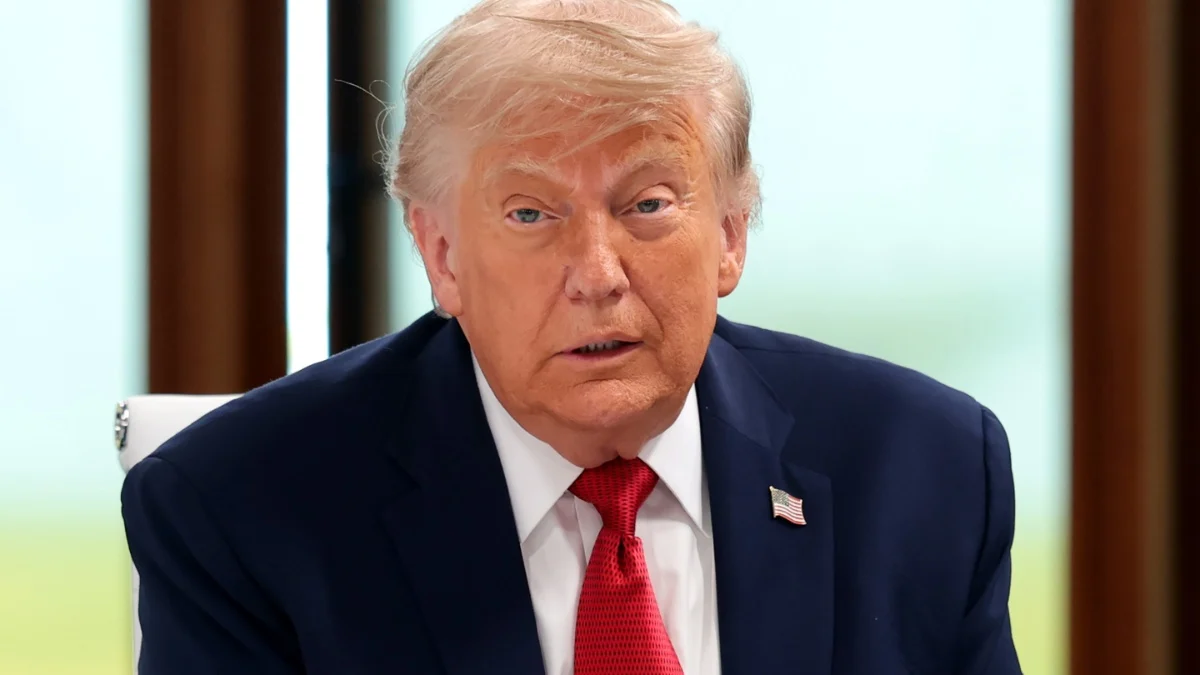
In a stunning display of legislative defiance that has sent shockwaves through the corridors of power in Washington, the United States Senate passed a bipartisan resolution on Tuesday aimed at curbing President Donald Trump’s ability to engage in military hostilities with Iran. The 50-48 vote represents a historic milestone in the ongoing struggle between the Executive and Legislative branches regarding the constitutional authority to wage war.
The passage of the concurrent resolution, which directs the removal of U.S. military forces from hostilities against Iran, marks a significant departure from traditional party-line voting. Despite intense pressure from the White House to maintain a unified front, four Republican senators broke ranks to join their Democratic colleagues, fundamentally shifting the geopolitical landscape of the current administration’s foreign policy agenda.
The Legislative Breakdown: A Bipartisan Defiance
The narrow 50-48 margin was made possible by a rare coalition of ideological opposites. Republican Senators Rand Paul (R-KY), Susan Collins (R-ME), Lisa Murkowski (R-AK), and Bill Cassidy (R-LA) cast the deciding votes that handed the President a stinging rebuke.
The political maneuvering behind the scenes was as critical as the final tally. The absence of Senate Minority Leader Mitch McConnell and Senator Dave McCormick—both of whom have historically opposed such resolutions—provided the necessary breathing room for the measure to clear the chamber. Their absence, whether by design or circumstance, proved to be the decisive factor in an environment where every vote carries immense weight.
Conversely, the vote saw a rare cross-party split from the Democratic side, as Senator John Fetterman (D-PA) voted against the resolution, citing concerns over the timing and the potential impact on ongoing diplomatic negotiations. Despite this internal Democratic friction, the momentum carried by the House of Representatives—which passed an identical version of the resolution earlier this month by a vote of 215-208—proved insurmountable.
Chronology of the Escalation
The road to this week’s confrontation has been paved with months of legislative tension. This marks the tenth time the Senate has held a vote on an Iran-related war powers measure within the current calendar year.
- Early Year: The cycle of legislative attempts to constrain executive authority began as tensions in the Persian Gulf spiked, prompting Democrats to introduce various iterations of war powers legislation.
- The House Initiative: Earlier this month, the House of Representatives successfully passed the concurrent resolution, setting the stage for a high-stakes showdown in the upper chamber.
- The Build-up: Over the past several weeks, Democratic leadership worked to incrementally peel away Republican support, capitalizing on growing discomfort within the GOP regarding the lack of clear, long-term strategic goals in the Middle East.
- The Final Showdown: Tuesday’s vote served as the culmination of these efforts, forcing a floor vote that the White House had sought to avoid for months.
Supporting Data and Context
To understand the weight of this resolution, one must look at the legal and historical context of the War Powers Act of 1973. The Act was designed to ensure that the collective judgment of both the Congress and the President is applied to the introduction of U.S. armed forces into hostilities.
For the White House, the argument has remained consistent: there are no active hostilities from which to withdraw forces, particularly following the April 7th ceasefire. Administration officials have argued that the resolution is not only redundant but dangerous, as it allegedly undermines the President’s ability to act as Commander-in-Chief in a rapidly evolving threat environment.
However, proponents of the resolution, led by Senator Tim Kaine (D-VA), argue that the measure is a necessary "guardrail." Kaine noted that even in the absence of full-scale war, the potential for inadvertent escalation is high. By passing this resolution, Congress is reasserting its Article I powers, ensuring that any future escalation in the region must be preceded by a transparent debate and explicit legislative authorization.
Official Responses and Rhetorical Warfare
The response from President Trump was characteristically swift and combative. Taking to Truth Social on Tuesday night, the President dismissed the vote as "poorly timed and meaningless." His rhetoric escalated quickly, as he accused the dissenting senators of providing "aid and comfort [to] the Enemy."
Trump did not stop at policy critiques; he turned his ire toward the four Republican senators who defected, labeling them "losers" and claiming their actions made his job "more difficult" at a time when he is navigating sensitive negotiations with Tehran. This follows his earlier categorization of House Republicans who supported similar measures as "GRANDSTANDERS" and "unpatriotic."
The White House official line mirrored the President’s frustration. A senior administration official dismissed the vote as having "no significance," shifting the blame to "Republican absences" rather than a genuine shift in policy consensus. They argued that the resolution is a performative act of politics rather than a substantive piece of legislation.
In contrast, legislative aides in the House have pushed back against the administration’s characterization. A Democratic aide speaking on background to CNN clarified that the measure would, in fact, be binding as a matter of law, regardless of the White House’s attempts to downplay its impact.
Implications for Future Foreign Policy
The implications of this vote are twofold: domestic political fracture and international signaling.
Domestic Impact
For the Republican party, this vote exposes a deepening rift between the traditional interventionist wing and the growing non-interventionist or "America First" skepticism regarding Middle East entanglements. The fact that four GOP senators felt comfortable defying the President suggests that the internal party discipline regarding foreign policy is significantly weaker than in previous years.
International Signaling
From the perspective of Tehran and other global powers, the vote sends a confusing signal. While the White House maintains that the President has full authority to act, the Senate has publicly signaled that there is no consensus for a broader conflict. This could embolden Iran to push the boundaries of current agreements, knowing that the U.S. legislative branch is currently in a state of internal deadlock regarding the use of force.
The Constitutional Tug-of-War
The fundamental issue at the heart of this dispute is the erosion of the constitutional checks and balances established by the Founders. For decades, the executive branch has utilized "emergency powers" and broad interpretations of previous Authorizations for Use of Military Force (AUMF) to engage in global conflicts without explicit new approval from Congress.
This resolution, however, represents a rare instance where the pendulum is attempting to swing back. By demanding a formal role in the decision-making process for Iran, the Senate is testing the boundaries of the executive’s patience.
Conclusion: The Road Ahead
As the dust settles on this historic vote, the focus will shift to how the White House attempts to circumvent the resolution’s intent. Will the administration continue to argue that the ceasefire renders the resolution moot, or will they seek to repair the relationship with the four Republican senators who feel that Congress has been sidelined for too long?
The resolution serves as a stark reminder that even in an era of hyper-partisanship, the institutional memory of the Senate regarding its war-making powers remains intact. Whether this leads to a more collaborative approach to foreign policy or a period of heightened hostility between the White House and Capitol Hill remains to be seen. What is clear, however, is that the balance of power in Washington has shifted, if only by a few degrees, forcing a recalibration of how the United States approaches the prospect of war in the 21st century.
The coming weeks will be crucial. With the President already lashing out at his own party and the legislative branch asserting its constitutional prerogative, the stage is set for a prolonged constitutional standoff. The resolution may be termed "meaningless" by the Oval Office, but its passage suggests that for at least a segment of the legislative body, the era of executive autonomy in matters of war has come to an abrupt and contentious end.
 Neng Nana
 Azzam Bilal Chamdy
 Nana
Nana
