

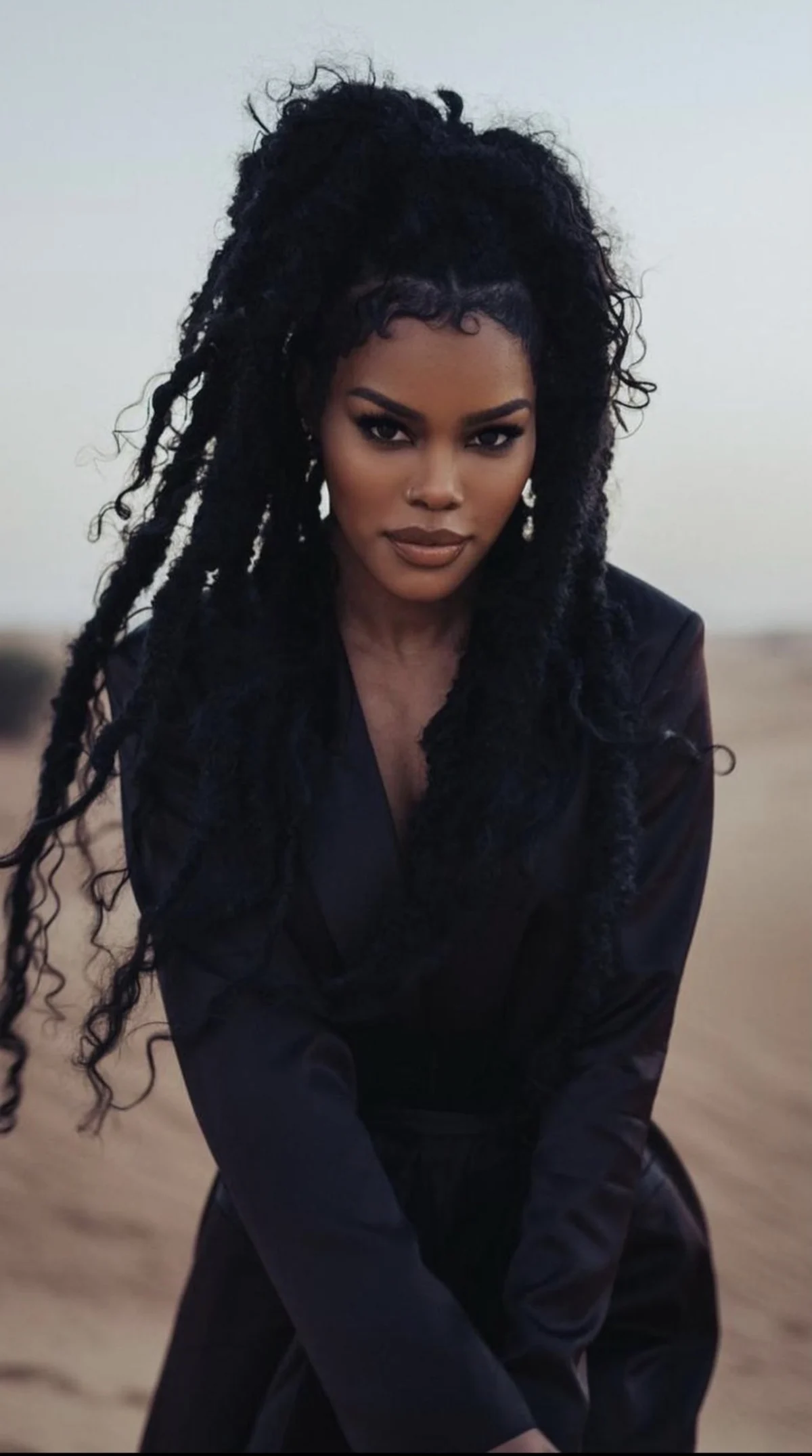
In an era where the lines between musician, actor, director, and creative visionary have blurred, few artists have navigated the intersection of these disciplines with the fluidity and impact of Teyana Taylor. On Sunday, June 28, 2026, the global entertainment community will turn its eyes to the Peacock Theater in Los Angeles, where BET will formally bestow the title of "Icon of the Year" upon the Harlem-born powerhouse. The ceremony, hosted by comedian and cultural commentator Druski, promises to be a career-spanning tribute to an artist who has, in a remarkably short window, redefined the scope of modern stardom.
The Magnitude of the Moment: Defining the "Icon"
The "Icon of the Year" honor at the BET Awards is not merely a lifetime achievement award; it is a declaration of influence. According to the network’s official release, the distinction is reserved for "a culture-defining artist—someone whose impact isn’t measured in years but in the undeniable weight they carry in every room, every conversation, and every corner of the culture they touch."
For Teyana Taylor, this definition fits with clinical precision. Her trajectory from a prodigious talent in the late 2000s to a multi-hyphenate mogul in the mid-2020s serves as a masterclass in artistic evolution. Whether she is choreographing viral routines, directing nuanced visual albums, or commanding the screen in prestige cinema, Taylor operates with a singular, unmistakable creative thumbprint. By selecting her for this year’s top honor, BET is acknowledging that Taylor is not merely a participant in the culture; she is one of its primary architects.
A Chronology of Excellence: From Harlem to Hollywood
To understand why Taylor is the undisputed choice for this year’s icon status, one must look at the meteoric rise she has experienced over the last half-decade. Her career has been marked by a relentless refusal to be pigeonholed.
The Early Years and Musical Foundation
Taylor emerged onto the scene with a raw, kinetic energy that quickly caught the attention of the industry’s elite. Known for her dance prowess and soulful vocal texture, she spent her early years establishing her reputation as a formidable stage presence. However, as the 2020s approached, the industry began to see that Taylor’s musical output—exemplified by her critically acclaimed visual projects—was merely the tip of the iceberg.
The Cinematic Breakthrough
The pivot to acting was not a side project; it was a wholesale reinvention. Her performance in the Sundance darling A Thousand and One was a watershed moment, earning her a Critics’ Choice Award and signaling to the dramatic film world that Taylor possessed an emotional depth capable of anchoring heavy, narrative-driven features.
This momentum became an unstoppable force. Following her dramatic acclaim, she secured a Golden Globe for Best Supporting Actress, a milestone that cemented her status as a serious dramatic force. Her work in Paul Thomas Anderson’s One Battle After Another further solidified this reputation, earning her an Academy Award nomination and putting her in the rarified company of performers who have successfully transitioned from the stage to the apex of film.
Expanding the Portfolio
Taylor’s recent resume reads like a map of the most exciting projects in entertainment. Beyond her awards-season success, she has navigated the worlds of high-stakes action and prestige television. Her role opposite heavyweights Matt Damon and Ben Affleck in the Netflix thriller The Rip showcased her ability to hold her own in blockbuster, star-studded environments. Simultaneously, her participation in the Ryan Murphy ensemble All’s Fair for Hulu highlighted her versatility, proving she could thrive in the fast-paced, high-gloss world of premium television.
Supporting Data: By the Numbers
The weight of Taylor’s impact is evidenced by more than just critical praise; it is reflected in the diversity of her professional accolades.
- Music: Her visual album Escape Room pushed the boundaries of the R&B genre, securing a Grammy nomination and proving that Taylor’s conceptual vision remains as potent as her vocal performance.
- Film/TV: The transition from musical stardom to the Oscar stage is a rarity. Her Academy Award nomination, coupled with her Golden Globe win, represents a success rate in crossover talent that few, if any, of her contemporaries have achieved in such a compressed timeframe.
- Cultural Footprint: Taylor has maintained her relevance as a style icon and creative director, frequently helming the visual aesthetic for her own projects and for high-profile collaborators. This autonomy—the ability to produce, direct, and execute her own vision—is the hallmark of the "Icon" designation.
Official Responses: The Institutional Perspective
The decision to honor Taylor was not one made lightly by the executive team at BET. Connie Orlando, the Executive Vice President of Specials, Music Programming, and Music Strategy, provided the rationale behind the selection, highlighting the intentionality behind Taylor’s career.
"Teyana Taylor is the embodiment of what it means to be an icon in this moment," Orlando noted in an official statement. "She doesn’t ask for a seat at the table; she builds the table, designs the rooms, and sets the tone for everyone who walks in. Her fingerprints are all over culture, and it is an honor to celebrate everything she represents on Culture’s Biggest Night."
Orlando’s emphasis on "building the table" speaks to the underlying theme of Taylor’s career: agency. In an industry that often demands artists conform to predetermined boxes, Taylor has consistently forced the industry to adapt to her own, self-constructed parameters.
Implications: What This Means for the Future of Entertainment
The selection of Teyana Taylor as the 2026 Icon of the Year signals a shifting tide in how the industry measures "legendary" status. Traditionally, this award might have been reserved for artists with decades of longevity. By choosing Taylor—an artist who has achieved this level of mastery in the prime of her career—BET is shifting the focus toward impact density rather than just tenure.
This sets a precedent for the next generation of creatives. It suggests that if an artist is willing to take risks, master multiple crafts, and exert control over their creative output, they do not need to wait for the sunset of their careers to be recognized as icons. Taylor’s success is a beacon for those who work in the spaces between traditional labels, validating the "slash-generation" of talent who are writers, directors, performers, and entrepreneurs all at once.
Furthermore, the ceremony itself, hosted by Druski, promises to bridge the gap between legacy media and the modern digital landscape. As the network prepares to announce the full slate of performers and presenters, the industry expects a celebration that mirrors Taylor’s own aesthetic: high-octane, visually arresting, and profoundly soulful.
Conclusion: The Road to June 28
As the date approaches, the anticipation surrounding the BET Awards continues to build. The honor being bestowed upon Teyana Taylor is more than just a trophy; it is a acknowledgment of a creative spirit that has refused to be confined by the expectations of others.
Whether through her choreographic genius, her command of the dramatic lens, or her enduring musical relevance, Taylor has created a blueprint for modern artistic success. On the night of June 28, the Peacock Theater will not just be honoring a performer; they will be celebrating a cultural force whose work has permanently altered the landscape of the entertainment industry. For Taylor, this accolade serves as both a testament to her past and a springboard for a future that, if her track record is any indication, will be nothing short of revolutionary.
As the industry prepares for "Culture’s Biggest Night," one thing is clear: Teyana Taylor is, and has always been, in a category of her own.
 Nana
Nana
 Ali Ikhwan
 Iffa Jayyana
