

In an era defined by intense cultural polarization and growing anxiety over the erosion of civil liberties, a coalition of Hollywood’s most influential figures is preparing to take a stand—not through policy debates or legislative lobbying alone, but through the transformative power of performance.
Next month, the Committee for the First Amendment, spearheaded by legendary activist and actress Jane Fonda, will host "Rise Up, Sing Out: A Concert for the First Amendment." This high-profile event, slated for Sunday, June 14—coinciding with Flag Day—promises to be a landmark gathering at New York City’s historic Town Hall. The event will serve as both a rallying cry for the protection of free expression and a visceral demonstration of artistic solidarity against what organizers describe as mounting government repression and industry intimidation.
The Star-Studded Lineup: A Coalition of Voices
The event has drawn an unprecedented roster of talent, bridging generations and disciplines. Joining the previously announced Jane Fonda, Bette Midler, Patti Smith, Joy Reid, Rufus Wainwright, Sasha Allen, and the Broadway Inspirational Voices, organizers confirmed a new wave of participants this week.
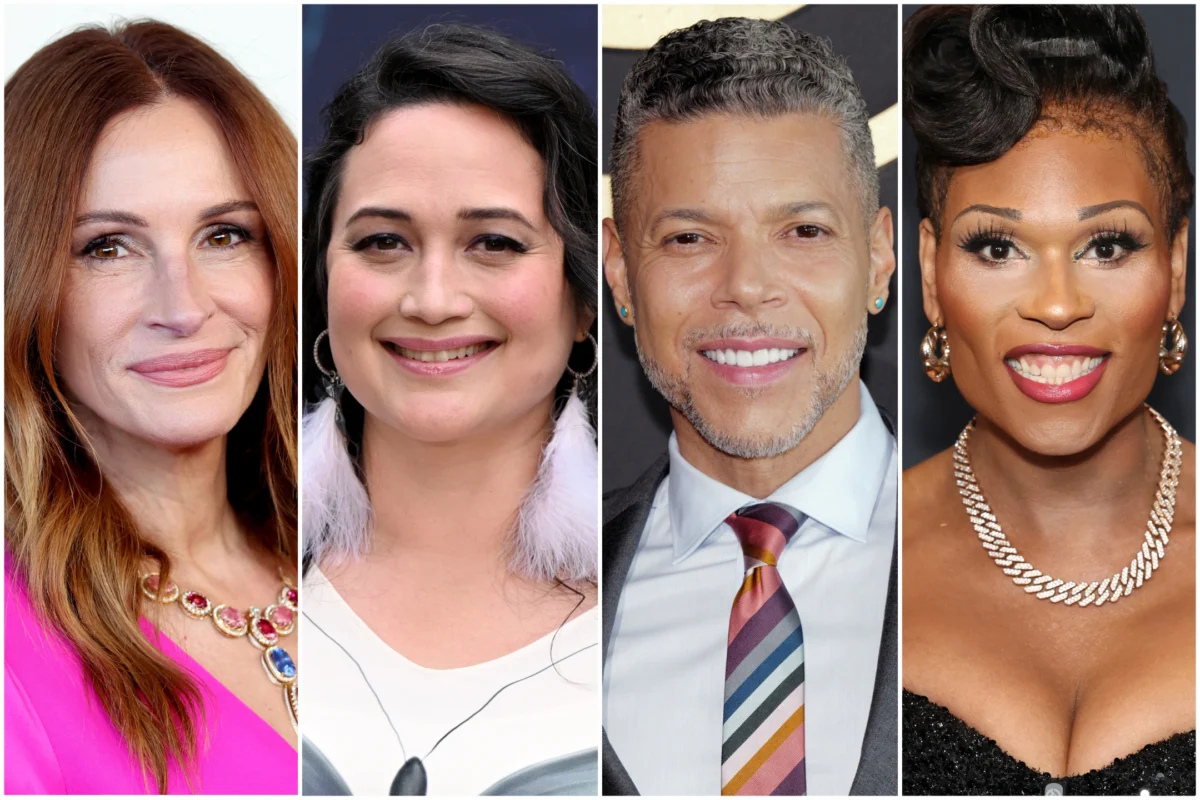
Academy Award winner Julia Roberts and Oscar-nominated breakout Lily Gladstone have joined the bill, signaling the event’s broad appeal across the highest echelons of the entertainment industry. They will be accompanied by actor and activist Wilson Cruz and performer Peppermint. The expanded lineup further includes Jenn Colella, Alex Joseph Grayson, Singing Resistance, the Rude Mechanical Orchestra, Kayla Davion, and Rev. Adriene Thorne.
This diverse assembly of voices represents more than just a concert; it is a strategic manifestation of a movement that views the arts as an essential bulwark against the silencing of dissenting perspectives.
Chronology: From the McCarthy Era to Modern Resistance
The Committee for the First Amendment is not a new invention, but rather a powerful revival of a historic institution. The original committee was established in the 1940s, a dark chapter in American history defined by the House Un-American Activities Committee (HUAC) and the "Red Scare." During that period, the government targeted writers, directors, and actors, demanding they testify about their political beliefs and "name names."
Among the original members of that inaugural committee was Henry Fonda, Jane’s father. The group was formed to protect the sanctity of free speech in Hollywood and to oppose the blacklisting of artists who refused to capitulate to the government’s demands.
Fast forward to October 2024: Jane Fonda announced the official relaunch of the committee, citing a perceived decay in the protection of artistic freedom. The relaunch was backed by an initial list of over 550 industry A-listers. This group reads like a "who’s who" of modern Hollywood: Aaron Sorkin, Barbra Streisand, Ben Stiller, Billie Eilish, Janelle Monáe, John Legend, Julia Louis-Dreyfus, Julianne Moore, Kerry Washington, Natalie Portman, Pedro Pascal, Quinta Brunson, Spike Lee, Viola Davis, and Whoopi Goldberg, among many others.
The journey from the 1940s to the present day reflects a cyclical nature in American politics. Fonda’s decision to revive the group suggests that the current climate of "industry complicity" and "government repression" has reached a threshold that necessitates an organized, institutional response.
The Artistic Vision: Behind the Production
"Rise Up, Sing Out" is being treated as a high-caliber theatrical production, ensuring that the message is delivered with maximum impact. The production is being helmed by director Schele Williams, with music direction by Mary Mitchell Campbell and a script written by Bess Kalb.
The technical execution of the night is being handled by a team of Broadway veterans, including lighting designer Jamie Roderick, sound designer Cody Spencer, and projection designers Daniel Brodie and Olivia Sebesky. Linda Marvel is set to serve as the production stage manager. The evening is produced by Bruce Cohen and the team at rigor + ruckus—Robb Nanus, Heather Shields, and Rachel Sussman—who have spent months coordinating the logistics of what is expected to be an emotionally charged performance.
Official Responses and the Rhetoric of Defiance
At the heart of the event is Jane Fonda’s unwavering commitment to the cause. In a formal statement released by the committee, Fonda articulated the urgency of the moment, framing the concert as a necessary act of rebellion.
"We can’t sit idly by while our rights are at stake," Fonda stated. "History shows us that when democracy is threatened, song becomes one of our most powerful weapons. Right now, we are at a critical crossroads. It’s time for us to rise up, raise our voices, and stand up against a government that refuses to put its people first. We are fighting back the best way we know how to: with our community and in solidarity."
Fonda’s rhetoric reflects a growing sentiment within the arts community that silence is no longer an option. The committee characterizes itself as a collective of storytellers and cultural leaders committed to pushing back against not just governmental overreach, but also the self-censorship that often takes hold within major media and entertainment corporations when they fear political or financial backlash.
Implications: The Role of the Arts in Modern Democracy
The implications of this concert extend far beyond the stage of Town Hall. By hosting the event on Flag Day—a day traditionally associated with patriotism—the committee is making a deliberate attempt to reclaim the narrative of "American values." They argue that the First Amendment is the primary pillar of a healthy democracy and that its erosion is an existential threat to the American project.
Economic and Social Impact
All proceeds from the concert will go directly to the Committee for the First Amendment. This funding is critical for the organization’s long-term objectives: legal support for artists facing censorship, educational initiatives to raise public awareness about free speech rights, and advocacy work aimed at holding institutions accountable.
The Challenge of Industry Complicity
One of the most poignant aspects of the committee’s mission is its explicit mention of "industry complicity." For years, critics have argued that the consolidation of media ownership and the pursuit of profit have led studios and streaming platforms to suppress controversial content. The committee acts as a pressure group within the industry, reminding power brokers that the creative spirit cannot thrive in an environment of intimidation.
Accessibility and Participation
Recognizing that their message must reach a wide audience, the organizers have made the concert accessible beyond the physical confines of Town Hall. While tickets for the in-person event are available via Ticketmaster and the official website, the performance will also be free to watch via a global livestream. Doors for the event will open at 6:45 p.m. ET, with the main show commencing at 7:30 p.m. ET.
Conclusion: A Turning Point for Free Expression
"Rise Up, Sing Out" stands as a litmus test for the entertainment industry’s willingness to mobilize. While the list of supporters is vast and influential, the real test will be whether the concert serves as a springboard for sustained activism or remains a symbolic, albeit impressive, gesture.
As the June 14 date approaches, all eyes will be on New York City. For Jane Fonda and her cohort, the event is not merely a show; it is an assertion of the role that the arts play in maintaining the health of a republic. In an age where the truth is often contested and the boundaries of speech are constantly being redrawn, the Committee for the First Amendment is betting that the most effective way to protect our rights is to exercise them loudly, publicly, and in perfect harmony.
 Nana
Nana
 Ali Ikhwan
 Iffa Jayyana
