

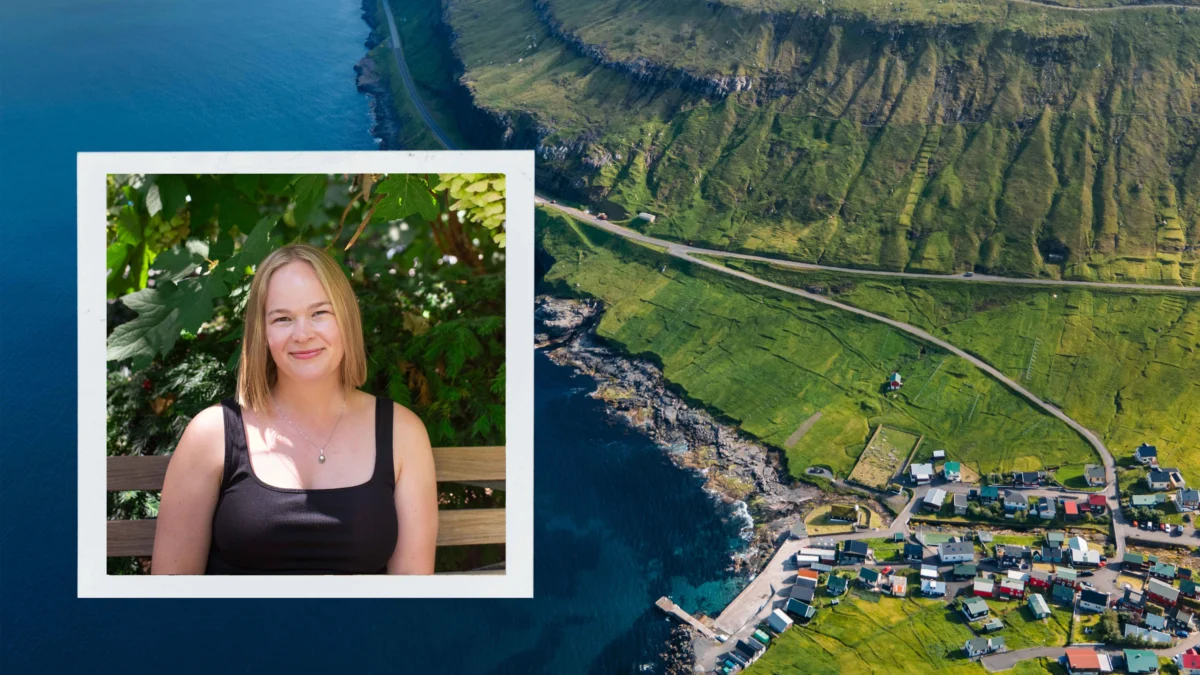
For nearly a decade, travel writer Katie Lockhart existed in a state of perpetual transit. With no fixed address and a suitcase serving as her primary closet, she traversed the globe, documenting the culinary landscapes and hidden corners of over 75 countries. Yet, amidst the blur of airports and hotel check-ins, a singular, craggy archipelago in the North Atlantic—the Faroe Islands—refused to fade from her memory.
Today, that period of rootlessness has concluded. In a deliberate pivot from the relentless pace of modern nomadism, Lockhart and her partner have settled in the village of Funningur, a secluded hamlet of just 40 residents within the self-governing territory of the Kingdom of Denmark. Her journey, featured as part of the Why I Moved series, offers a poignant look at the intersection of professional freedom, the pursuit of serenity, and the logistical realities of building a life in one of the world’s most isolated environments.
The Genesis of a New Life: Main Facts
The decision to trade a New York City zip code for a fjord-side home in the North Atlantic was not merely a romantic whim; it was a calculated restructuring of both finances and values. Lockhart’s move represents a growing demographic of American expatriates—remote workers and freelancers who have leveraged their geographic independence to seek out social safety nets and communal environments that contrast sharply with the "rugged individualism" often associated with the United States.
Lockhart’s transition was facilitated by her career as a freelance travel and food journalist. By maintaining a flexible income stream, she and her partner—a marketing consultant—are able to split their time between the dramatic, windswept cliffs of the Faroes and the vibrant, tropical humidity of Vietnam. This dual-lifestyle approach allows them to escape the polar darkness of the Faroese winter while remaining deeply integrated into their village community during the warmer, light-filled months.
A Chronology of Integration
The path to residency in the Faroe Islands is notoriously difficult for non-EU citizens, involving a complex bureaucratic dance. Lockhart’s process began in earnest in 2022, characterized by a mix of persistent outreach and strategic networking.
- 2018: Lockhart visits the Faroe Islands for the first time on a professional assignment. The encounter is transformative, sparking a commitment to return annually.
- 2022: The couple consults with legal counsel to navigate the stringent regulations surrounding property acquisition.
- 2023: Lockhart formally petitions the Faroese government for permission to purchase property. Her appeal highlights her professional role as a chronicler of Faroese culture and her commitment to the nation’s tourism economy.
- October 2023: After a grueling search involving termite-ridden listings and intense bidding wars, the couple successfully purchases a home in Funningur.
- Present Day: The couple maintains the home as a community asset, utilizing a local property manager to host travelers on Airbnb, thereby ensuring the home is occupied and productive even when they are abroad.
Supporting Data and the Logistics of Isolation
The Faroe Islands present a unique set of challenges that would deter many. With a total population of approximately 54,000, the archipelago relies heavily on connectivity to mainland Europe. Lockhart notes that daily two-hour flights to Copenhagen serve as her primary umbilical cord to the rest of the world.
The economic realities of the move were stark. For a freelancer, the cost of living in a major U.S. metropolitan area often necessitates a cycle of "paycheck-to-paycheck" living. In contrast, the Faroes provide a stable, albeit quiet, environment. The logistical hurdle of purchasing a home was solved by the "small-town" nature of the islands; Lockhart credits the local tourism board and personal connections for helping validate her petition to the government.
The property itself, while charming, required significant intervention. The couple’s transition from potential buyers to homeowners involved hands-on construction, a process that allowed them to bond with their neighbors, who provided both tools and technical guidance.

Cultural Synthesis: The Faroese Perspective
One of the most compelling aspects of Lockhart’s story is her analysis of cultural temperament. She draws a surprising parallel between the people of the Faroe Islands and those of her native New England: a "stoic outer shell" that guards a deep, reservoir-like warmth.
Language and Integration
Despite being welcomed into the fold—marked by a public acknowledgement during a local festival—the barrier of the Faroese language remains. Lockhart acknowledges that while English is widely spoken, the local language is the true key to integration. She highlights the generational divide, noting that while younger residents are bilingual, the elders of the village—who are often the most welcoming—may only speak Faroese. This has led to a form of non-verbal connection, such as walking dogs or sharing meals, where the lack of a shared vocabulary is superseded by communal participation.
The Social Contract
Lockhart is vocal about the contrast between American society and the Faroese model. She characterizes the latter as a "democratic socialist" structure that prioritizes collective well-being over individual gain. The lack of crime, the cleanliness of the infrastructure, and the informal nature of social life (where neighbors knock on doors without invitation) have provided her with a sense of security and presence that she found unattainable in the U.S.
Implications for the "Expat" Trend
Lockhart’s story is more than a personal anecdote; it is a reflection of a broader, systemic shift. As the gig economy matures, the concept of "home" is becoming increasingly fluid. However, her experience carries a cautionary note: moving abroad is not merely about finding a lower cost of living, but about aligning one’s life with a society that reflects their internal ethical compass.
For those considering a similar path, the implications are clear:
- Professional Mobility is Essential: Success in such remote locations requires a sustainable, location-independent income.
- Bureaucratic Resilience: Navigating residency laws requires more than just money; it requires a compelling narrative of how one will contribute to the local community.
- Community as Currency: In small, isolated societies, one’s reputation is the most valuable asset. Lockhart’s success was largely determined by her willingness to be vulnerable, honest about her intentions, and respectful of the local traditions.
Looking Ahead: Will She Return?
When asked about the possibility of returning to the United States, Lockhart’s answer is unequivocal. She cites a decline in the quality of life in the U.S. and a fundamental misalignment with the prevailing American ethos of "rugged individualism." For her, the Faroe Islands are not a temporary layover but a deliberate final destination.
"I’m at peace and happy," she states. In a world defined by its frenetic pace and constant connectivity, Lockhart has found that the ultimate luxury is the ability to sit in a chair, look out over a fjord, and be entirely, blissfully present. Her life in Funningur stands as a testament to the fact that while the world is vast and full of opportunity, the most meaningful destinations are those where we can finally stop running and start belonging.
 Asro
Asro
