

By TechCrunch Editorial Team
Published June 27, 2026 | 9:45 AM PDT
In a move that signals a significant shift in the competitive landscape of Silicon Valley, Paul Meade—the Apple vice president who spearheaded the development of the Vision Pro headset—is leaving the Cupertino-based tech giant. According to reports from Bloomberg, Meade is set to join the hardware division at OpenAI, a transition that highlights the intensifying race to define the future of personal computing through artificial intelligence.
Meade’s departure is not merely an isolated exit; it represents a tectonic shift in Apple’s internal engineering hierarchy as the company prepares for a major leadership transition under the incoming CEO, John Ternus.
The Core Facts: A Strategic Defection
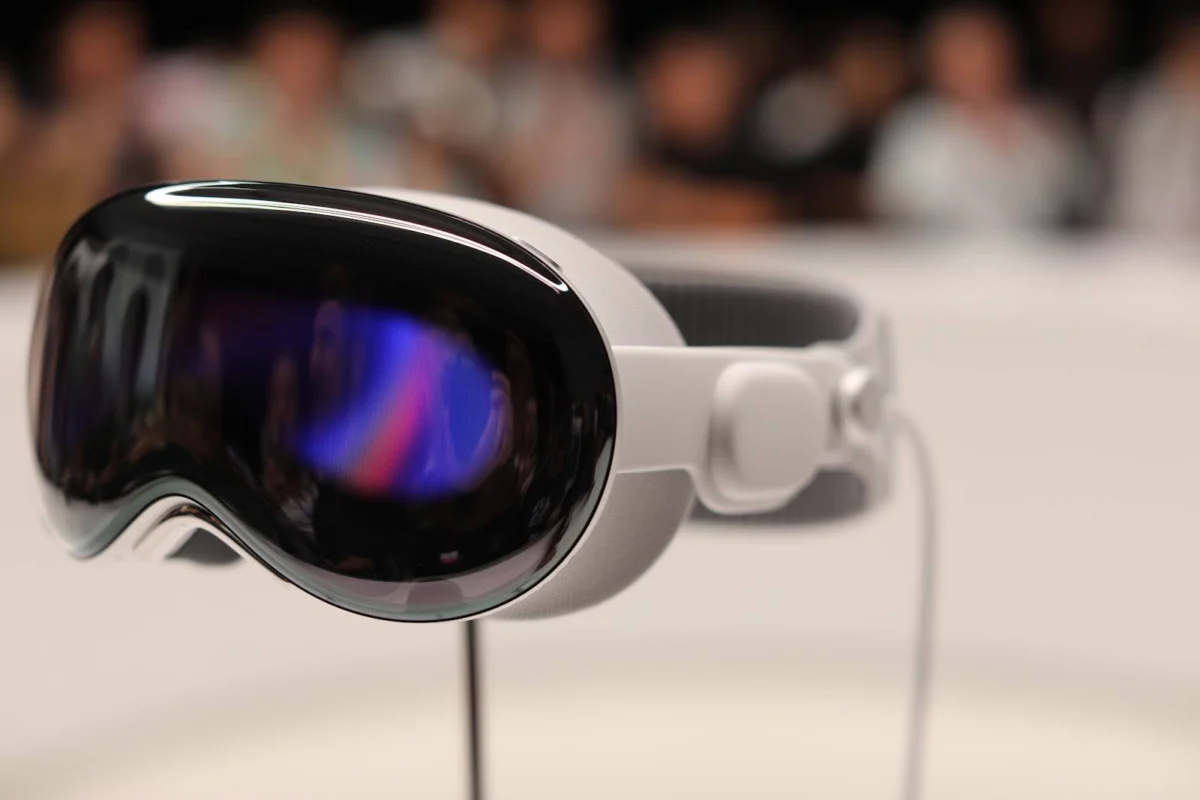
Paul Meade has long been a linchpin in Apple’s hardware engineering organization. Beyond his high-profile oversight of the Vision Pro—a device that remains one of the most ambitious, if commercially complicated, products in Apple’s recent history—Meade was instrumental in the early-stage development of Apple’s forthcoming smart glasses.
The move to OpenAI is particularly striking. While Apple has traditionally been the pioneer of consumer-facing hardware, OpenAI is actively pivoting toward the physical device space. By securing a veteran of Meade’s caliber, OpenAI is signaling its intent to move beyond large language models and software platforms, potentially challenging the incumbents in the wearable technology market.
A Chronology of a Shifting Landscape
To understand the gravity of this exit, one must view it within the timeline of the last 18 months of Apple’s internal reorganization:
- June 2023: Apple officially unveils the Vision Pro, positioning it as the beginning of "spatial computing."
- October 2025: Following lukewarm consumer adoption of the expensive Vision Pro, reports emerge that Apple has effectively shelved plans for a major hardware overhaul of the headset, shifting resources toward AI-integrated smart glasses.
- April 2026: TechCrunch reports that Apple is actively testing four distinct designs for these future smart glasses, intended to compete directly with Meta’s Ray-Ban smart glasses ecosystem.
- April 2026: John Ternus is identified as the successor to current CEO Tim Cook, signaling a new era of engineering-led management at Apple.
- June 2026: Paul Meade resigns from Apple, citing organizational changes stemming from the transition to the Ternus leadership era.
Supporting Data: The Vision Pro and the Pivot to Glasses
The Vision Pro was heralded as a breakthrough in display technology, yet its $3,499 price point and bulky form factor prevented it from achieving the mainstream saturation Apple typically demands. Market analysts suggest that the device served as a "proof of concept" rather than a commercial pillar.
In contrast, Apple’s pivot toward smart glasses represents a "Meta-fication" of its strategy. With Meta’s Orion and Ray-Ban initiatives gaining traction, Apple is under pressure to produce a wearable that is unobtrusive, lightweight, and deeply integrated with AI. Meade was the architect of this transition. His departure leaves a void in the leadership of a project that is arguably the most critical component of Apple’s next-generation hardware roadmap.
The Ternus Factor: A Culture of Consolidation
Industry observers and internal sources characterize this departure as a direct result of the "Ternus Shakeup." As John Ternus prepares to take the reins of Apple, he has reportedly initiated a restructuring of the hardware engineering department to streamline decision-making.

For several veteran vice presidents, this restructuring has been perceived as a loss of autonomy. When reporting lines are compressed and long-term project oversight is centralized, high-level executives often feel that their sphere of influence has diminished. Meade’s exit suggests that even at the highest levels of Apple, the uncertainty surrounding the "post-Cook" era is creating a vacuum that external competitors—especially well-funded AI labs—are eager to fill.
The OpenAI Ambition: A "Calm" Hardware Future
OpenAI’s interest in hardware is no longer a secret. The company has been working closely with legendary industrial designer Jony Ive, the man responsible for the aesthetic language of the iPhone and MacBook.
Sam Altman, CEO of OpenAI, has been vocal about his vision for a "peaceful and calm" AI device—one that acts as an ambient assistant rather than a screen-obsessed distraction. However, the path to this reality has been fraught with challenges. Reports from late 2025 indicated that the collaboration between Ive’s firm and OpenAI was struggling to find a clear path to production, with internal disagreements over form factor and user experience.
By hiring Paul Meade, OpenAI is acquiring the operational expertise necessary to translate "calm" design concepts into mass-produced, functional hardware. Meade’s experience in navigating the complex supply chains and engineering requirements of Apple will be invaluable as OpenAI attempts to bridge the gap between abstract AI software and tangible, consumer-ready devices.
Official Responses and Industry Implications
As of this writing, TechCrunch has reached out to both Apple and OpenAI for formal comments. Neither company has provided a statement regarding the specific terms or implications of Meade’s transition.
The implications for the industry are profound:
- The Talent War: The competition for top-tier hardware talent is heating up. Companies that were once strictly software-focused are now bidding against traditional consumer electronics giants for the engineers who know how to package complex AI into wearable devices.
- Apple’s Succession Risk: The transition to a new CEO is always a period of vulnerability. If Apple continues to lose key engineering leaders, it could slow the development of its smart glasses, potentially allowing Meta to capture the "AI-wearable" market share in the interim.
- The Convergence of AI and Hardware: We are witnessing the end of the era where AI lived solely in the cloud. The future, as envisioned by Altman and potentially executed by Meade, will be embedded in the objects we wear.
Conclusion: What Lies Ahead?
The departure of Paul Meade is a clear signal that the center of gravity in the tech industry is shifting. While Apple remains a titan of hardware, the allure of building the "next great AI device" at OpenAI is proving to be a powerful draw for the architects of the past decade’s technology.
Whether Apple’s smart glasses can survive the loss of their primary champion remains to be seen. Similarly, it remains an open question whether OpenAI can successfully transition from an AI research lab into a hardware powerhouse. For now, the move confirms one thing: the battle for the future of ambient computing has only just begun, and it will be fought by the people who know how to build the future, one component at a time.
This report will be updated as more information becomes available regarding the leadership restructuring at Apple and the specific objectives of OpenAI’s hardware division.
 Asep Darmawan
 Siti Muinah
 Ali Ikhwan
