

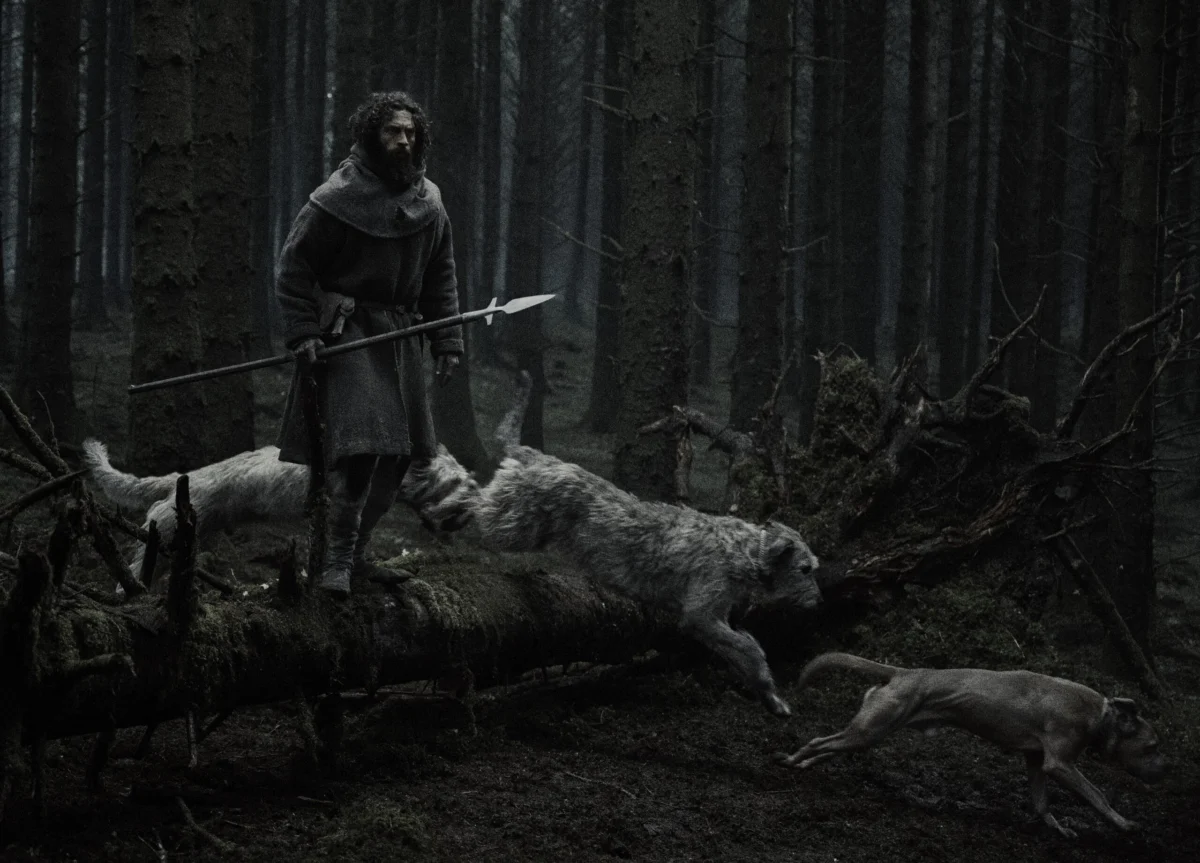
Robert Eggers has long been a filmmaker obsessed with the texture of history. From the puritanical paranoia of The Witch to the mud-caked brutality of The Northman and the gothic, expressionist shadows of Nosferatu, Eggers has consistently redefined what "elevated horror" means in the modern cinematic landscape. Now, with the release of the first trailer for his latest project, Werwulf, the director is once again preparing to plunge audiences into a nightmare forged in the fires of the past.
The project, a spin on the classic Universal creature feature, promises to be the most visceral and haunting experience in Eggers’ filmography. Starring Aaron Taylor-Johnson as a man cursed by lycanthropy, the film arrives as the next major milestone in a career defined by meticulous historical accuracy and atmospheric dread.
The Plot: A Descent into 13th Century Damnation
Set against the unforgiving, damp landscape of 13th-century England, Werwulf follows a protagonist known simply as "Man" (Aaron Taylor-Johnson). Through a non-linear narrative structure that utilizes haunting flashbacks, the audience learns of the character’s tragic descent into monstrosity, lured into the cycle of lycanthropy by an ominous, ancient elder.
In the film’s present, this man struggles to maintain a semblance of domestic stability with his family in a rural, isolated community. However, the village is soon besieged by a series of gruesome killings, leading the inhabitants to fear an unseen, primal predator. The film is described by Focus Features as a "harrowing tale of devotion, damnation, and the devil within," suggesting that the real terror may lie not just in the monster, but in the human cost of the transformation.
Chronology: From Concept to CinemaCon
The genesis of Werwulf was first announced in January 2025, a period when Eggers’ Nosferatu was cementing its status as his most commercially and critically successful film to date. Eggers, known for his relentless commitment to his craft, described the screenplay at the time as his "darkest" work, noting that it would incorporate authentic Middle English dialogue to ground the supernatural elements in linguistic realism.
Production officially commenced in September 2025 at the state-of-the-art Sky Studios Elstree in England. The shoot, which utilized a combination of controlled studio environments and rugged U.K. location filming, was a grueling process designed to capture the damp, oppressive atmosphere essential to the film’s tone. Principal photography concluded in January 2026.

The project gained significant momentum during CinemaCon 2026, where the first official footage was unveiled to exhibitors. The industry response was electric, with many outlets billing it as Eggers’ "most horrifying motion picture yet." The trailer, while keeping the physical transformation of the werewolf shrouded in shadows, confirmed that the film would lean heavily into the tactile, grime-streaked aesthetic that has become the director’s signature.
Supporting Data: The Eggers Repertory Returns
One of the most compelling aspects of Werwulf is the continuity of the creative team. Eggers has effectively built a "repertory company" of behind-the-scenes talent that has been with him since his breakout debut, The Witch.
- The Creative Core: Eggers reunites with cinematographer Jarin Blaschke, editor Louise Ford, production designer Craig Lathrop, and costume designer Linda Muir. This core team is responsible for the unique visual language of Eggers’ films—the high-contrast lighting, the period-accurate textiles, and the suffocating sense of place that makes his worlds feel tangible.
- The Script: The screenplay was co-written by Icelandic poet and author Sjón. Having previously collaborated on the screenplay for The Northman, the pair has developed a distinct shorthand for merging mythological dread with grounded human drama.
- The Cast: Beyond the lead performance of Aaron Taylor-Johnson, the cast features several of Eggers’ frequent collaborators, including Lily-Rose Depp, Willem Dafoe, and Ralph Ineson. Each of these actors has previously demonstrated an ability to inhabit Eggers’ challenging, archaic dialogue and physically demanding roles, signaling a high level of performance quality.
Official Responses and Creative Intent
In various press statements leading up to the film’s release, Eggers has emphasized that Werwulf is not merely a genre exercise. "The werewolf myth is one of the oldest human fears," Eggers remarked during a press junket following the CinemaCon reveal. "It is the fear of losing the rational mind to the beast. By placing this in the 13th century, we are looking at a time when the boundaries between the physical and the supernatural were incredibly thin."
Focus Features, the studio backing the project, has signaled immense confidence in the film, opting for a high-profile Christmas Day 2026 release. This move is significant; it positions Werwulf not just as a niche horror film, but as a major holiday blockbuster, mirroring the release strategy for Nosferatu.
Producers Tim Bevan, Eric Fellner, and Garrett Bird have praised the project’s scope, noting that the combination of Eggers’ vision and the technical capabilities of the modern production environment allowed them to achieve practical effects that feel both "primitive and terrifyingly real."
Implications: The Quest for Oscar Gold
The timing of the release—December 25, 2026—is a clear indicator of the film’s awards-season ambitions. Werwulf is essentially following the "Nosferatu playbook," utilizing the same crew, the same studio support, and the same late-year window that historically garners Academy attention.

If the film succeeds in its technical goals, it is a strong contender for nominations in several "below-the-line" categories. The Academy has shown an increasing appreciation for Eggers’ specific brand of elevated horror, particularly regarding:
- Cinematography: Jarin Blaschke’s work is consistently cited for its innovative use of natural light and period-accurate color palettes.
- Production Design: Craig Lathrop’s ability to build entire villages that feel lived-in and historically accurate remains the industry gold standard.
- Costume Design: Linda Muir’s expertise in period textiles and aging techniques ensures that the characters look as though they have been dragged through the centuries.
- Makeup and Hair: Given the creature-centric nature of the film, the makeup effects are expected to be a focal point for the Academy’s technical branches.
A Legacy in the Making
As we look toward the December release, the anticipation for Werwulf serves as a testament to Robert Eggers’ status as a modern auteur. In an era dominated by franchises and intellectual property, Eggers has managed to carve out a space for original, terrifying, and deeply artistic cinema.
Werwulf represents a culmination of his career-long interests: the intersection of folk horror, historical linguistics, and the darker impulses of the human spirit. Whether the film will reach the heights of critical acclaim achieved by his previous works remains to be seen, but one thing is certain: the horror community is waiting, and for the first time in a long time, the shadows feel a little bit deeper.
When the lights go down on December 25, 2026, audiences will not just be watching a movie; they will be witnessing a filmmaker at the peak of his powers, wrestling with the beast that has lurked in the corners of human history for a thousand years. Whether it is a story of salvation or a descent into madness, Werwulf is poised to leave an indelible mark on the landscape of 21st-century horror.
 Ammar Sabilarrohman
 Siti Muinah
 Iffa Jayyana
