

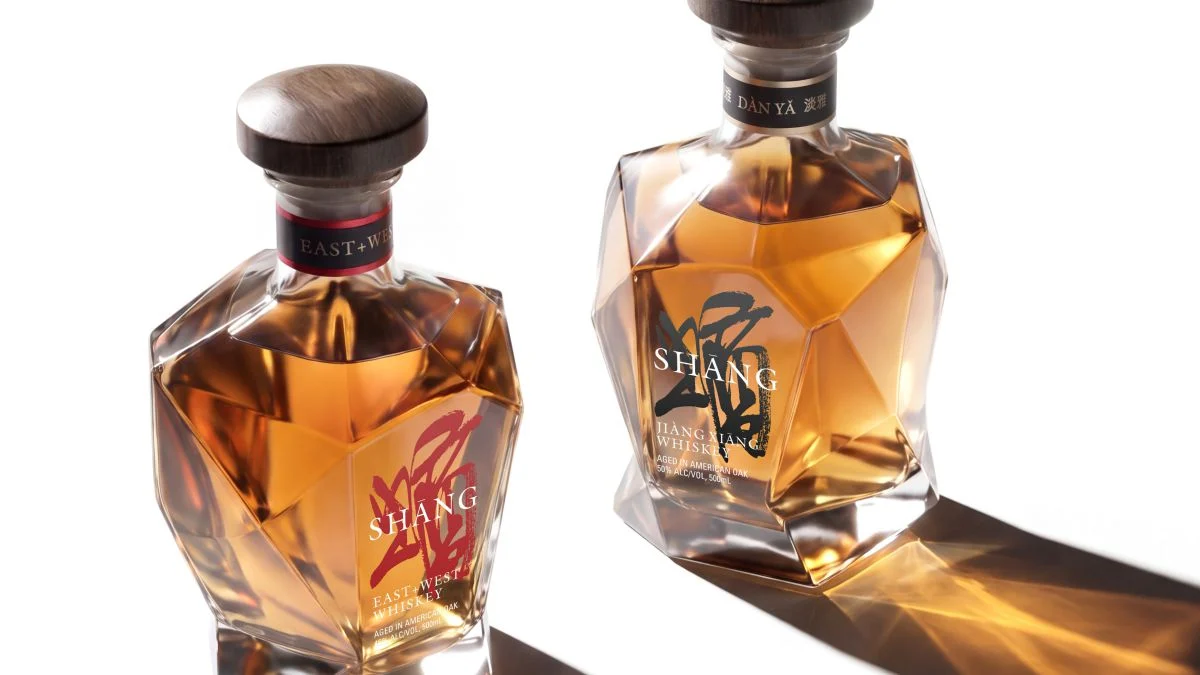
In the world of craft spirits, innovation is often measured by the refinement of a single tradition—a better barrel, a unique strain of yeast, or a more precise distillation cut. However, a new partnership between Chinese distilling powerhouses and American whiskey experts has produced something that defies traditional categorization. Shàng, a new brand of spirits, is the result of a cross-continental marriage between the ancient, savory complexity of Chinese baijiu and the rich, wood-driven character of Kentucky bourbon. This daring experiment aims to redefine the boundaries of the spirits aisle, offering a liquid that is as much a cultural bridge as it is a drink.
Main Facts: The Anatomy of an Unusual Hybrid
At its core, Shàng is an ambitious exploration of flavor architecture. The brand has launched with two primary expressions: Shàng Dàn Yì and Shàng East + West Kentucky Blend. While they share a common lineage, they represent two different philosophies of blending and maturation.
The base of these spirits is a jiàngxiāng (sauce-aroma) baijiu, sourced from the Chìshuǐ River basin in China. This region is legendary for its production of high-end baijiu, characterized by a savory, pungent, and deeply complex flavor profile. To transform this into a spirit that can hold its own in the American market, the production team employs a multi-stage process: an initial year of fermentation and distillation, three years of maturation in traditional Chinese clay pots to mellow the spirit, and a final redistillation in a copper pot still to isolate the "heart" of the liquid. Once this "whiskey base" is finalized, it is shipped to Kentucky for finishing and blending.
This is not a mere infusion or a flavored spirit. It is a fundamental reconfiguration of two of the world’s most storied distilling traditions. By moving the spirit from the neutral environment of clay pots to the reactive, porous environment of charred American oak, the producers have essentially "westernized" the baijiu, stripping away its aggressive top notes while retaining its profound, umami-rich soul.
Chronology: A Multi-Year Odyssey
The genesis of Shàng is a testament to global supply chain collaboration. The project brought together an unlikely quartet of stakeholders: Guìzhōu Guótài Shǔzhì Liquor Group, Maritine Brands, True Essence Foods, and the Whiskey House of Kentucky.
- Phase 1: The Chinese Foundation: The process begins in the Chìshuǐ River basin. The red sorghum undergoes eight fermentations and seven distillations—a grueling, year-long process that emphasizes consistency and depth.
- Phase 2: The Clay Pot Maturation: Unlike American whiskey, which relies on the oxygen-exchange and chemical compounds of oak barrels, the baijiu is aged for a minimum of three years in ceramic jars. This stage is designed to marry the congeners of the spirit, rounding off the sharp edges of the high-proof distillate without imparting woody tannins.
- Phase 3: The Copper Transition: The spirit is then redistilled in a copper pot still. This is the "bridge" step, where the baijiu is refined into a liquid that mimics the chemical structure of a whiskey base, making it receptive to barrel aging.
- Phase 4: The Kentucky Integration: The spirit is transported to the Whiskey House of Kentucky. Under the guidance of the veterans who founded the Bardstown Bourbon Company, the liquid is moved into new charred oak barrels. This is where the "East meets West" philosophy takes physical form, as the spirit absorbs the vanilla, caramel, and smoke of the American barrel.
- Phase 5: Market Entry: Following a period of blending and stabilization, the two inaugural expressions were finalized for release, with a current rollout via direct-to-consumer preorders.
Supporting Data: Understanding the Flavor Profile
To the uninitiated, the flavor profile of Shàng can be jarring. Traditional whiskey drinkers are accustomed to the sweetness of corn or the spice of rye; they are rarely prepared for the savory, fermented intensity of sorghum-based baijiu.
Shàng Dàn Yì (50% ABV)
This expression is the purist’s choice. It leans heavily into its baijiu roots. On the nose, it is pungent and aggressive, reminiscent of high-end, traditional Chinese spirits. Upon tasting, however, the influence of the American oak begins to assert itself. The palate is a complex map of overripe fruit, dark chocolate, and blue cheese, balanced by notes of truffle salt, earth, and grass. It is a "funky" spirit in the best sense of the word—resembling a high-ester rum or an exceptionally mature mezcal—with a distinct umami finish that lingers long after the swallow.
Shàng East + West Kentucky Blend (46% ABV)
This expression is designed to be more accessible, bridging the gap for those who prefer the familiar profile of bourbon. By blending the sorghum-based base with other whiskies, the producers have dialed up the sweetness. It presents notes of candy corn, butterscotch, and vanilla—classic markers of American charred-oak aging—interspersed with the fruitiness of cotton candy grapes and the brightness of cherry. It is a more harmonious, "sippable" spirit that softens the sharp, savory edges of the baijiu with the comforting warmth of Kentucky tradition.

Official Responses and Industry Context
The launch of Shàng comes at a precarious time for the American distilling industry. The Whiskey House of Kentucky, where much of the blending and maturation occurred, recently made headlines for downsizing operations, citing the industry-wide "bourbon slump" characterized by oversupply and cooling demand.
Despite these headwinds, the leadership behind Shàng remains bullish. Yán Kùijìng, chairman of the Guìzhōu Guótài Shǔzhì Liquor Group, stated, "The unparalleled craft of dual-brewing and dual-aging defines the unique character of Shàng. It embraces the classic Western liquid-state fermentation technique, integrates the millennia-old art of Chinese solid-state jiàngxiāng brewing, nurtured through slow aging in ceramic jars, and refined by maturation in American oak barrels."
This statement highlights the intellectual ambition of the project. The partners are not just trying to sell a product; they are attempting to synthesize two disparate scientific approaches to alcohol production. The "liquid-state" fermentation typical of Western distilling is being asked to exist alongside the "solid-state" fermentation of Chinese brewing.
Implications: A New Category of Spirits?
The success or failure of Shàng will have significant implications for the global spirits market. For years, the industry has looked for the "next big thing," often settling for experimental barrel finishes (like port or rum casks). Shàng, however, moves beyond the cask and into the realm of base-liquid fusion.
If this spirit gains traction, it could spark a wave of "fusion spirits." We have already seen the rise of international single malts and the success of Japanese whisky blending techniques, but this is the first time a major effort has been made to integrate the massive, often inaccessible market of Chinese baijiu with the American whiskey palate.
However, the hurdle remains the consumer’s palate. Baijiu is an acquired taste, often described by Westerners as "challenging." By blending it with familiar Kentucky bourbon profiles, Shàng is effectively offering a "gateway" to the world of sorghum-based spirits. If the company can successfully market this as a bridge rather than a confrontation, it may find a dedicated niche of adventurous drinkers.
Moreover, the collaborative nature of this project—linking Chinese state-owned enterprises with American startup distilleries—serves as a case study for future trade. In an era where international trade relations are increasingly fraught, the spirits industry continues to act as a unique diplomatic conduit, proving that even the most stubborn traditions can, with enough heat and time, be blended into something entirely new.
As the industry watches, the question remains: is the world ready for a spirit that tastes like a Kentucky sunset and a Chinese harvest simultaneously? The team at Shàng believes the answer is not just yes, but that it is the natural evolution of a globalized drinking culture.
 Ali Ikhwan
 Laily UPN
 Raul Delapena Setiawan
