

By TechBeat Editorial Staff
Published: June 29, 2026
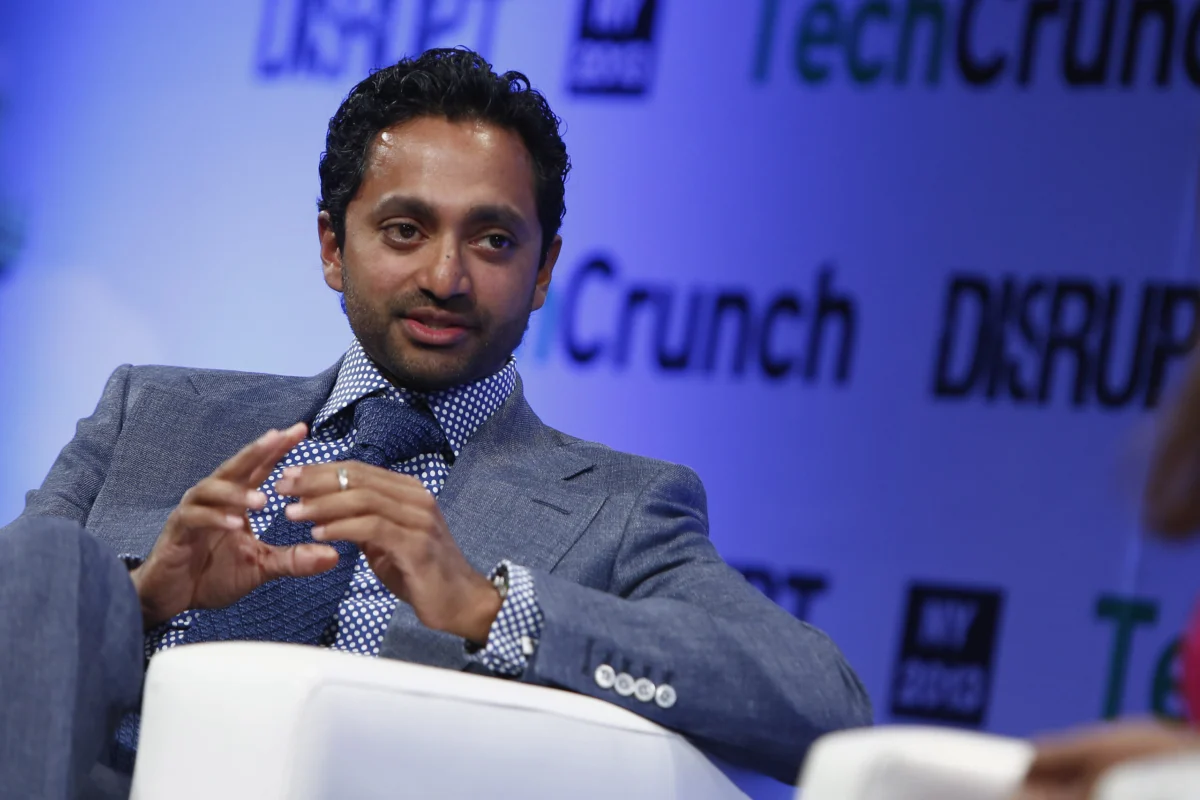
In a move that signals a significant shift in the landscape of artificial intelligence development, Chamath Palihapitiya, the prominent venture capitalist, former Facebook executive, and co-host of the influential All-In podcast, has officially stepped back into an operational role. On Monday, Palihapitiya announced that his latest venture, 8090 Labs, has successfully closed a $135 million Series A funding round. The startup, which focuses on AI-driven coding agents for large-scale enterprise environments, is positioning itself to move beyond the "vibe-coding" prototypes that have saturated the market, aiming instead for production-grade software engineering.
The round was led by Salesforce Ventures, with heavy participation from an elite group of Silicon Valley heavyweights, including Jeffrey Katzenberg’s WndrCo, David Sacks’ Craft Ventures, and fellow All-In podcast hosts David Friedberg and Jason Calacanis.
The Core Mission: Bridging the Enterprise Gap
Founded in January 2024, 8090 Labs was built on a specific thesis: the current generation of AI coding assistants is ill-equipped for the rigorous, compliance-heavy requirements of modern corporations. While developer tools like GitHub Copilot or Cursor have become household names among individual programmers, Palihapitiya argues that these tools often lack the architectural guardrails, auditability, and security protocols required for enterprise-scale deployment.
The company’s flagship product, "Software Factory," is designed to automate the production of enterprise software. Unlike consumer-facing AI agents that might generate code snippets or simple scripts, Software Factory claims to provide a structured environment where AI-driven agents can build, test, and deploy complex, production-quality systems. Key features include end-to-end audit trails, security policy enforcement, and integration with existing corporate CI/CD (Continuous Integration/Continuous Deployment) pipelines.
A Chronology of the Rise: From Venture Capital to Operator
The trajectory of 8090 Labs reflects the broader evolution of the AI boom over the past two years.
- January 2024: 8090 Labs is quietly founded by Palihapitiya, initially operating as an incubation project under the Social Capital umbrella.
- Q1-Q4 2024: The company spends its first year iterating on the Software Factory platform, focusing on stealth-mode development and pilot testing with select Fortune 500 partners.
- Q1 2026: As the demand for industrial-grade AI coding tools reaches a fever pitch, 8090 Labs pivots from an experimental venture to a commercial enterprise, seeking a major capital injection to scale operations.
- June 29, 2026: 8090 Labs officially announces the closure of its $135 million Series A round. Concurrent with the funding, Palihapitiya announces he is stepping into the role of CEO, transitioning from a board-level participant to a full-time operator.
Supporting Data and the Market Landscape
The $135 million investment into 8090 Labs is a testament to the aggressive venture appetite for "AI-for-Devs" infrastructure. According to recent market analysis, the demand for automated software engineering tools is expected to grow by nearly 30% annually through 2030.
However, investors are increasingly differentiating between "wrapper" companies—those that simply layer a user interface over existing LLMs—and companies building foundational infrastructure. Salesforce Ventures’ lead in this round suggests a strategic alignment between 8090 Labs and the enterprise software ecosystem. With the backing of industry veterans like Nikesh Arora (CEO of Palo Alto Networks) and Adam D’Angelo (CEO of Quora), the startup has secured not only capital but also a network of advisors with deep roots in cybersecurity and large-scale platform management.
The "Facebook Moment": A Philosophical Shift
For those who have followed Palihapitiya’s career, his return to an operating role is perhaps the most significant aspect of this news. In a statement posted to X (formerly Twitter), Palihapitiya drew a direct parallel between the current AI explosion and his formative years at Facebook, where he served as a senior executive during the company’s hyper-growth phase.

"Since I left Facebook, I was waiting for a moment like this to return to a full-time operating role," Palihapitiya wrote. "I am convinced that what we are building now is even more important than the social media era, so there was no decision to make except to be all in."
This sentiment underscores a broader trend among Silicon Valley’s elite: a shift from the passive "investor-as-pundit" model back to the "founder-as-builder" model. After years of influencing the ecosystem from the sidelines through venture capital and media, Palihapitiya is choosing to place his reputation directly on the line in the competitive trenches of AI infrastructure.
Implications: What This Means for the Enterprise
The emergence of 8090 Labs and the massive capital infusion behind it carries several implications for the tech industry:
1. The Death of "Vibe Coding"
The term "vibe coding"—a colloquialism for using AI to generate code that looks right but lacks structural integrity—is increasingly viewed as a liability in the enterprise. 8090 Labs represents a push toward "Governance-First" AI. By baking audit trails and compliance into the development process, the startup is essentially attempting to commoditize the role of the senior lead developer who oversees code quality.
2. Vertical Integration of Developer Tools
With Salesforce Ventures leading the charge, we may see 8090 Labs integrate deeply into the enterprise sales and software deployment chain. If Software Factory succeeds in becoming a standard for large corporations, it could fundamentally alter how companies like Salesforce, Oracle, and SAP handle their own internal development, potentially speeding up release cycles by months.
3. The "All-In" Effect
The involvement of the All-In podcast’s "besties"—Friedberg, Sacks, and Calacanis—serves as a powerful signal to the market. While critics often debate the influence of the podcast on public discourse, its role as a concentrated source of venture capital and industry consensus is undeniable. By investing in 8090 Labs, this group is effectively creating an internal standard for AI development, reinforcing their shared belief that AI will be the primary driver of corporate productivity for the next decade.
4. A Talent Migration
Palihapitiya’s return to the CEO chair will likely spark a migration of top-tier engineering talent toward 8090 Labs. In the hyper-competitive market for AI talent, engineers often follow founders who have a track record of scaling high-growth businesses. His presence as an active operator, rather than a hands-off investor, transforms the company into a high-priority destination for those looking to build the "plumbing" of the AI revolution.
Conclusion: A New Chapter
As of mid-2026, the question is no longer whether AI will change software development, but how that change will be governed and scaled. 8090 Labs, with its war chest of $135 million and the vocal leadership of Chamath Palihapitiya, is betting that the answer lies in the marriage of high-performance agents and ironclad corporate governance.
Whether this move marks the beginning of a new era of enterprise productivity or a costly experiment in institutional AI, one thing is clear: the most prominent voices in Silicon Valley are no longer content to just talk about the AI revolution—they are now actively attempting to command it. With 8090 Labs, the "all-in" mentality has officially transitioned from the podcast studio to the production floor.
 Asep Darmawan
 Siti Muinah
 Ali Ikhwan
