

Main Facts: A Nation in Mourning
The landscape of northern Venezuela has been irrevocably altered following a series of high-magnitude earthquakes that struck on June 24, leaving a trail of death, displacement, and systemic collapse. The disaster, characterized by twin tremors of 7.2 and 7.5 magnitude occurring less than a minute apart, has reduced major urban centers to heaps of twisted masonry and jagged concrete.
As of the latest reports, the confirmed death toll stands at 1,450, though authorities and humanitarian agencies warn that this figure is a grim understatement. Tens of thousands remain missing, and the number of injured—already exceeding 3,200—continues to climb as rescuers reach more isolated pockets of devastation. The United Nations Office for the Coordination of Humanitarian Affairs (OCHA) has described the ongoing search efforts as a battle against "impossible odds," with families and emergency responders navigating dangerous, unstable rubble in a desperate attempt to locate survivors or recover the remains of their loved ones.
Chronology of the Crisis
The catastrophe began on June 24, a day that started with normalcy before being shattered by seismic violence.
- The Initial Impact: The twin quakes hit in rapid succession. The proximity of the epicenters to densely populated regions, including the coastal state of La Guaira and the capital, Caracas, meant the impact was immediate and widespread.
- The First 24 Hours: Initial reports were fragmented due to the total collapse of telecommunications infrastructure. Citizens, such as Mireya Quesada Sojo, began the harrowing process of digging through the wreckage with their bare hands. In these early hours, the lack of heavy machinery meant that survival depended entirely on the grit of neighbors and local volunteers.
- Mobilization Phase: Within 48 hours, the international community responded to the UN’s call. By the end of the second day, 27 countries had deployed over 2,200 search-and-rescue specialists, accompanied by 140 specialized search dogs trained to detect life under deep layers of concrete.
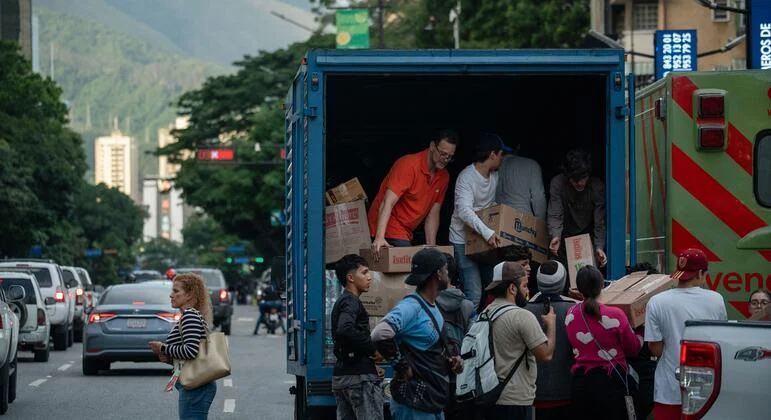
- Logistical Stabilization: By the third day, the UN and local government agencies had established coordination centers in La Guaira. Field hospitals were erected to manage the overflow of trauma cases as regional hospitals struggled to maintain operations amidst power outages and structural damage.
Supporting Data: Mapping the Destruction
The sheer scale of the disaster is underscored by satellite analysis and demographic data provided by the International Organization for Migration (IOM) and other humanitarian bodies.
- Structural Collapse: Official assessments indicate that nearly 190 buildings experienced total collapse, while over 770 others suffered critical structural failure. Witnesses have described high-rise apartment complexes falling like "houses of cards" or "layered pastries," a testament to the intensity of the seismic waves and, potentially, the quality of local construction.
- The Human Toll: The IOM warns that up to 6.76 million people could be affected by the disaster. In Caracas alone, two million residents are contending with the aftermath. Satellite imagery from Microsoft, utilized by the IOM, reveals that in the port city of Catia La Mar, over 31.5 per cent of buildings have been compromised.
- Vulnerable Populations: UNICEF has highlighted that the crisis disproportionately affects the youth. Of the 1.8 million people currently in urgent need of humanitarian aid, approximately 680,000 are children, a demographic facing heightened risks of disease, trauma, and lack of access to clean water.
Official Responses and Humanitarian Aid
The international response has been swift but faces the daunting challenge of navigating a landscape where the infrastructure—roads, airports, and power grids—has been severely degraded.
The UN and WFP Intervention
Stephanie Hochstetter, the WFP Country Director in Venezuela, has been at the center of the relief effort in La Guaira. "Destruction is all around," she remarked, emphasizing that the primary objective for the WFP is the stabilization of the food supply chain. With 3,000 metric tons of food already in the country, the agency is prioritizing the delivery of aid to the most affected states, aiming to sustain 10,000 families for the next two months.
Search and Rescue Coordination
OCHA is currently functioning as the central hub for the international rescue effort. Beyond the logistical task of coordinating 2,200 rescuers, the agency is managing complex information streams to ensure that search teams are deployed to the most promising sites. The deployment of field hospitals in La Guaira serves as a critical lifeline, providing surgical and trauma care that would otherwise be unreachable for survivors trapped in remote or debris-choked sectors.
Government and Military Synergy
The UN is working in tandem with the Venezuelan military and civil protection units. This collaboration is essential for the movement of heavy machinery, which is required to lift the massive concrete slabs pinning potential survivors. Despite the political complexities often associated with the region, the current climate is defined by an overwhelming focus on the humanitarian imperative: saving lives and preventing further loss.
Implications: A Country Under Strain
The earthquakes did not strike a vacuum; they occurred in a country already grappling with long-standing socioeconomic challenges. The "overlapping needs" mentioned by the WFP refer to a population where, even prior to the disaster, 80 per cent of citizens cited food access as their primary concern.
The Long-Term Economic Impact
The destruction of 190 buildings and the compromise of 770 others will have lasting economic repercussions. The collapse of major transport arteries and the damage to the port city of Catia La Mar will likely stifle the flow of goods into the country for months to come. The loss of housing stock on this scale suggests that the internal displacement crisis could turn into a permanent demographic shift, as families are forced to relocate to regions that have escaped the worst of the seismic activity.
The Psychological Scars
The testimony of Mireya Quesada Sojo serves as a microcosm for the national psyche. Her admission—"We know they are no longer alive, but we just have to be able to see them again"—highlights the profound psychological toll that the recovery process takes on the survivors. The act of digging through the ruins is, for many, not just a rescue mission, but a ritual of closure. As the days pass, the transition from search-and-rescue to recovery and reconstruction will require significant mental health support, which is currently in short supply.
A Test for Global Solidarity
The UN Emergency Relief Chief, Tom Fletcher, described the damage to the country’s physical infrastructure as "overwhelming." He noted that the initial estimate of 50,000 missing individuals remains "terrifyingly plausible." The international community’s ability to remain committed to the relief effort, even as the initial news cycle fades, will determine the speed of Venezuela’s recovery.
The current situation remains fluid. While humanitarian corridors are being established and food supplies are being mobilized, the physical and social fabric of Venezuela will require years of sustained support to mend. For now, the focus remains on the rubble-strewn streets of La Guaira and beyond, where every hour of work represents a fragile hope for those still waiting for their loved ones to be brought home. As rescue dogs scent the air and heavy equipment rumbles through the broken city centers, the international effort stands as a singular, unified attempt to mitigate one of the most significant natural disasters in the region’s modern history.
 Lina Hope
 Asro
Asro
 Layla Zulfa
