

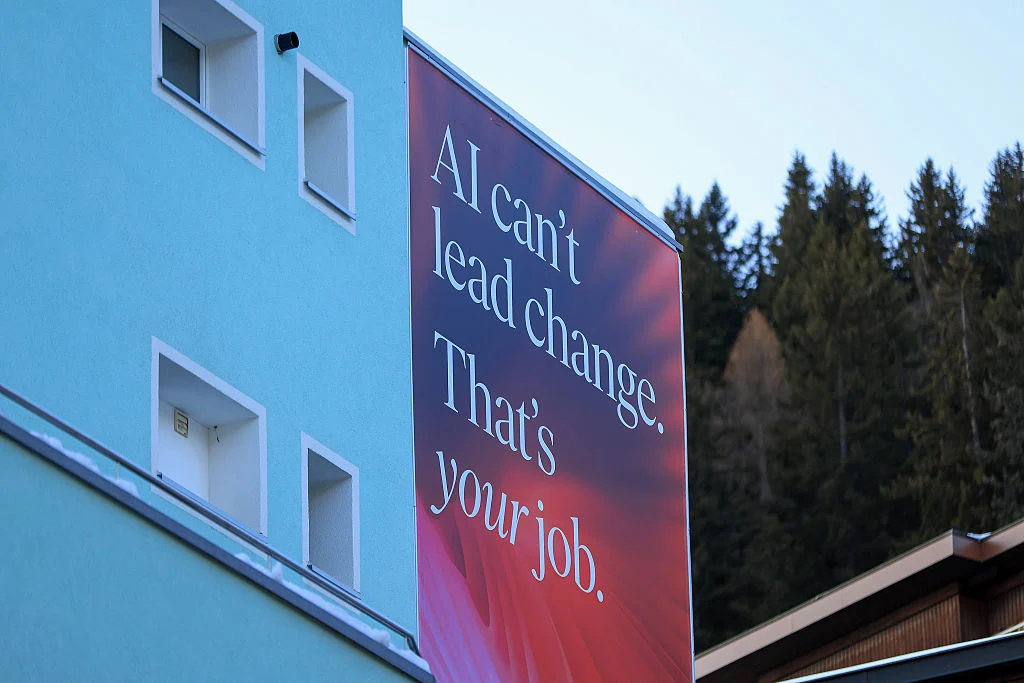
As artificial intelligence continues its rapid integration into the global economy, the narrative surrounding the technology has been dominated by a singular, persistent fear: mass unemployment. Every announcement of corporate restructuring—from Silicon Valley giants to legacy enterprises—has increasingly cited AI as a catalyst for headcount reduction. Through May 2026, companies announced nearly 90,000 job cuts explicitly tied to AI, fueling a growing anxiety among the workforce. With some projections suggesting that up to 15% of U.S. jobs could be displaced by automated systems over the next five years, a generation of early-career professionals is left questioning if the labor market will even exist by the time they graduate.
However, a new report from Ramp and Revelio Labs—which analyzed enterprise AI spending and workforce records across 22,000 companies—suggests that the reality is far more nuanced than the prevailing "AI-as-executioner" narrative. Rather than acting as a universal replacement for human labor, AI is emerging, for some, as a powerful engine for firm-wide expansion.
The Chronology of Fear: How AI Became the Workplace Bogeyman
The anxiety surrounding AI is not unfounded; it is a direct result of a highly visible trend that began in earnest in late 2024 and accelerated throughout 2025.
- Early 2025: Initial waves of corporate layoffs began to incorporate "efficiency" language, with C-suite executives explicitly noting that AI tools were performing the tasks of junior analysts and support staff.
- Late 2025: The scale of these cuts reached a fever pitch, with major tech firms justifying thousands of layoffs as necessary "rebalancing" efforts to accommodate AI-driven workflows.
- Q1-Q2 2026: The discourse reached a breaking point. With 90,000 AI-related job cuts reported in the first five months of the year, the public perception shifted from "AI as a tool" to "AI as a threat."
- Mid-2026: Research from Goldman Sachs confirmed the sting of this trend, revealing that AI had already contributed to a net loss of approximately 16,000 jobs per month over the previous year, with Gen Z and entry-level positions absorbing the brunt of the impact.
This timeline has fostered a pervasive sense of economic fatalism. Yet, the data from Ramp and Revelio Labs provides a counter-narrative, suggesting that the "AI-layoff" trend is not a monolith but a byproduct of specific corporate behaviors.
Supporting Data: The "High-Intensity Adopter" Phenomenon
The study challenges the premise that AI automatically leads to staff attrition. By analyzing the spending habits of 22,000 companies, the researchers identified a cohort they termed "high-intensity adopters." These are firms that spend an average of $30 per employee per month on AI within their first three months of implementation.
The findings for this group were counterintuitive: these high-intensity adopters saw their total headcount increase by 10.2%. Even more striking was the resilience of entry-level positions within these firms. While the broader market saw a decline in junior roles, entry-level headcount at these specific tech-forward firms actually rose by 12%.
Growth Across the Board
The headcount expansion was not limited to developers or specialized AI engineers. Growth was observed across a wide range of functions, including:
- Engineering and Software Development: Contrary to fears that code-generating AI would render human developers obsolete, engineering roles remain highly resilient.
- Customer Service and Administration: AI appears to be augmenting, rather than replacing, these roles by handling routine inquiries, allowing human staff to focus on more complex, value-add interactions.
- Marketing, Finance, and Science: The automation of rote tasks in these sectors has allowed companies to pivot toward more ambitious project pipelines, necessitating a larger workforce to manage the expanded output.
The "Expansion Engine" Theory: Why Investment Matters
Why would a company that spends heavily on automation hire more people? The report argues that for tech-centric firms, AI functions less like a replacement and more like a force multiplier. By making the "core output"—writing code, debugging, and creating documentation—cheaper and faster, AI lowers the cost of production.
When the cost of production drops, the return on investment for expanding the entire firm increases. If a software company can build a product 30% faster using AI, it does not simply fire 30% of its engineers. Instead, it uses those savings to accelerate the development of new products, enter new markets, or increase the scale of their operations. This, in turn, requires more project managers, more salespeople, more customer success specialists, and more marketing experts.
In this model, AI is not a tool for labor substitution; it is a catalyst for firm-wide expansion. However, the report includes a critical caveat: this only applies to sustained, heavy investment. Companies that merely purchase subscriptions or run isolated pilots without making a core commitment to AI integration tend to see no growth in headcount, often remaining stagnant or falling into the "layoff" category as they attempt to cut costs without a strategic roadmap.
Implications: The Widening "Resources Gap"
Perhaps the most significant takeaway from the report is the looming divide between resource-rich firms and everyone else. The report suggests that the benefits of AI are not evenly distributed. Success with AI requires more than just a subscription fee; it requires:
- Capital: The liquidity to invest in high-end AI infrastructure.
- Technical Staff: The expertise to integrate AI models into existing business workflows effectively.
- Management Bandwidth: The ability to reorganize business processes to take advantage of AI-driven productivity.
Firms that possess these assets are currently in a position to leverage AI to grow faster, hire more, and outpace their competitors. Conversely, companies that lack these channels—often smaller enterprises or those in more traditional sectors—may find themselves "stuck." They may try to adopt AI by purchasing tools, but without the internal infrastructure to convert those tools into business growth, they risk being left behind.
The authors of the report were careful to note, "This paper does not show that AI universally creates jobs, but it does counter claims that AI will lead to broad job losses." The implication is that we are witnessing a bifurcation in the economy. In the "AI-forward" sector, the technology is acting as a stimulant for growth. In the broader, less technologically integrated sector, the transition is significantly more painful.
Conclusion: Navigating the AI Transition
As we move toward the latter half of the decade, the debate over AI and the workforce must evolve. It is no longer enough to ask, "Will AI replace humans?" The data suggests a more sophisticated question: "What kind of company will use AI to scale, and what kind of company will use AI to cut?"
For graduates and those currently in the workforce, the focus may need to shift from merely fearing automation to understanding the specific ecosystems where AI is being used to fuel growth. While the "powder keg" of layoffs is a real and present danger in the current economy, the existence of a high-growth, high-AI-investment sector provides a glimmer of hope.
The divide is clear: firms that view AI as a strategic asset for expansion are hiring, while firms that treat it as a cost-cutting gimmick are struggling. As this trend continues, the challenge for policymakers and educators will be to ensure that the "high-intensity adopter" environment—one of growth and opportunity—becomes the norm, rather than the exception. In the final analysis, AI is a reflection of the strategy that deploys it. When used to build, it can be a boon; when used merely to trim, it becomes a burden. The next five years will likely determine which of those two paths the broader global economy chooses to walk.
 Asep Darmawan
 Siti Muinah
 Ali Ikhwan
