

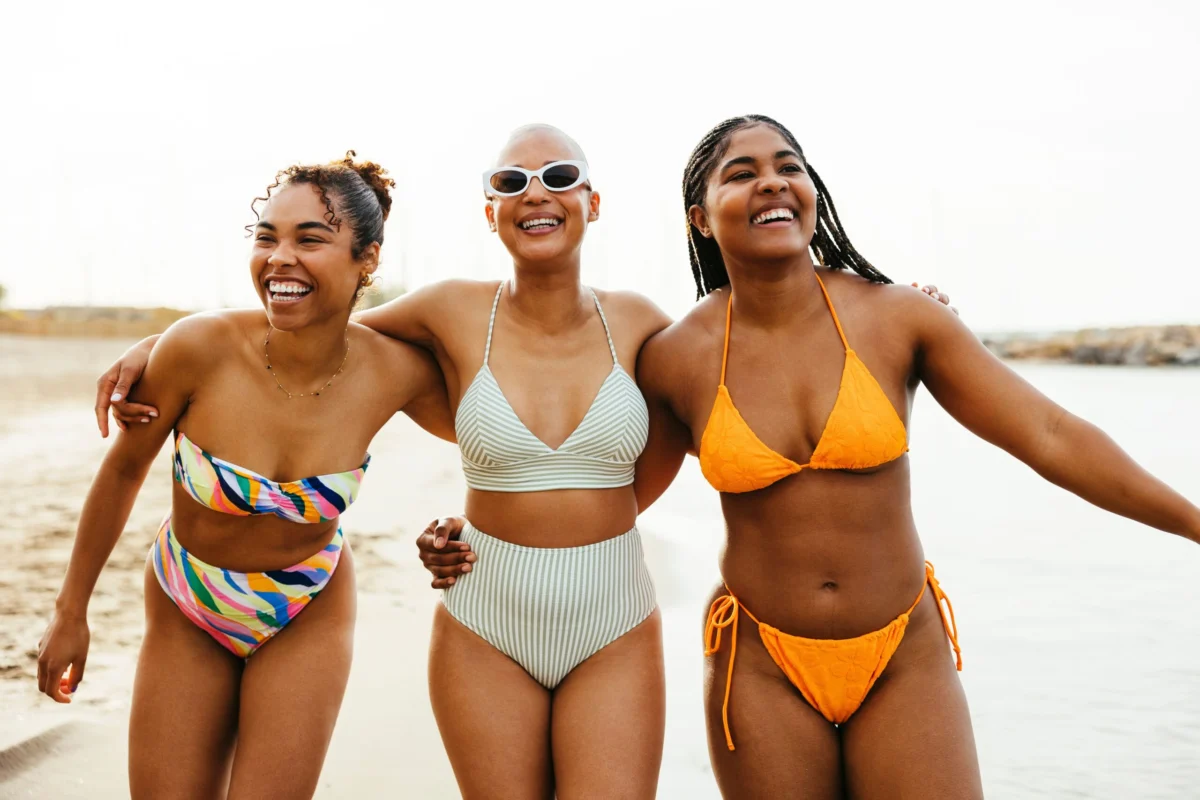
As the speedboat cut through the turquoise waters of the Caribbean, headed toward the pristine shores of Anguilla, the scene felt like a classic romantic cliché. Everywhere I turned, my camera lens caught the silhouette of honeymooners locked in an embrace or couples whispering over sunset cocktails. Yet, I wasn’t there for a romance. I was there with my two closest girlfriends, embarking on what I’ve coined a "we-moon"—a getaway designed to honor the milestones that society often ignores.
For too long, the travel industry has been dominated by the binary of the honeymoon and the babymoon. But where is the space for the single woman to celebrate a professional triumph, a personal metamorphosis, or the sheer joy of autonomy? The we-moon is more than just a girls’ trip; it is an intentional, celebratory ritual designed to shift the cultural narrative surrounding female companionship and individual achievement.
The Genesis of the We-Moon: Redefining Milestone Travel
The concept of the we-moon stems from a simple, provocative question: Why do we reserve our most opulent travel experiences for romantic partners or impending parenthood? Society is adept at scheduling celebrations for weddings, baby showers, and anniversaries. However, when a woman publishes her first book, earns a master’s degree, secures a major promotion, or hits a significant decade in age, these moments are often relegated to a celebratory dinner or a modest social media post.
A we-moon flips this script. It is an act of reclamation. It is the intentional gathering of one’s "chosen family" to acknowledge an achievement that doesn’t fit into the traditional domestic timeline. During my recent trip to the Four Seasons Resort and Residences Anguilla, the distinction became clear: this wasn’t merely a vacation; it was a curated celebration of my debut book. By treating this milestone with the same gravity and luxury typically reserved for a honeymoon, we validated our own paths, proving that personal success is just as worthy of a tropical toast.
The Anatomy of a Successful We-Moon: Expert Guidance
Executing a destination celebration that remains harmonious and stress-free requires more than just a plane ticket and a hotel reservation. To understand how to curate a trip that balances group dynamics with individual needs, I consulted Dr. Joy Harden Bradford, PhD, author of Sisterhood Heals.
Dr. Bradford emphasizes that the primary pitfall of group travel is the assumption of total synchronization. When expectations for a "perfect" getaway are high, the pressure can manifest as friction. To mitigate this, she suggests a framework built on clear communication, boundaries, and intentionality.
The Strategic Importance of Private Quarters
The foundation of a successful we-moon is the living arrangement. While honeymooners often seek the intimacy of a single, shared space, a we-moon thrives on a delicate balance between communal energy and restorative solitude.
"I think having a place where everybody can retreat and have alone time is really good if that is something the group can do," Dr. Bradford explains. "So, private sleeping quarters are important."

During our Anguilla excursion, we opted for a villa rental. This provided the autonomy of a private home—perfect for early risers who wanted to journal on a balcony or night owls who preferred room service—while maintaining access to the premium amenities of the Four Seasons. By prioritizing private bathrooms and bedrooms, we eliminated the minor, friction-filled annoyances that often plague group travel, allowing us to show up for each other with more patience and presence.
The Art of the Itinerary: Balancing Group Dynamics
The greatest threat to any group trip is the "over-planned itinerary." Dr. Bradford notes that because many women view their vacation as a rare reprieve from a demanding professional life, they inadvertently load their trips with excessive expectations. This often leads to burnout, where the "celebration" becomes a source of exhaustion.
The Power of Optionality
A well-structured we-moon should follow the principle of "optional togetherness." For our trip, we utilized the expertise of a villa concierge to build a flexible framework. Our mornings were often spent in solitude or personal wellness activities. For instance, while I engaged in a one-on-one poolside yoga session—allowing me to focus on my specific physical recovery and pain points—my friends chose to rest.
We reconvened for shared experiences that mattered: an afternoon of group spa treatments and a Jeep excursion to explore the island’s hidden beaches. By making activities optional, we removed the guilt associated with saying "no" to an outing, ensuring that every participant felt recharged rather than obligated.
Fostering Growth: The Social Experiment of New Experiences
Beyond relaxation, the we-moon is an ideal environment to challenge the brain and deepen bonds through shared learning. During our time in Anguilla, we enrolled in a margarita-making class at our villa’s bar.
Research suggests that acquiring new skills—whether it’s mixing cocktails, pickleball, or a local cooking technique—boosts cognitive health. More importantly, it creates a "social safety net." When you engage in a new activity with friends, the stakes are low. If you fail, you don’t experience the embarrassment of a public setting; you simply share a laugh. This levity is essential for long-term friendship maintenance, as it builds a repository of shared, humorous memories that strengthen the bond long after the plane touches down at home.
The Architecture of Intimacy: Deepening Vulnerability
The hallmark of a transformative girls’ trip is the conversation. However, meaningful dialogue rarely happens by accident. As Dr. Bradford points out, "If these are people that you are actually hoping to grow closer to, then it is important to continue to go deeper with those relationships. That really requires a lot of vulnerability, which is hard for people."
To foster this environment, you must curate the atmosphere. A loud, crowded restaurant is rarely the place for a heart-to-heart regarding life’s complexities or career anxieties. For our group, we designated our final night in the villa’s private jacuzzi as our "unraveling space." With the sunset as a backdrop and a bottle of wine in hand, we moved past the surface-level pleasantries to discuss professional obstacles and the intricacies of our dating lives.

Setting the stage for vulnerability allows friends to move from being casual companions to essential pillars of support. By removing the distractions of daily routine, we created a vacuum that was naturally filled by truth and connection.
Implications: The Cultural Shift of the We-Moon
The shift toward the we-moon is indicative of a broader cultural change: women are no longer waiting for a partner or a "traditional" milestone to grant themselves permission to celebrate.
Economic and Social Impact
As the hospitality industry continues to evolve, resorts are beginning to recognize the economic power of the "celebratory group." Properties like the Four Seasons are seeing a rise in bookings for villa residences that cater specifically to groups of friends looking for a hybrid of hotel luxury and residential privacy.
This trend has significant implications for mental health and community building. By validating our own achievements, we are essentially signaling to our peers that their work, their growth, and their happiness are worthy of investment. When we prioritize the we-moon, we are not just taking a vacation; we are reinforcing the idea that our chosen families are the most enduring romantic and platonic partnerships we have.
Conclusion: Setting the Intention
As I looked back at the photos from our trip—the yoga sessions, the sunset chats, the laughter over failed margarita measurements—I realized that the "we-moon" is not defined by the destination, but by the intention. Whether you are traveling to a five-star resort or a cozy cabin, the mission remains the same: to stop waiting for life to hand us a reason to celebrate and to start creating those reasons ourselves.
The next time you reach a milestone, don’t wait for the invitation from someone else to celebrate it. Pick up the phone, call your closest friends, and start planning. After all, if we are the ones doing the work to achieve our dreams, we should certainly be the ones to curate the experience of celebrating them. The we-moon is not just a trend; it is a declaration of self-worth, a celebration of sisterhood, and a necessary evolution of modern travel.
 Asro
Asro
 Suro Senen
 Azzam Bilal Chamdy
