


After a decade-long hiatus that left fans of the franchise wondering if they would ever hear that signature, whimsical syncopation again, Nintendo has finally answered the call. The release of Rhythm Heaven Groove marks a triumphant return for the cult-classic series, blending the eccentric charm of its predecessors with refined mechanics designed for a modern era. Whether you are a veteran of the GBA and DS entries or a newcomer stepping into this world of off-beat humor and high-stakes timing, Rhythm Heaven Groove promises a test of mettle—and metronome.
The Return of a Cult Classic: Main Facts
Rhythm Heaven Groove arrives as a standalone title that distills the essence of the series into a tight, responsive package. The premise remains deceptively simple: players must execute rhythmic actions—jumping over obstacles, snapping umbrellas open in sync with a beat, or clearing windshield wipers—to the tune of eclectic, catchy soundtracks.
However, beneath the colorful, minimalist aesthetic lies a surprisingly demanding challenge. The game’s core loop relies on precision input timing, requiring players to internalize the underlying pulse of each track. Unlike traditional rhythm games that often rely on visual note-tracks, Rhythm Heaven has always demanded that players "feel" the music. In Groove, this philosophy is elevated through refined controller haptics and a more nuanced audio engine that emphasizes the "call and response" nature of each stage.
A Decade in the Making: The Chronology of Rhythm
To understand the significance of Rhythm Heaven Groove, one must look at the series’ trajectory. The franchise began as a modest but brilliant experiment on the Game Boy Advance with Rhythm Tengoku (2006). It later found global success on the Nintendo DS with Rhythm Heaven (2008) and the Wii with Rhythm Heaven Fever (2011).
After the 3DS entry, Rhythm Heaven Megamix (2015), the series fell into a prolonged silence. Industry analysts speculated that the shifting landscape of mobile gaming and the evolution of rhythm-action titles had sidelined the franchise. However, internal reports from Nintendo EPD suggest that the development team spent years prototyping new control schemes to ensure the "feel" of the game would translate perfectly to the Nintendo Switch’s hardware. The result is a title that feels like a spiritual successor to the Wii era, refined for the modern player.
Supporting Data: Why "Feeling the Beat" Matters
In Rhythm Heaven Groove, the margin for error is razor-thin. Technical analysis of the game’s input window shows that the "Perfect" rating threshold requires millisecond-level precision. This is why the game provides various sensory inputs, not just audio.

Visual cues, such as character animations that telegraph a beat before it arrives, are data-rich indicators for the player. For instance, in stages featuring recurring obstacles, characters often bounce at a consistent frequency. Players who learn to interpret these animations as a secondary metronome consistently outperform those who rely solely on button prompts. Furthermore, the game’s "Perfect" system is a data-gated mechanic: players are only granted three attempts to achieve a perfect run on a specific track before the opportunity is revoked, forcing players to approach these challenges with preparation rather than brute force.
Official Responses and Developer Philosophy
Nintendo’s development team, in recent press materials, emphasized that Rhythm Heaven Groove was designed to be "accessible but mastery-oriented." According to lead designers, the inclusion of the "Video Examples" feature was a direct response to player feedback from previous iterations, where players often felt lost during complex, tempo-shifting tracks. By providing a "ghost" of the intended input, the developers aim to bridge the gap between casual play and high-level performance.
"We want players to internalize the music, not just react to the screen," a spokesperson noted. This philosophy is reflected in the game’s audio mixing, which intentionally creates a soundscape where the primary rhythm is reinforced by both the background track and the sound effects of the player’s own actions.
Strategic Insights: How to Master the Groove
For those looking to conquer the game, success is found in preparation. Here are eight essential pillars for your journey through the game:
1. Never Skip the Practice Sessions
Before every main stage, the game offers a tutorial segment. Do not skip these. They act as the "rhythmic anchor" for the song, teaching you the unique audio cues that define the level’s specific pattern. Without this foundation, you are effectively playing blind.
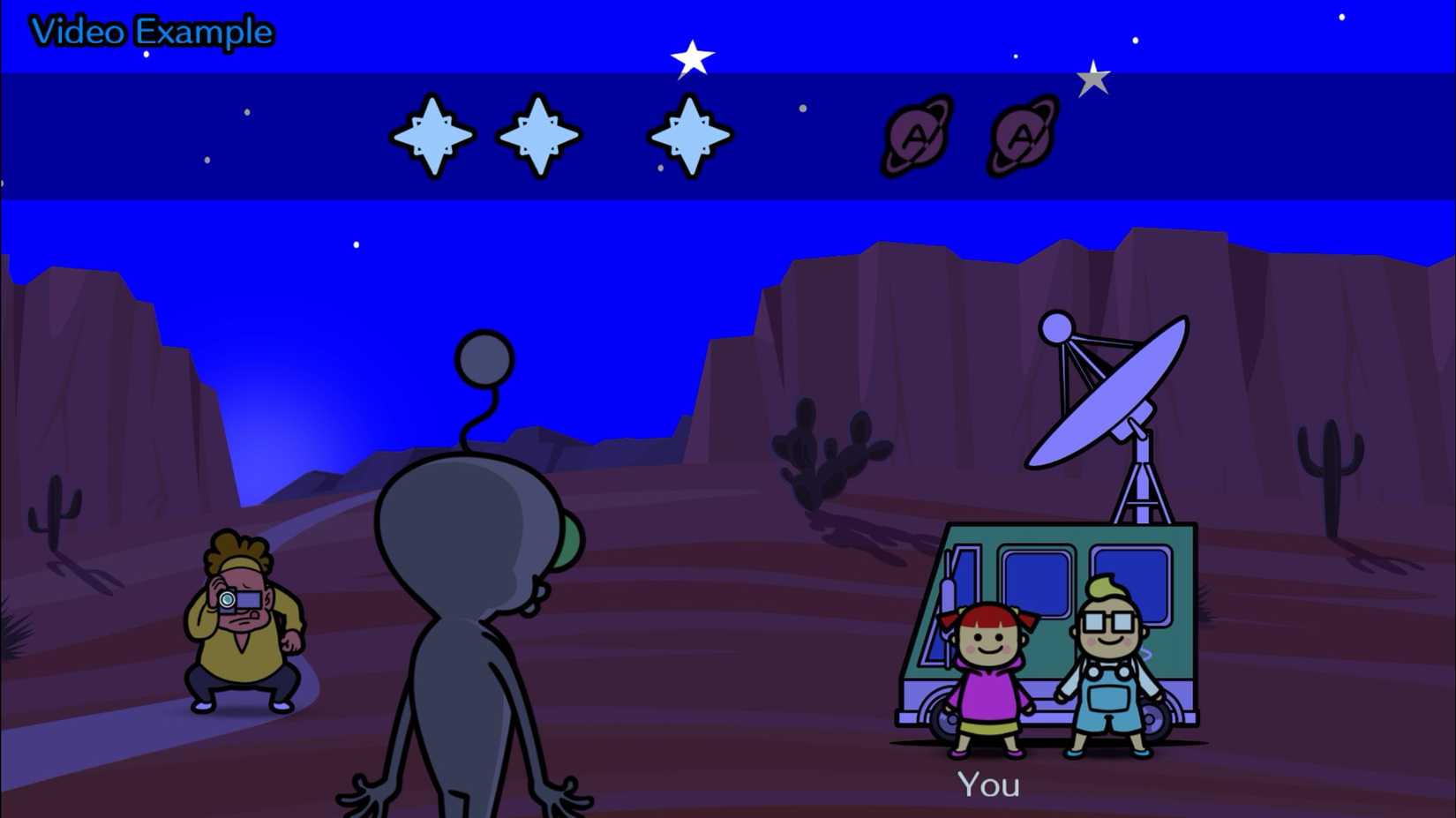
2. Utilize Video Examples
If you find yourself stuck on a specific pattern, press the ‘Y’ button during the practice session to watch a video example. This allows you to observe the perfect timing without the pressure of inputting the commands yourself. It is the most effective way to "train your eyes" for the rhythm.
3. Lean on Audio Cues
While visual cues exist, they are often secondary. Close your eyes during a song only after you have mastered the rhythm; on the first attempt, the visuals are there to help you learn the cadence. The music is your true guide.
4. Optimize Your Audio Setup
Because timing is the core of the experience, input lag can be your greatest enemy. Using high-quality wired headphones is strongly recommended. If you must use speakers, ensure your television is in "Game Mode" to minimize audio-visual latency.
5. Establish a Physical Metronome
You do not need an actual metronome, but you do need a physical connection to the beat. Whether you tap your foot, bob your head, or count out loud, incorporating a physical movement helps your brain keep time during complex tempo changes.
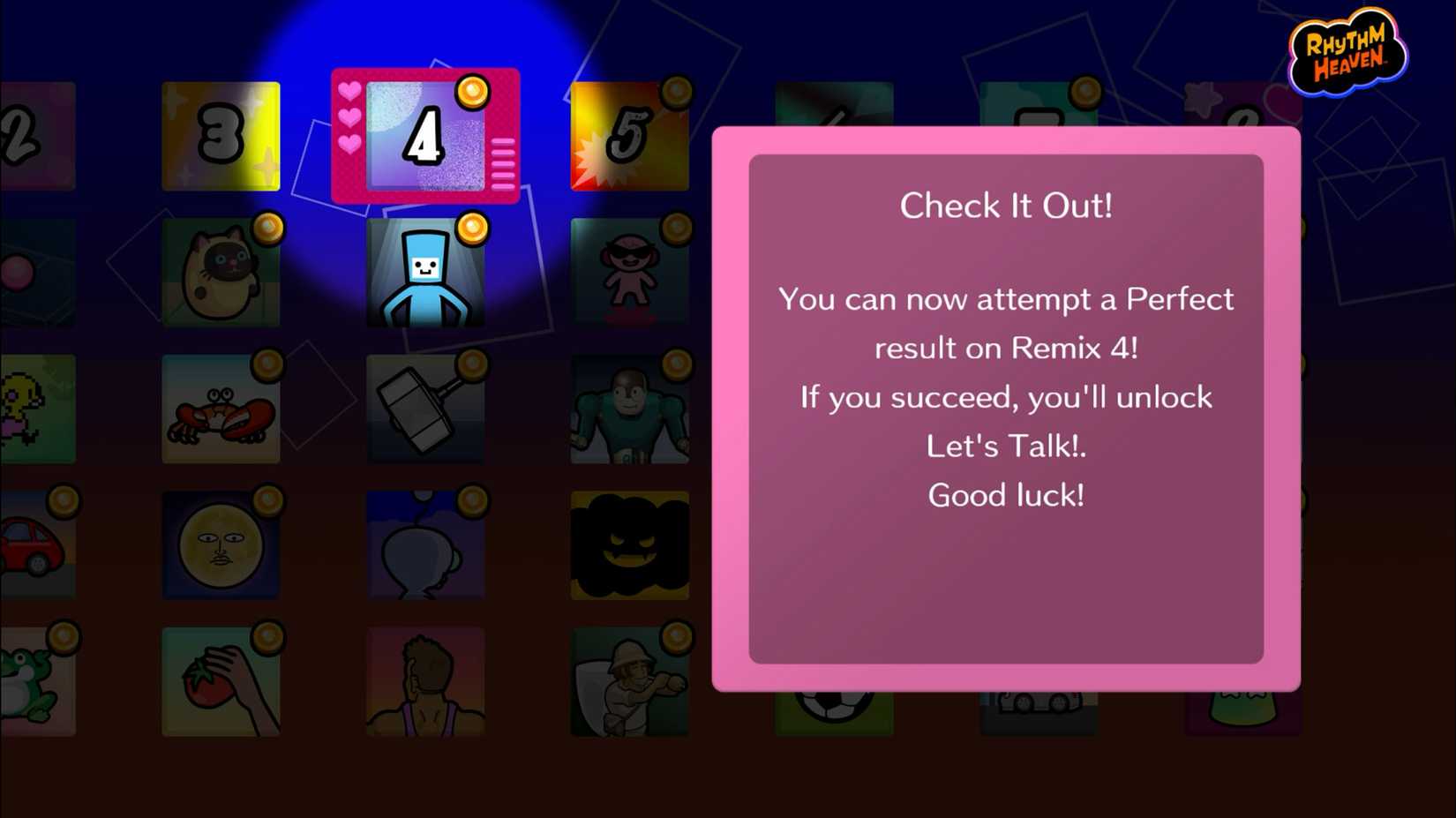
6. The "Perfect" Grind
A "Perfect" result is a badge of honor, but it is also a limited resource. Do not rush into these attempts. Spend time in the practice and video example modes first. If you fail three times, you must wait for the game to offer you another opportunity, so treat each attempt with the gravity it deserves.
7. Explore the Minigames
The "Beatspell" and "Rhythm Toybox" are not just filler; they are designed to sharpen specific rhythmic skills—such as timing, sequence memory, and syncopation—in a low-stakes environment. Use these to reset your mind when the main game becomes frustrating.
8. The Case for Handheld Mode
For the absolute best performance, play in Handheld Mode. Docked play introduces a variety of variables, including wireless controller latency and TV processing time, that can shift the input window by several milliseconds. While imperceptible in most games, in Rhythm Heaven, those milliseconds are the difference between a "Great" and a "Perfect."
Implications for the Rhythm Genre
The success of Rhythm Heaven Groove sends a clear message to the industry: there is a significant, hungry audience for precision-based rhythm games that do not rely on complex peripherals. By focusing on the purity of the beat and the joy of simple, tactile interaction, Nintendo has set a new standard.
The game also highlights the importance of "player agency" in rhythm titles. By offering tools like video examples and varied minigames, Groove avoids the "wall of frustration" that often turns casual players away from the genre. It invites the player to learn, grow, and eventually master the material.
As players continue to climb the leaderboards and hunt for that elusive, full-game "Perfect" rating, Rhythm Heaven Groove stands as a testament to the idea that some things are worth waiting for. It is a refined, joyous, and incredibly challenging experience that proves the rhythm genre isn’t just alive—it’s grooving.
 Basiran
 Nana Muazin
 Layla Zulfa
